ChangeNOW is a non-custodial crypto exchange service built for direct asset swaps rather than traditional account-based trading. Since launching in 2017, it has become one of the most visible competitors to Changelly and ChangeHero, with a broad coin list, wallet integrations, a mobile app and business-facing API products. The appeal is obvious: no ordinary account setup, no order book, and a destination wallet of your choice. It is a polished version of a model that remains inherently dependent on trust during execution.
A typical order takes only a few inputs. Select the asset and network you are sending, select the asset you want, enter the recipient address, and transfer the deposit to the generated address. ChangeNOW then exchanges the funds and sends the output. The flow is friendlier than moving coins through a centralized exchange, particularly for users who keep assets on a hardware wallet. It also reduces the temptation to leave money sitting in an exchange account just because a trade was inconvenient.
The company advertises support for hundreds of assets and numerous networks. That scale is useful, though users should distinguish between a token being listed and a route being consistently liquid. Major coins and stablecoins usually have the most reliable execution. Smaller tokens, new chains and cross-network stablecoin conversions may have higher minimums, weaker quotes or temporary availability issues. A large asset list looks impressive, but the quality of the specific route matters much more than the count.
ChangeNOW uses floating-rate and fixed-rate exchange options. The floating option follows market movement while the order is processed, which can give a better price in stable conditions. The fixed option aims to protect the output amount for a limited time, assuming the user sends the correct funds promptly. I prefer fixed rate for meaningful conversions, especially if the deposit chain is Bitcoin or Ethereum and confirmations may take time. The extra cost is visible, but so is the protection against a sudden market move.
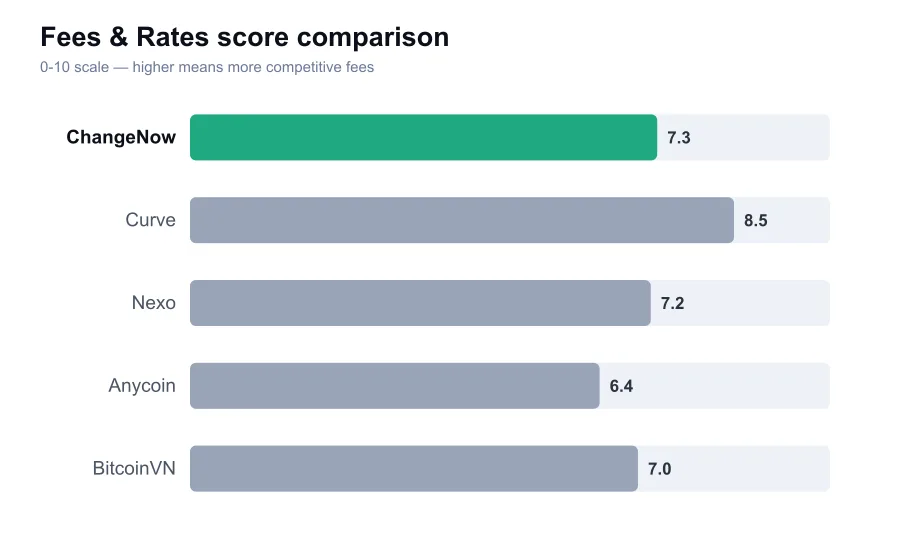
Fees are embedded in the quoted exchange rate rather than presented as a simple trading commission. ChangeNOW has often described its service fee as starting around 0.5%, with network fees and market liquidity costs added to the calculation. That does not mean every swap costs precisely 0.5%. Some pairs are efficient and competitive. Others have a spread large enough that a user who only reads the marketing percentage could be disappointed. The output figure is the number to compare, not the promotional fee language.
On a routine BTC, ETH, SOL, LTC or major stablecoin conversion, ChangeNOW is frequently in the competitive range for instant services. It may not beat a careful manual trade on Kraken Pro or Binance, but that is not its natural contest. Its real comparison is with Changelly, ChangeHero, SimpleSwap and StealthEX. Quotes between those services can differ materially at the same moment because they use different liquidity paths. I would always open at least two tabs before confirming a sizeable order.
The platform's rate display is clear enough for ordinary users, and its exchange status page gives the process more visibility than many small competitors provide. You can see whether it is awaiting a deposit, confirming it, exchanging the asset, or sending the payout. That is helpful, but the labels remain high level. A delayed order can still leave the customer wondering whether the bottleneck is a blockchain, a market-maker, a wallet maintenance event, or an internal review. Better operational detail would improve confidence.
Speed is a real strength on supported, liquid routes. Fast chains can settle quickly, and many simple swaps complete in minutes after the initial transfer is recognized. ChangeNOW cannot make Bitcoin confirmation times disappear, and it cannot force Ethereum gas congestion to clear. Any provider claiming to be instant is really describing its own processing time, not the entire on-chain journey. For a normal Bitcoin swap, allowing thirty minutes or more is more realistic than expecting a card-payment style experience.
Users can influence speed before the transaction starts. Send enough network fee for prompt confirmation, verify that the destination network matches the asset, and avoid initiating a time-sensitive trade during a major market spike. Stablecoin mistakes are particularly unforgiving. USDT on Tron, Ethereum, BNB Smart Chain, Solana and other networks are not interchangeable deposits. ChangeNOW provides network selection, but the sender remains responsible. A wrong-chain transfer can turn a five-minute swap into a recovery request with no guaranteed outcome.
ChangeNOW's no-registration approach is attractive, but it has the same caveat as its competitors. The service can apply AML procedures and may request identity verification where a transaction triggers risk controls. Its public materials describe AML compliance and transaction screening, which is normal for a company handling crypto flows at scale. No-KYC in this context means KYC is not routinely required upfront for every ordinary swap. It does not mean that all users can remain anonymous in every circumstance.
This policy is the largest practical risk for privacy-focused users. If a transaction is flagged after deposit, the customer may have to provide identification or source-of-funds documents before the case can move forward. That is inconvenient, but it is also a reason not to use instant exchanges for funds connected to unclear transaction history. A regulated exchange asks questions earlier. ChangeNOW asks fewer questions at the front door, while retaining the ability to ask them later. Decide which friction you would rather have.
The service's non-custodial structure is a meaningful safety benefit in ordinary use. There is no reason to maintain a large long-term balance on ChangeNOW, and output can be sent directly to a wallet under your own control. Still, money passes through the service's operational systems, so customers are taking counterparty risk for the duration of each exchange. The safest practice is modest order sizing, verified addresses, and no use of an instant swap as the sole route for an urgent six-figure transfer.
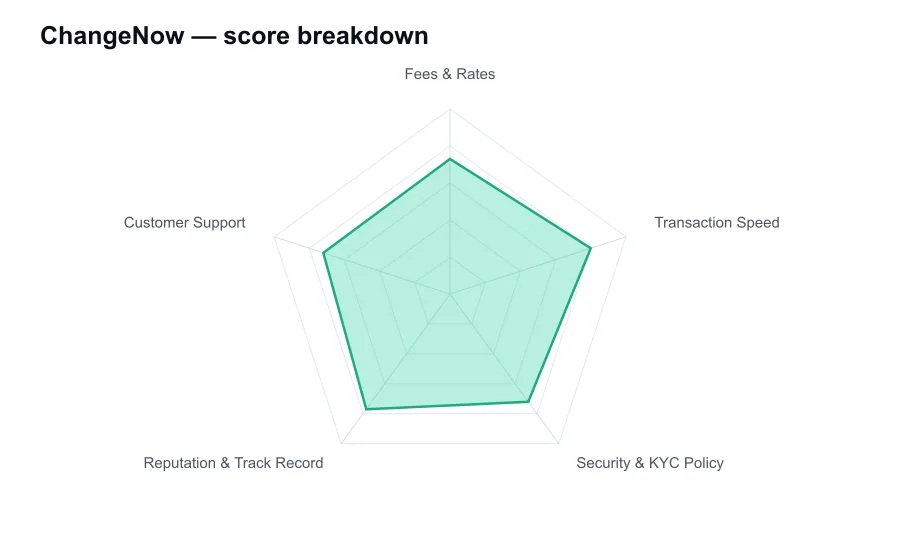
ChangeNOW has developed a stronger public profile than many same-era instant exchanges. It has been active since 2017, has product integrations, publishes status information, and operates a recognizable brand across consumer and business services. It has also received the normal mix of favorable reviews and complaints seen in this category. Positive feedback highlights fast completion and broad asset support. Negative reports tend to focus on delayed transactions, changing floating rates, refunds, or verification requests after deposits were sent.
I regard its reputation as good within the instant-swap field, though not equivalent to the regulatory standing of a major licensed exchange. It is more established than a new anonymous aggregator and has done more than many rivals to build tools and public-facing infrastructure. Yet it is still difficult for an outsider to fully audit its liquidity, wallet operations and case handling. That is why reputation should influence order size. A decent track record justifies cautious use, not unlimited exposure.
Customer support is available 24/7 through live chat and email, and ChangeNOW has generally made itself easy to contact compared with providers that hide behind ticket queues. Response quality is usually strongest for basic transaction-status questions. Exceptional cases are harder. If an order is held for AML review or a chain issue, support can relay the process but may not be able to give the immediate resolution a customer wants. The company could improve by publishing clearer timelines and escalation expectations for those situations.
ChangeNOW also provides business tools, including API and white-label style offerings, which helps explain its extensive asset coverage and integrations. That infrastructure is useful for wallets and services that need swap functionality without building their own exchange pipeline. Retail users should not read business scale as a personal guarantee, but it does suggest the company is more than a thin landing page sitting on a single liquidity partner. Product depth is one of its stronger credibility markers.
My practical recommendation is simple. Use ChangeNOW for a self-custody swap where convenience, asset availability and reasonable speed matter more than the absolute lowest fee. Compare the final output against Changelly and ChangeHero, choose fixed rate if you need certainty, and save the transaction ID. Do not use it as a substitute for a liquid spot exchange if you are trading frequently or executing a large order. The platform is at its best when it solves a specific wallet-to-wallet problem cleanly.
ChangeNOW is one of the better instant exchange options, largely because it combines a mature interface, broad coverage and useful operational tooling. Its main compromises are shared by the category: quote-based pricing, blockchain-dependent settlement, and the possibility of a KYC request after funds have been sent. Those are not trivial compromises, but they are manageable for informed users. I would place ChangeNOW ahead of many lesser-known swap services, while still reserving major activity for venues with clearer fees, deeper liquidity and more formal customer protections.