Nexo sits in a different corner of the crypto market from a simple exchange. It began as a crypto lending and interest platform, then expanded into card spending, trading, custody and savings-style products. That broader ambition is useful if you want one dashboard for a portfolio, but it also means Nexo carries more counterparty risk than a plain non-custodial swap service. You are not just buying coins. You are trusting a financial platform with them.
The company launched in 2018 and grew quickly during the lending boom, especially among holders who wanted to borrow against Bitcoin or earn yield on stablecoins. Nexo's model has survived a period that wiped out several large centralized lenders, including Celsius, BlockFi and Voyager. That matters. It does not make Nexo risk-free, but remaining operational through that crisis is a meaningful part of its track record.
Its exchange is built for convenience rather than professional trading. The interface is clean, conversions are quick, and the platform supports a broad collection of major coins and stablecoins. The Nexo Pro terminal offers a more conventional order-book experience for users who dislike instant-swap pricing. Casual users will find the standard exchange easier, though they should understand that an easy conversion screen can hide the true execution cost.
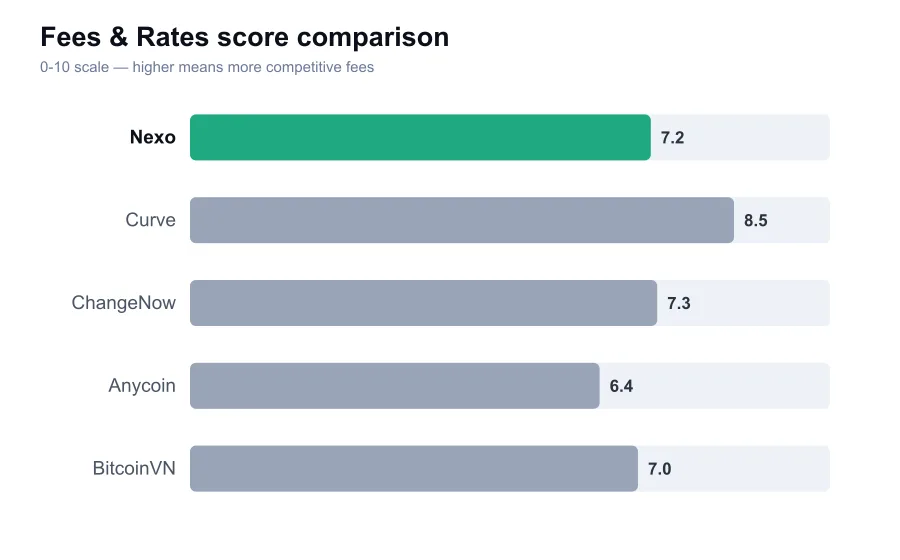
Published Nexo Pro spot fees begin around 0.20 percent maker and 0.25 percent taker, with lower rates available through volume tiers and NEXO token benefits. Those numbers are respectable, though they are not the reason a serious day trader would leave Binance, Kraken Pro or Coinbase Advanced. Deep liquidity and transparent order-book execution matter more than a modest headline discount, and Nexo still feels secondary to those established trading venues.
The standard exchange can be more expensive than its simple presentation suggests. Instant conversions commonly include a spread, and that spread changes with market conditions, asset pair and order size. It is not always unreasonable, but users should compare the quoted output with a live market price before confirming. A 0.25 percent exchange fee is easy to understand. A spread embedded in a conversion quote is harder to audit and can cost more.
Nexo's loyalty tier system is central to its pricing. Holding NEXO tokens can reduce borrowing rates, improve exchange fees and increase the rewards available on certain balances. Platinum status traditionally requires NEXO to represent at least 10 percent of the portfolio's value. That setup rewards committed users, but it also pressures people to hold the platform's own token simply to access its best terms. I don't love that trade-off for conservative investors.
Deposits by crypto transfer are generally straightforward, while fiat funding options depend heavily on country and currency. Bank transfers can be inexpensive, but card purchases and third-party payment rails are usually the costly route. Withdrawal fees are also not a fixed universal promise. Nexo offers a limited number of free withdrawals according to loyalty tier, then charges network-based fees. This is fine for investors who move funds occasionally, less appealing for people who rebalance across wallets every week.
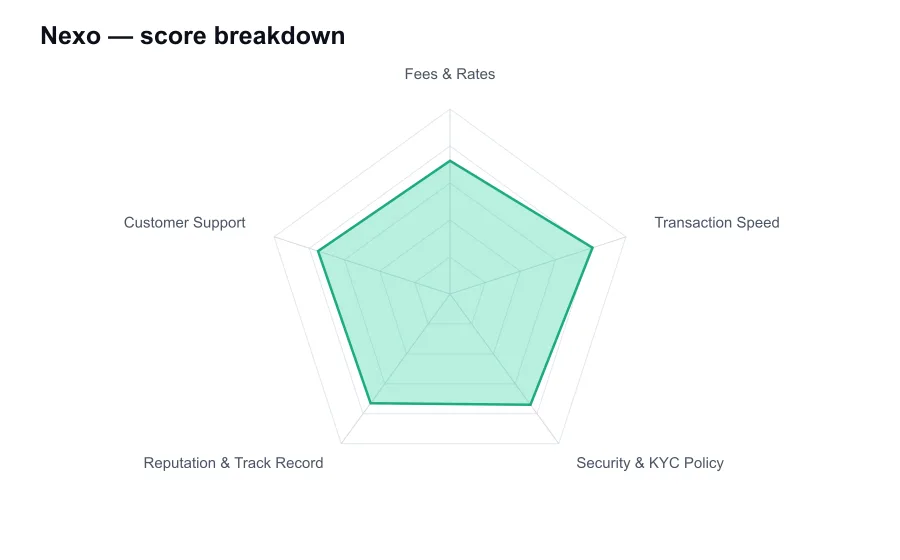
Speed is one of Nexo's stronger practical points. Internal conversions are normally near-instant, card transactions authorize quickly, and crypto withdrawals are processed around the clock before blockchain confirmation times take over. A Bitcoin withdrawal cannot outrun Bitcoin blocks, of course, but the platform itself is usually not the bottleneck. During sharp market moves, quotes can refresh or expire fast, which is normal for instant-buy products but still frustrating if you are trying to catch a price.
Security is where Nexo needs a nuanced reading. It requires identity verification for meaningful use, so this is not a privacy-first exchange. Users should expect government ID, facial verification and source-of-funds questions in certain cases. Some customers resent that friction, but it is preferable to the vague compliance standards that often surround smaller crypto platforms. Nexo's KYC process is a feature for users who value regulated access, and a deal-breaker for those who do not.
The company promotes cold storage, multi-signature custody arrangements, 24/7 monitoring and insurance provided through custodial partners. It has also publicized security certifications and wallet-level protections. These are positive signals, but they should not be confused with a government deposit guarantee or a full public audit of every liability. Nexo previously used real-time attestation services, yet industry access to those services changed after the collapse of Armanino's crypto practice. Users should judge current disclosures, not old marketing screenshots.
Nexo has not suffered the kind of catastrophic customer-loss event associated with some lending peers, and that is a genuine strength. Still, its history includes regulatory pressure. In 2023, it agreed to pay a $45 million settlement with the US SEC and state regulators over its Earn Interest Product, and it exited or restricted parts of the US market. The episode showed that Nexo's product design can run ahead of regulators. That is not ancient history for anyone considering yield products.
Customer support is better than the industry average in availability, with 24/7 live chat and a substantial help center. Straightforward matters such as transaction status and account settings are usually handled efficiently. The tougher cases are the familiar centralized-platform problems, compliance reviews, delayed withdrawals while risk checks run, and proof-of-funds requests. Public complaints about those moments do exist. Support is present, but it cannot always make an internal compliance decision feel fair or quick.
The Nexo Card is one of the more useful reasons to choose the platform. Its debit and credit modes let users spend crypto-backed value without necessarily selling assets at the point of purchase, subject to local availability and product terms. That flexibility is clever, though borrowing against volatile collateral to fund everyday spending is not a habit I would encourage. It is a useful tool for disciplined users, not a substitute for cash-flow management.
For long-term holders who want borrowing, card access and basic trading in one place, Nexo remains a credible, polished option. It is not the cheapest venue for active trading, and it is not where I would park funds blindly for the highest advertised yield. The best use case is measured: keep only the working balance you need, understand the loyalty-token incentives, and avoid treating a centralized lender as if it were a bank account. Nexo has earned more trust than many former rivals, but it still deserves active scrutiny.