Coinomi is not an exchange in the conventional custodial sense. It is a long-running multi-chain software wallet, available primarily through mobile and desktop applications, that lets users hold their own keys while connecting to third-party swap and purchase services. That distinction should shape every expectation. Coinomi can be a convenient wallet and a gateway to exchanges, but it is not a bank-like platform responsible for safeguarding a customer balance in the same way Coinbase or Coinmotion is.
The wallet has been around since 2014, which gives it more history than most multi-asset wallets. It supports a very large selection of coins, tokens, and blockchain networks, a practical advantage for people who actually use diverse assets. For a bitcoin-only investor, that breadth may be unnecessary. For someone navigating older altcoins, several wallets, or token standards that mainstream exchanges neglect, it can be genuinely useful.
The central benefit is noncustodial control. Coinomi generates the wallet credentials on the user's device, and the recovery phrase is the key to the assets. Coinomi cannot simply reset a forgotten password and restore coins the way a custodial exchange can. This is freedom with consequences. If you lose the recovery phrase, expose it to a phishing site, or install malware, there may be nobody capable of reversing the loss.
That fact also explains Coinomi's KYC position. Creating and using the wallet itself does not normally require identity verification because it is software for managing self-custodied addresses. The moment you use an integrated third-party partner to buy crypto with fiat or swap one asset for another, the partner's rules take over. Depending on the provider, jurisdiction, amount, and risk checks, that transaction may involve KYC or additional questions.
This separation is often misunderstood in wallet reviews. A user might complain that Coinomi asked for documents during a purchase, when the request actually came from a card processor or exchange partner. Conversely, a person seeking a fully private swap should not assume the wallet interface guarantees it. Blockchain transactions are public, and external services can apply their own compliance procedures. Read the name of the provider on the confirmation screen before proceeding.
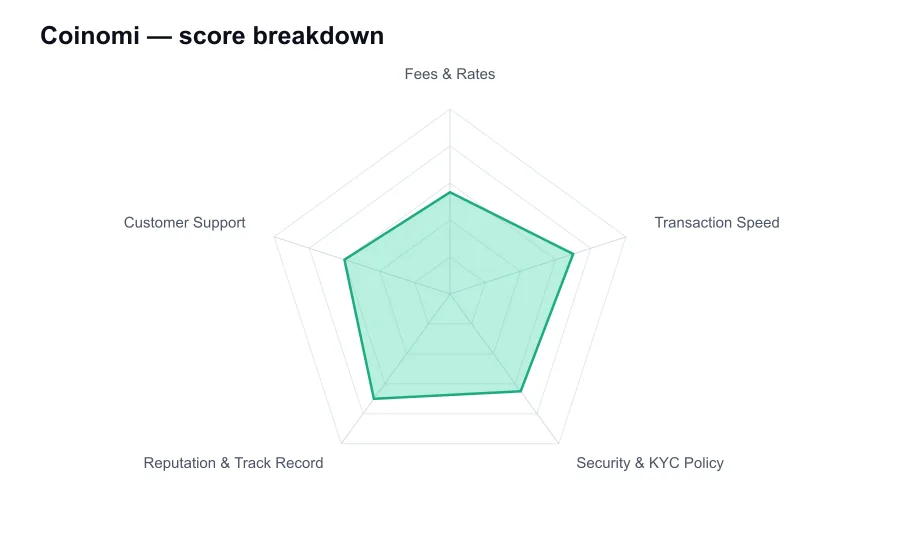
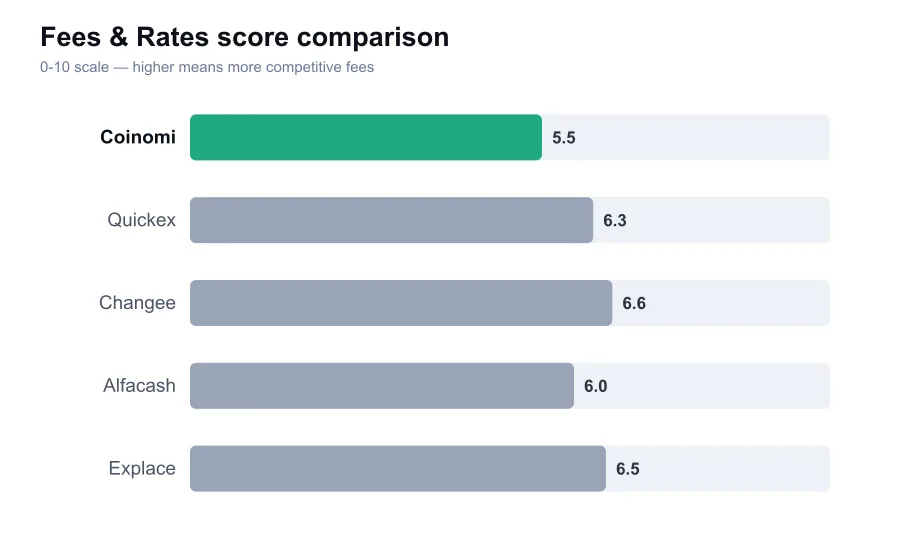
Coinomi's built-in exchange functions are about convenience, not consistently low cost. Exchange partners quote a rate that can include spread, service charges, and network costs. Coinomi may receive compensation from integrated services, while the partner determines much of the final price. The customer should judge the deal by the amount arriving in the destination wallet. A visible rate can look attractive until you compare it with a centralized exchange plus a normal withdrawal.
Network fees are separate and equally important. Sending bitcoin, Ethereum, or tokens requires a fee paid to the relevant network, and expensive periods can make small transfers uneconomic. Coinomi gives users practical control over wallet transactions, but it cannot make a congested chain cheap. A novice should avoid repeatedly moving tiny balances between wallets, especially on Ethereum-based networks where gas can dominate the value transferred.
Speed is normally good where Coinomi has direct control, which is to say signing and broadcasting a properly funded transaction. The blockchain then decides confirmation time. A bitcoin payment may receive its first confirmation in minutes or significantly longer under congestion, while some other networks settle more quickly. Integrated swaps add another moving part: the partner must receive, process, exchange, and send the output asset. Those are not instant wallet transfers.
The wallet's security record deserves a measured discussion rather than marketing slogans. In 2019, security researcher reported a vulnerability involving Coinomi's desktop application sending a recovery phrase to a spell-check service in certain circumstances. Coinomi addressed the issue, and there was no widely established report of funds being stolen through that specific flaw. Still, it was a serious reminder that noncustodial software can have privacy and implementation failures even if its architecture is designed to keep keys local.
Coinomi has stated that wallet keys remain encrypted and under the user's control, and it offers security features such as password protection and recovery phrase backup. Those are useful, but they do not make a hot wallet equal to a hardware wallet. A phone or computer connected to the internet is a hostile environment compared with a dedicated signing device. For daily spending, experiments, or modest balances, Coinomi is reasonable. For substantial long-term holdings, I would use a reputable hardware wallet and keep the recovery phrase offline.
The app's broad chain support is both its strength and its support burden. A user can encounter token contract issues, derivation-path confusion, unsupported forks, phishing clones, and partner swap problems that have nothing to do with a simple bitcoin wallet. Coinomi's knowledge base and ticket support can help with ordinary setup questions, but no support team can recover a validly sent transaction or restore a phrase the owner failed to record.
That limitation affects reputation. Coinomi has survived for years and remains recognizable among multi-coin wallet users, which matters. It has not achieved the universal trust of a hardware-wallet manufacturer, and its past desktop privacy issue means it should not be treated uncritically. The right reading is neither panic nor blind loyalty. It is an established software wallet with a complicated history and a product that demands competent user behavior.
I also would not install any wallet by following an advertisement, a direct message, or a search result that looks slightly unusual. Download Coinomi only from its official site or verified app-store listing, verify the publisher, and never type a recovery phrase into a website or give it to a support agent. Real support does not need it. That one rule prevents a remarkable number of crypto losses.
Coinomi is best for users who understand self-custody and want a flexible wallet across many chains. It is not my first recommendation for an absolute beginner buying their first bitcoin, because the recovery phrase responsibility and partner-based purchase flow introduce too much complexity. Nor is it the ideal vault for a life-changing amount. It is a capable tool, but the user is part of its security model.
My take is that Coinomi remains useful, particularly for multi-asset users who value control and compatibility more than a polished exchange experience. Its fees for swaps should be treated as convenience pricing, and its security is only as strong as the device and backup habits of the person using it. Use it deliberately, keep software updated, verify every address, and reserve hardware storage for serious savings. In that role, Coinomi is credible, but it is not carefree.