FixedFloat is an instant cryptocurrency exchange service built for people who care more about fast, automated swaps than a glossy retail exchange experience. It has long been popular with technically confident users because it supports Lightning Network payments, does not require a conventional account for ordinary transactions, and offers a stripped back flow that gets to the point. That focus is real. So is the baggage attached to the service's security history.
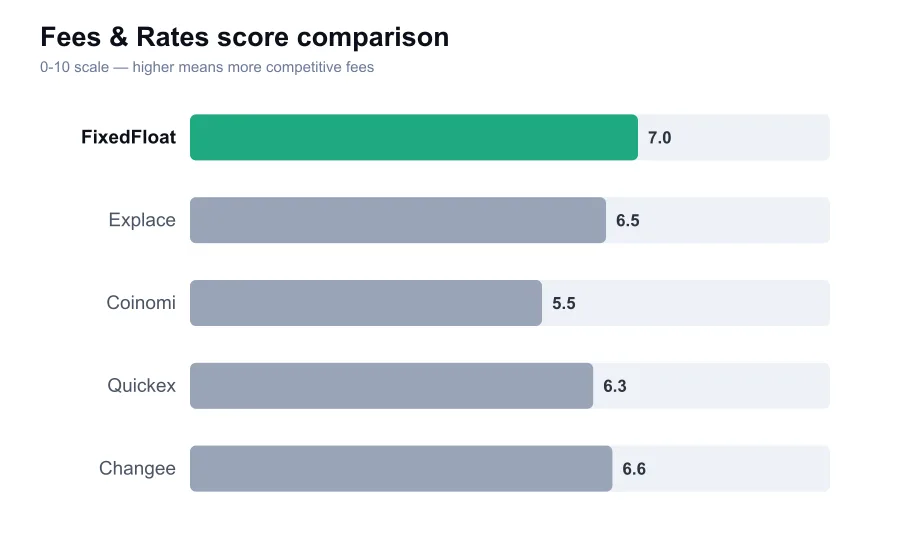
The name tells you the basic product choice. FixedFloat offers a Float Rate, where the final payout follows the market during processing, and a Fixed Rate, where the quoted amount is protected within the payment conditions. Float Rate swaps carry a stated 0.5 percent service fee, while Fixed Rate swaps carry a stated 1 percent fee. Network fees are separate, and the actual output still depends on the route and market conditions.
That is more transparent than many instant exchangers that hide all pricing inside a spread. A customer can understand why a fixed quote costs more. FixedFloat is taking market risk while it waits for your deposit to confirm and completes the conversion. The downside is obvious too. One percent before network costs is not cheap. Users who are already verified at a major exchange can often execute the same liquid pair for a fraction of that amount.
For small swaps, though, the comparison is not quite that simple. A Lightning payment, a quick conversion, and a direct on chain payout can be more convenient than funding an exchange, placing an order, and withdrawing. FixedFloat has historically been particularly attractive for Bitcoin and Lightning users who need to move between BTC, LTC, ETH, stablecoins, and similar assets without leaving a long term exchange balance. The convenience is genuine, and the automation often works well.
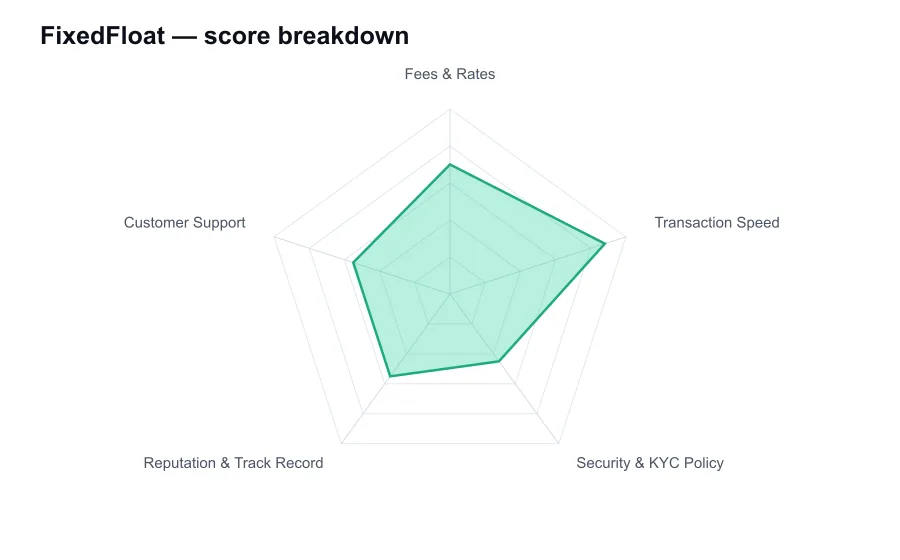
Lightning support is the feature that separates FixedFloat from a lot of its peers. A Lightning invoice can settle in seconds, making the deposit side of a BTC swap dramatically faster and cheaper than a conventional Bitcoin transaction. That does not mean the entire conversion is always instantaneous. The outgoing asset still depends on its own blockchain and the platform's liquidity path. But for users who live in the Lightning ecosystem, the difference is substantial.
On normal routes, FixedFloat can be fast. A completed order may take only a few minutes if the incoming network is quick and the destination chain is not congested. Bitcoin on chain deposits require confirmation time. Ethereum during a busy period can slow the payout side. A transaction that trips an automated risk flag can take far longer. The service's core strength is speed in the boring, ordinary case, not guaranteed rescue work when something goes wrong.
The interface is extremely simple, which cuts down on distraction but can also make the operation feel less reassuring to a first time user. There is no conventional portfolio page, no trading chart, and no persistent account with a detailed transaction center. You get an exchange ID, a deposit address or invoice, and an order status page. Experienced wallet users may prefer that. Someone accustomed to a bank style service might find it unnervingly bare.
FixedFloat generally does not require registration or KYC for standard swaps. Its stated approach is automated and privacy conscious, but it still applies AML controls and can suspend an order if it detects suspicious activity. This is not merely legal boilerplate. Users should expect that a flagged deposit can be held while the platform seeks information or determines whether it can return the funds. No KYC at the front door does not mean no compliance risk after you deposit.
The more serious security issue is the February 2024 theft, when FixedFloat acknowledged an external attack after blockchain investigators linked roughly $26 million in stolen cryptocurrency to the service. The company said it had been attacked and that security measures were being improved. The incident did not turn FixedFloat into an automatic scam, but it absolutely changes the risk assessment. A service handling customer flows must be judged not only by its convenience but by how it protects hot wallet infrastructure and how transparently it responds under pressure.
The incident also highlights a flaw in the way users talk about noncustodial swap platforms. FixedFloat does not ask customers to maintain a permanent account balance, which reduces one type of exchange risk. Yet every swap still creates a temporary custodial handoff. The service receives the input asset, exchanges it, and sends the output. If its systems, liquidity, or hot wallets are compromised during that process, users are exposed. The right response is not panic. It is limiting transaction size.
Reputation before the exploit was fairly strong among Lightning and privacy oriented crypto users. FixedFloat had processed a large volume of automated swaps and developed a reputation for quick execution. After the exploit, the picture is more complicated. Some users still value its technical utility. Others see the security event and communications around it as a reason to avoid the platform entirely. Both reactions are understandable, but a reviewer should not score past performance as if the attack never happened.
Support is a weaker area. FixedFloat's automated model is efficient when there is no issue, but it can feel impersonal when there is one. Contact options and status tracking exist, yet public complaints have often focused on delayed answers for held or problematic transactions. That is common in the no account swap sector. Still, a provider that markets rapid automation should have especially clear escalation procedures for customers whose funds are caught between chains or compliance checks.
I would also be cautious about using FixedFloat for funds that need a clear audit trail, a named counterparty, or reliable human intervention. Businesses, funds, and users with tax reporting needs are usually better served by regulated exchanges with formal statements and account support. FixedFloat is designed for a different audience, namely technically capable individuals who understand confirmations, fees, invoices, and the risk of sending assets to a temporary third party.
For the right user, the service remains useful. Lightning based swaps are convenient, Float Rate pricing can be fair on a favorable route, and the product does not waste time with a cluttered account system. But the 2024 security breach cannot be treated as a footnote. It should affect how much money a prudent customer is willing to route through the platform. Use it for a quick operational swap, not as an unquestioned pillar of your crypto workflow.
My final view is sharper than the average review. FixedFloat is technically capable and unusually good for Lightning related conversions, but its security record prevents a relaxed recommendation. The fee structure is clear, which I appreciate, and routine speed can be excellent. Yet transparency about price does not compensate for a major theft event or a support model that is weakest precisely when automation breaks. It is a specialist tool for informed users who keep their position sizes controlled.