Explace is a smaller instant crypto exchange service that targets users who want a direct wallet to wallet conversion without signing up for a custodial trading platform. Its model will be familiar to anyone who has used an instant swap site. Pick the asset you are sending, pick the asset you want back, enter a receiving address, and fund the generated deposit address. The appeal is simplicity, but Explace operates in a market where trust and execution history matter far more than a polished landing page.
The service offers a broad selection of cryptocurrencies and generally presents fixed and floating exchange rate options. That makes it usable for both a quick low stakes conversion and a more deliberate trade where the customer wants the output amount locked. Fixed quotes are particularly relevant for volatile assets. A customer swapping SOL into BTC does not want a ten minute price move to decide whether the trade was good or bad.
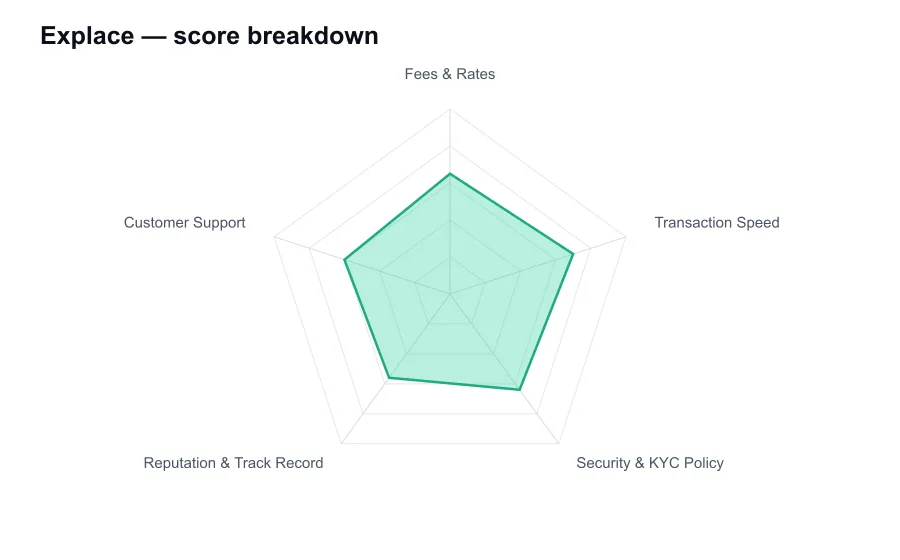
The first thing I would say about Explace is that it is not as battle tested as the largest names in this category. That does not automatically make it unsafe or unreliable. It does mean that the public evidence base is thinner. There are fewer long running independent discussions, fewer detailed reports from high volume users, and less brand recognition than services such as ChangeNOW, Exolix, or Godex. A smaller footprint should lead to smaller initial transactions.
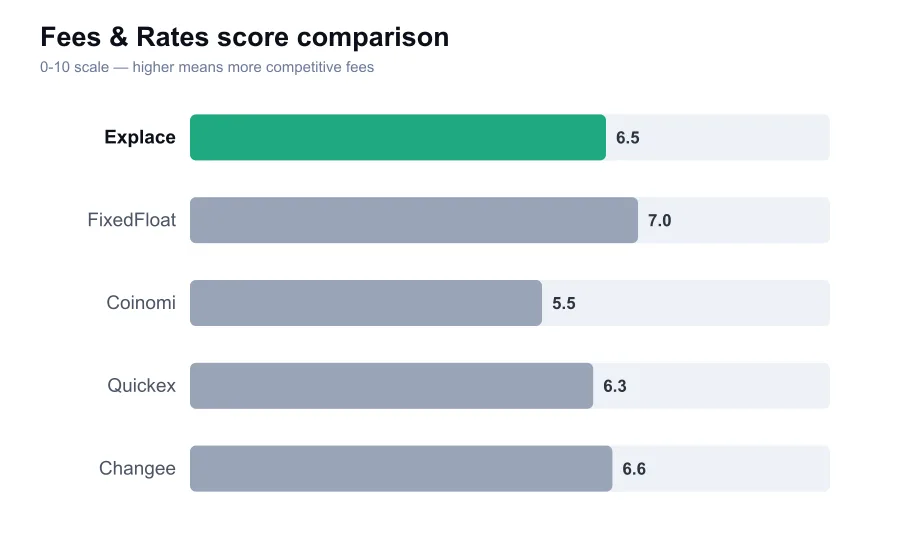
Its pricing is quote based rather than a transparent trading fee model. Explace may display a service fee or advertise favorable rates, but users should judge the actual output against alternatives at the moment they trade. The spread can contain the provider's compensation, partner execution costs, and market risk. This is normal for instant exchangers. It is still frustrating because it makes a simple claim such as low fees hard to verify across every coin and network.
For liquid routes, Explace can produce sensible quotes. A routine USDT to ETH, LTC to BTC, or BTC to USDC conversion may cost less in friction than moving through a traditional exchange if you factor in account setup, withdrawal fees, and time. It is not likely to be the lowest cost route for an experienced trader with access to spot markets. The service is selling direct execution, not deep exchange liquidity or maker fee discounts.
Small swaps deserve extra skepticism. Minimum amounts can be affected by chain fees, and the difference between a quoted rate and a final payout can look large if the network itself is expensive. Ethereum mainnet is the obvious example, but it is not the only one. Before sending, check whether the output asset is being delivered on the chain you actually need. A cheap quote is useless if you receive USDT on a network your destination wallet or exchange does not support.
Transaction speed depends much more on the underlying chains and liquidity route than on the Explace interface. Fast chain deposits may be completed in minutes once the funds are detected. Bitcoin can require several confirmations, and congested Ethereum transfers can take substantially longer. Users should be suspicious of any instant swap provider promising a precise universal completion time. The service can automate an order, but it cannot control block production or an exchange partner's wallet maintenance.
The fixed rate option is worth using for a larger conversion, although customers need to follow its payment instructions closely. An expired quote, a deposit that arrives outside the rate lock period, or an amount that differs from the requested amount can push an order into manual processing. This is where smaller services often show their limitations. A major platform may have more automation and more staff coverage. At Explace, a problem order can become a support ticket rather than a quick self service fix.
Explace does not ordinarily require a user account or standard KYC before a basic exchange. That is central to its appeal, particularly for users who want to avoid handing personal data to another online financial service. The caveat is familiar but important. The company can apply AML procedures to suspicious or high risk transactions. Any customer who believes an instant exchanger is outside compliance systems is misunderstanding how this industry now works.
The security question has two parts. First, Explace reduces the danger of leaving a standing balance on an exchange because it is designed for one off swaps. Second, it introduces counterparty risk during the period between your deposit and your payout. The service has control of the incoming funds until it settles the transaction. That is why a noncustodial label does not remove all risk. It only avoids the ongoing custody risk of maintaining an exchange account.
The website flow is straightforward, and that counts for more than it sounds. Address errors, wrong network choices, and missing destination tags are common causes of crypto losses. A good instant exchanger should make those risks obvious before payment. Explace's interface is easy enough for an informed beginner, though I would still like to see more prominent network warnings and clearer explanations of what happens if a transaction needs compliance review or a refund.
Support availability is an area where a newer or smaller provider must earn confidence transaction by transaction. Explace offers customer contact channels and order tracking, but it does not have the visible public support footprint of a large regulated exchange. For a simple missing transaction issue, that may be enough. For a frozen order, a chain migration problem, or a substantial amount sent to an incorrect network, users may find the process less reassuring than dealing with an established firm.
I would not call Explace a poor service. The product is functional and the direct swap model is useful. The problem is that it has not accumulated the same level of independent proof as older competitors. In crypto, that gap matters. A fast successful swap is not difficult to provide. Consistently handling difficult cases, refunds, disputed AML flags, wallet outages, and market shocks over many years is the harder test.
There is a sensible way to use Explace. Start with a small amount, select fixed rate if price certainty matters, verify the receiving chain character by character, and retain the order ID and deposit hash. Compare the final receive amount with at least one larger rival. If Explace wins and the first test goes smoothly, it can become another useful option in your comparison list. It should not become the place where you send funds without checking the quote.
My take is that Explace is a decent convenience service with a credibility discount attached to its smaller public track record. It has the features people expect, including no routine registration and rate choices, but it does not yet have enough demonstrated history to deserve blind trust with a large transfer. The platform can be a good fit for modest, ordinary swaps. For a six figure transaction, a difficult compliance profile, or a situation where you need a named institution behind the trade, I would choose a more established venue.