111Obmen is a small instant crypto exchange service aimed at people who want to swap one asset for another without opening a conventional trading account. It sits in the same crowded corner of the market as ChangeNOW, SimpleSwap, LetsExchange, and dozens of similarly branded exchange widgets. That matters because its appeal is straightforward, but its room for error is small. In this category, a polished form and a long coin list are easy to build. Earning enough trust for someone to send an irreversible transaction is the hard part.
The service is built around a familiar flow. Pick a sending coin, choose a receiving coin, enter a wallet address, review the quoted rate, then send funds to a deposit address. There is no order book, advanced charting, custody account, staking product, or meaningful trading terminal. That simplicity will suit a user converting USDT to BTC or exchanging a wallet-sized altcoin position, but it also means 111Obmen should be judged as an execution service, not as a full exchange.
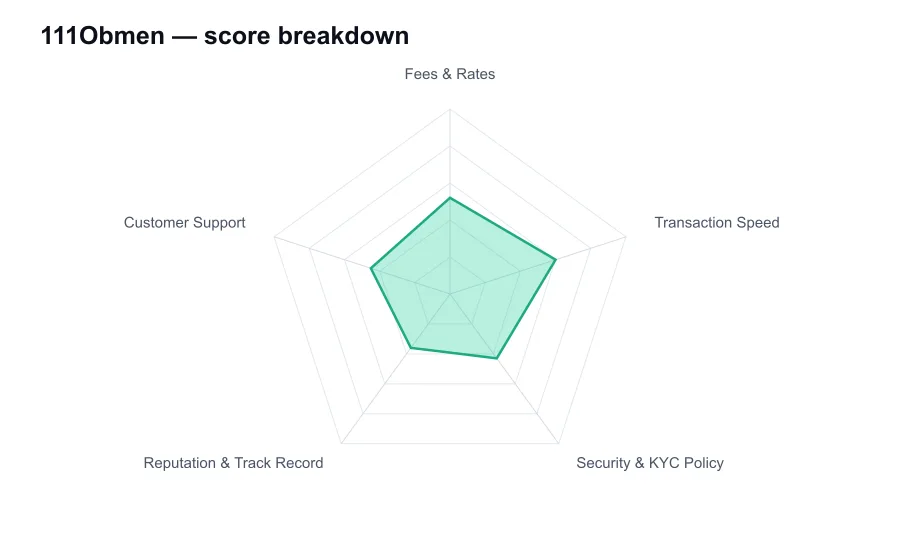
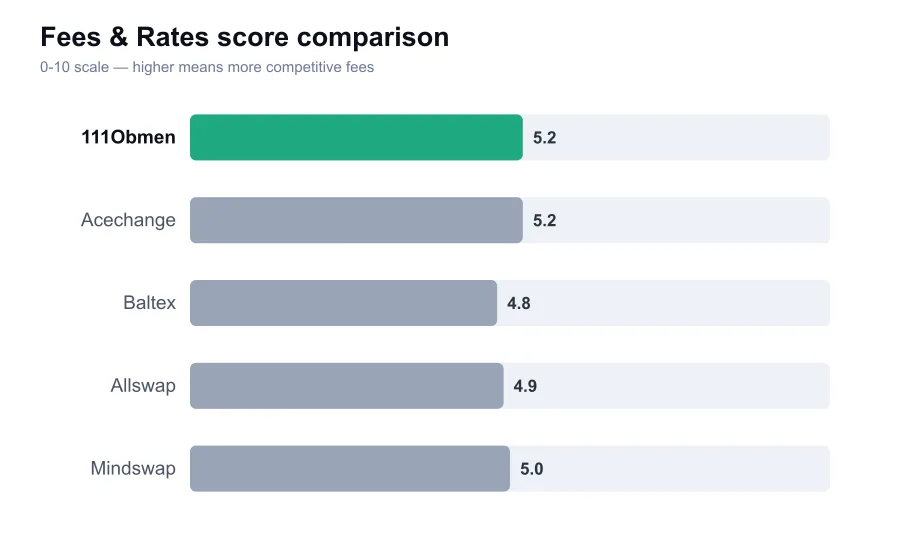
Its pricing is not transparent enough for my liking. The quote presented before a swap is the practical price a customer pays, yet that quote can combine a service spread, liquidity-provider spread, network cost, and slippage protection without breaking those elements out. That is common among instant exchangers, but common does not mean consumer-friendly. A trader comparing only the advertised rate can easily miss that the effective cost is materially higher than buying or selling on Kraken, Coinbase Advanced, or Binance where available.
For a small, inconvenient conversion, the premium may be tolerable. Saving twenty minutes of account setup can be worth a few dollars. For a larger BTC, ETH, or stablecoin swap, it is not a sensible habit to accept the first quote. Run the same pair through at least two competitors and compare the amount actually promised at the final confirmation screen. A difference of one percent on a large swap is not a rounding error, and thinly traded assets can produce much wider gaps.
The distinction between a floating quote and a fixed quote is particularly important here. A floating rate leaves the final payout exposed to market movement between the customer sending funds and the provider completing its hedging trade. During quiet conditions this may barely matter. During a sharp Bitcoin move, it can make the initial estimate look optimistic after the fact. If 111Obmen offers a rate lock on a given route, read the timing and amount conditions carefully, because a late or underpaid deposit can invalidate it.
Speed depends much more on the route than the website suggests. A swap involving fast chains such as TRON or Polygon can begin moving quickly once the deposit is detected. Bitcoin deposits need confirmations, Ethereum can slow down during network congestion, and an obscure asset may require a third-party market order before anything is sent out. A straightforward liquid swap can finish in minutes, but there is no honest basis for treating every conversion as instant.
That distinction becomes painful if a transaction is flagged for manual handling. Instant exchange operators regularly rely on external liquidity, wallet infrastructure, and risk controls. Any one of those can add hours. 111Obmen does not have the public operational record or transparent status reporting that would make me comfortable assuming a delayed transfer is being actively managed. For time-sensitive arbitrage, liquidations, or a payment deadline, use a venue where you control execution rather than an intermediary quote engine.
The KYC position needs to be understood in practical rather than marketing terms. A service may allow a normal swap to begin without account registration, but that does not guarantee a no-verification experience. Blockchain analytics flags, sanctions exposure, unusual transaction patterns, or a compliance provider's risk score can trigger a request for identification or source-of-funds evidence. If a provider holds funds while that review happens, the customer has little leverage besides support correspondence.
This is where 111Obmen's limited public footprint is a real weakness. I did not find the kind of detailed corporate disclosure, independently audited reserves, public security documentation, or established licensing record that would justify treating it like a regulated custodian. That does not prove misconduct. It does mean users should avoid confusing a browser-based swap interface with a bank-like financial institution. The safe approach is to keep self-custody, verify every address, and test with a small amount first.
The site-level basics matter too. Use the real domain you have independently verified, inspect the certificate, bookmark it, and never follow a sponsored search result or direct-message link to a swap page. Fake instant-exchange clones are a persistent problem. Since the service's transaction addresses are generated for each order, a single copied or altered destination can be catastrophic. Hardware-wallet confirmation is useful because it forces a second look at the receiving address.
Reputation is the point that stops me from recommending 111Obmen enthusiastically. Larger established noncustodial swap brands have years of searchable complaints, responses, partnerships, and public scrutiny. That history can be messy, but it gives a reviewer evidence to work with. 111Obmen has a far thinner independently verifiable record. Positive snippets and affiliate-style ratings are not enough to establish how it handles a disputed payout or a compliance hold.
Customer support appears to be a basic operational channel rather than a mature service organization with published response commitments, phone escalation, or a sophisticated incident dashboard. That may be enough for a typo in an address field before sending. It is much less reassuring after a five-figure transaction becomes stuck. Before using it, I would identify the support method, save the exchange ID, take screenshots of the original quote, and ask one pre-sale question to see whether a human answers coherently.
111Obmen may still have a place for a small, low-stakes conversion when it shows the best executable quote and the route is uncomplicated. The interface is likely easier for a newcomer than a centralized exchange's trading screen, and the lack of routine account creation is attractive. But convenience is not the same as consumer protection. The provider has not earned the trust premium that would justify sending a large balance without prior testing.
My view is blunt. Treat 111Obmen as an unproven transactional tool, not a venue to rely on. Compare the final quote, use a fresh self-custody address, start small, and keep records until the payout is complete. Users who need predictable fees, clear recourse, or robust compliance support should choose an established regulated exchange. The service may work perfectly for a simple swap, but its limited track record leaves too little margin for confidence.