Mindswap is a name associated with a small decentralized exchange and token-swap project rather than a mainstream crypto exchange with broad public adoption. That immediately puts it in a difficult market position. Decentralized trading is crowded, and users have mature options such as Uniswap, Sushi, Curve, PancakeSwap, and 1inch, depending on the chain and asset. A smaller DEX has to offer either exceptional liquidity, a distinct technical advantage, or unusually strong community trust. Mindswap has not convincingly demonstrated any of those at scale.
The project is best approached as an experimental DeFi venue, not as a default place to exchange assets. Its interface may allow wallet-based swaps without the account opening process used by centralized exchanges. That appeals to users who value self-custody and direct blockchain settlement. It also means users take responsibility for approvals, slippage settings, fake token contracts, network selection, and irreversible wallet transactions.
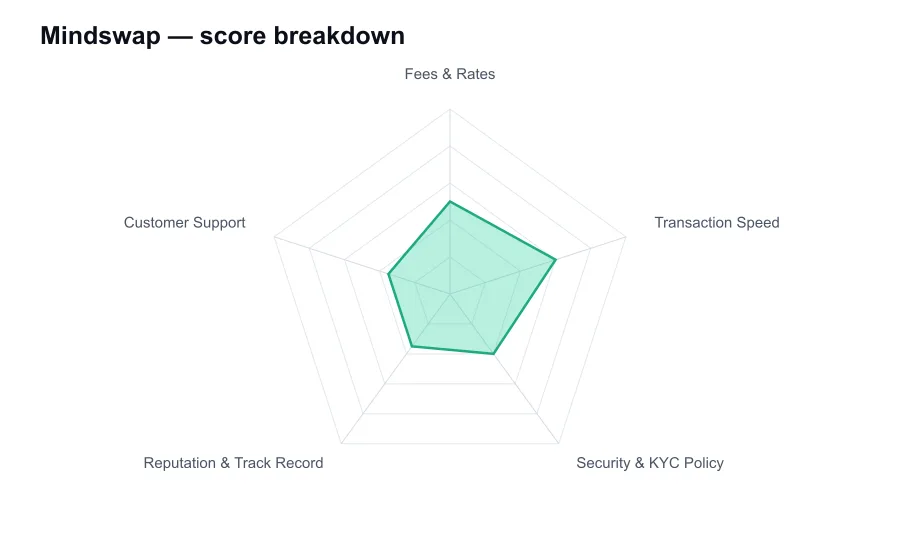
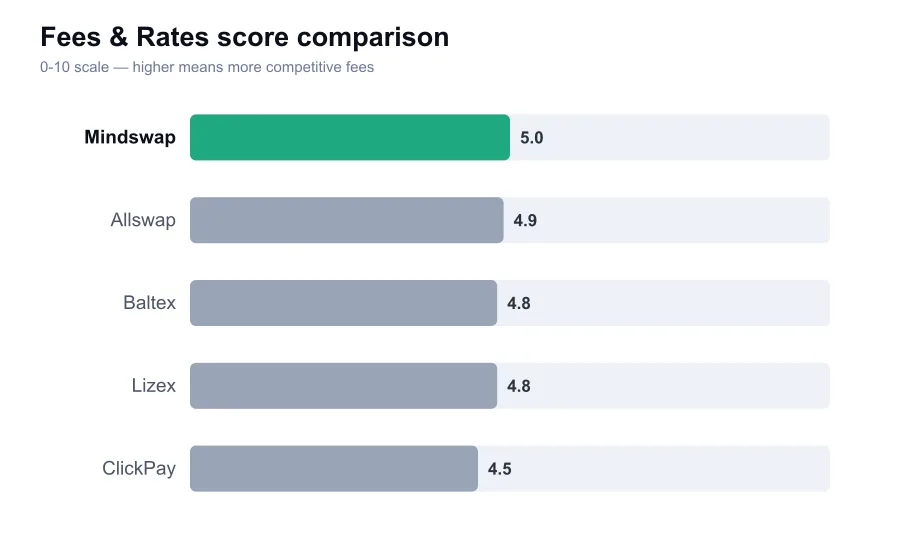
A DEX can advertise low fees and still be expensive in practice. The visible protocol fee is only one part of the trade. The actual cost includes network gas, liquidity-provider fees, price impact, slippage, and sometimes a very wide effective spread caused by shallow pools. For large, liquid pairs on a major exchange, this may be manageable. On a small venue or a thin pair, it can turn a supposedly cheap trade into an expensive one.
That is Mindswap's central pricing weakness. There is not enough demonstrable liquidity and volume history to assume that its quotes are competitive. A trader swapping a modest amount of a major token should compare the expected output against an aggregator or a recognized DEX before approving. For a niche token, the risk is higher still. Low-liquidity pools are vulnerable to price movement and can be manipulated more easily than deep markets.
The speed of a Mindswap transaction is fundamentally blockchain speed. A swap can settle in seconds or minutes on a fast network, while Ethereum mainnet activity can take longer and cost more during congestion. That part is not unique to the protocol. What matters is whether the route executes at the quoted price and whether the transaction interface makes failures understandable. Failed swaps still cost gas on many chains, and a confusing interface turns routine network friction into an avoidable loss.
Users should be especially wary of token approvals. Connecting a wallet to any DeFi application often requires granting a smart contract permission to spend a token. A safe workflow uses a separate wallet, limited balances, carefully checked contract addresses, and approval revocation after use where appropriate. There is no customer-service undo button after signing a malicious or mistaken transaction. Mindswap's smaller profile means there is less public security scrutiny than at the leading DEXs.
Smart-contract risk is not theoretical. Even an audited protocol can be exploited, and small projects may have fewer audit reports, fewer bug bounty participants, and less time-tested code than their dominant rivals. I would want to see clearly linked audit reports, verified contracts, active developer activity, governance documentation, and transparent incident communication before treating a DEX as more than an experimental tool. Without that evidence, the correct security posture is caution.
KYC is often minimal or absent for direct wallet interactions on a decentralized exchange. That does not mean a user is invisible, compliant everywhere, or exempt from legal obligations. Public blockchain activity is traceable, front-end access can be restricted by location, and fiat onramps or centralized offramps will often apply identity checks. No-KYC access is a feature for some users, but it should not be confused with protection.
Mindswap's reputation remains limited. There is no broad body of credible, long-term user feedback comparable to the major DEX ecosystem, nor is it a protocol that has become a standard routing destination for aggregators and serious onchain traders. That lack of traction matters because liquidity attracts liquidity, developers, independent researchers, and better operational monitoring. A small community can be enthusiastic, but it does not provide the same resilience.
Support in this type of product is generally community-based. Documentation, Discord or Telegram channels, and social updates can help with basic navigation, but they are not equivalent to a regulated broker's support desk. Nobody can reverse a completed swap, retrieve a private key, or guarantee recovery from an incorrect transfer. A project with limited public support infrastructure deserves a lower score here, particularly for users who are new to wallet-based trading.
The sensible use case is narrow. If Mindswap supports a token or chain you specifically need, and you can independently verify the contracts and compare execution with alternatives, a small swap may be reasonable. Even then, use a fresh or limited-fund wallet, set conservative slippage, and inspect the transaction simulation. Those are not paranoid rituals. They are normal operating discipline in DeFi.
It is a poor choice for first-time crypto buyers, for anyone converting salary or savings into crypto, or for a trader making a large market order. Centralized exchanges with transparent order books remain better for many people, while high-liquidity DEXs are a more logical choice for self-custody users. Mindswap has not built enough public evidence to justify taking the additional execution and protocol risk.
The temptation with little-known DEXs is to assume early participation offers an edge. Usually, it offers unpriced risk. Incentives can disappear, liquidity can leave, interfaces can change, and token markets can become hard to exit. A smart user doesn't confuse novelty with an opportunity. They ask whether the product solves a problem that the established alternatives cannot solve.
My judgment is that Mindswap is a watchlist project, not a recommended exchange venue. The self-custodial model is legitimate, and a wallet-based swap can be quick. Yet low public visibility, uncertain liquidity, and limited independent assurance leave it well behind the major decentralized trading protocols. Treat it as experimental infrastructure, keep transaction sizes small, and don't let a no-KYC label replace proper due diligence.