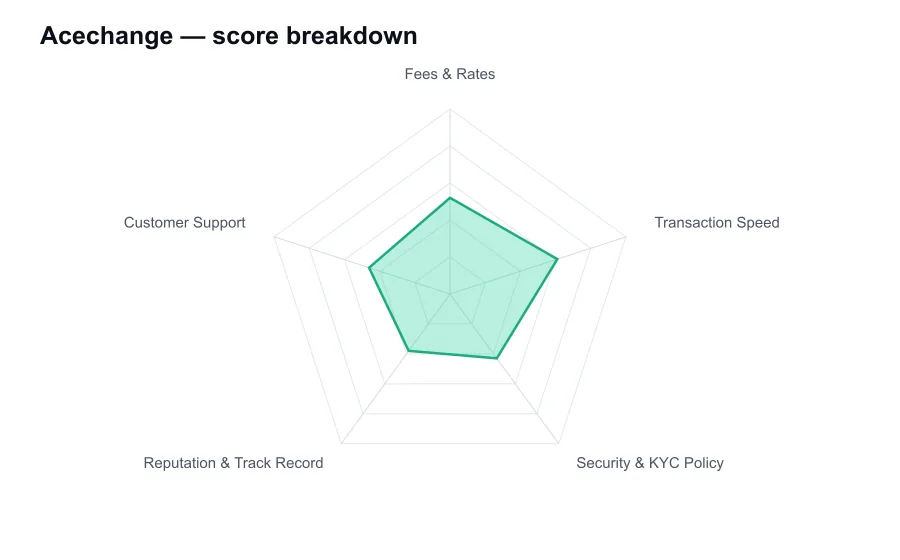
Acechange is a small instant crypto exchange service aimed at people who want to swap one coin for another without opening a full trading account. It sits in the same broad category as ChangeNOW, SimpleSwap, and LetsExchange, but it has nowhere near their public footprint or product depth. The appeal is obvious: pick an asset, enter a receiving address, send funds, and wait for delivery. That convenience is real, although the thin public record means users should approach it more carefully than they would a long established exchange.
The first thing I look for with a service like Acechange is a clear explanation of who operates it, where it is incorporated, and how customers can escalate a dispute. This is not just legal fine print. With an instant exchange, the platform briefly controls the asset you send, and a transaction error can leave a customer dependent on support. Acechange does not inspire the same confidence on this front as a regulated European broker or a well documented centralized exchange. Its public corporate and compliance detail appears limited.
That doesn't automatically make it fraudulent. Many noncustodial swap sites deliberately keep their interface spare and avoid collecting more customer data than necessary. But privacy and opacity aren't the same thing. A privacy minded customer can reasonably prefer a no account service while still expecting transparent terms, a visible legal entity, a risk policy, and a reliable way to reach someone if a swap is held. Acechange feels underdeveloped in that respect.
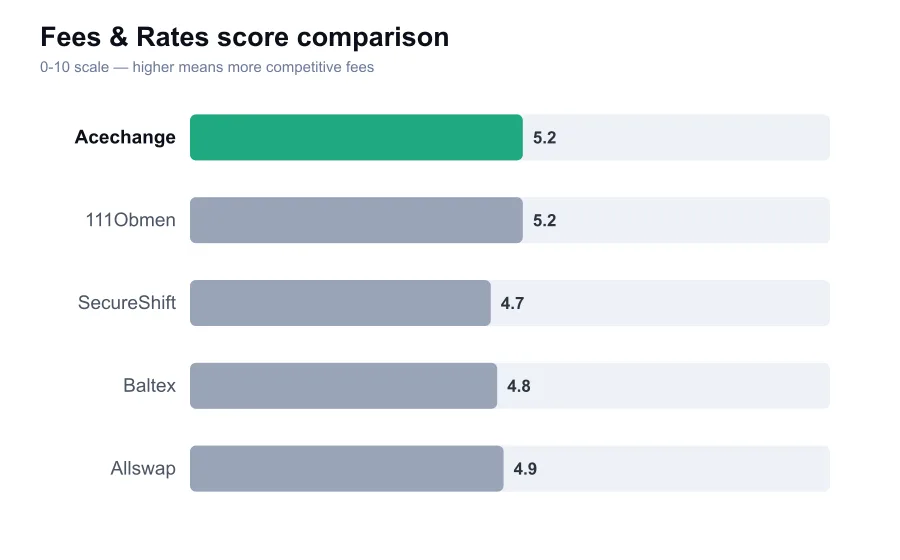
Pricing is also difficult to judge before placing an order. Like many instant exchange providers, Acechange presents a quoted conversion amount rather than a simple maker and taker fee schedule. The quoted rate normally bundles a liquidity-provider spread, market movement allowance, and network costs. That can be perfectly fair, but it makes comparison work necessary. A user who sees no separate fee line should not assume the swap is free.
For a liquid pair such as BTC to USDT or ETH to USDC, I would compare the final receive amount against at least two alternatives before committing. A 1 percent difference on a small test transaction is tolerable for speed and convenience. A wider gap is not. Smaller altcoin pairs are where these services can become expensive, because the provider may be sourcing liquidity through another venue and protecting itself against price movement while your deposit confirms.
Acechange is more suitable for a one off conversion than for recurring purchases or serious trading. There is no obvious reason to use a lightly documented swap site for weekly Bitcoin accumulation when a regulated broker, a large exchange, or even a transparent onchain route can be cheaper. The lack of a conventional order book also means there is no way to control the execution price with a limit order. You accept the quote or you don't.
Speed depends far more on the asset and blockchain than the homepage suggests. An exchange can process an order quickly, but it cannot make a Bitcoin deposit confirm instantly or rescue an Ethereum transaction sent with an inadequate gas fee. For common assets, a straightforward swap should often complete after the incoming transaction receives the required confirmations and the outgoing transfer is broadcast. In practice, that can mean minutes for some networks and much longer for Bitcoin or congested chains.
The important distinction is between a fixed quote and a floating quote. A fixed quote gives the customer a defined expected outcome for a limited period, provided the correct amount arrives on time. A floating quote is more exposed to market movement while the deposit confirms. Acechange should make that distinction unmistakable at the order screen. If it doesn't, users need to assume the displayed receive amount may change and should avoid sending funds during sharp market moves.
Security is another area where a small provider must earn trust transaction by transaction. A noncustodial swap flow reduces the danger of leaving a large balance on an exchange, which is a meaningful advantage. Still, it creates a different risk: you are sending irreversible crypto to an intermediary wallet and relying on its systems and counterparties to complete the trade. A clean website and a HTTPS lock icon don't prove that those systems are mature.
The practical safety rule is simple. Start with a small amount, save the order ID, transaction hash, quoted rate, and receiving address, then wait for completion before attempting a larger exchange. Triple check the destination network. Sending USDT on the wrong chain is one of the most common and costly mistakes in this market, and a small instant exchanger may have limited ability to recover it. Never treat a first transaction as a routine transfer.
Acechange appears to operate with a low friction onboarding model rather than universal upfront identity verification. That may appeal to users who dislike handing over documents for a modest crypto swap. It does not mean checks can never occur. AML monitoring, sanctions screening, suspicious transaction reviews, and source of funds requests can still be triggered, sometimes after a deposit has arrived. Anyone who cannot tolerate a temporary compliance hold should not use any no account exchange.
This is where better known competitors have an advantage. ChangeNOW and FixedFloat have developed clearer user expectations through years of public usage, though neither is risk free. A large regulated venue such as Kraken asks more of the customer at onboarding, but it also offers stronger account controls, clearer complaint channels, and a better documented operating history. Acechange has not built comparable public evidence of resilience through bad markets, network incidents, or customer disputes.
Support therefore matters more here than it would at a self custody wallet. The service should provide a live channel or ticket route that can locate an order by ID, explain confirmation requirements, and distinguish a blockchain delay from an internal review. The real test is not whether an agent answers a simple pre sale question. It is whether someone can explain a delayed transaction in plain language and take ownership of a genuine error.
My view is cautious rather than hostile. Acechange may work for a small, uncomplicated conversion by someone who understands wallet addresses, confirmation times, and rate risk. I would not use it for a large first transaction, a time sensitive payment, or funds I could not afford to have delayed. Its core proposition is convenient, but convenience alone is not enough to offset a limited public track record and modest transparency.