Ripio is one of the better-known crypto platforms built for Latin America, rather than a global exchange that happens to accept Latin American customers. Founded in 2013, it has operated through several market cycles and has focused on countries such as Argentina, Brazil, Uruguay and Colombia. That regional focus is its most important advantage. Ripio understands that local payment rails, currency instability and mobile-first access matter more here than copying a US trading app.
The company began under the name BitPagos before becoming Ripio, and it has built products around buying crypto, storing it, sending it and using local currency rails. In markets where inflation and capital controls shape financial behavior, Bitcoin and stablecoins are not only speculative assets. They can be savings tools, payment instruments or a way to access dollar-linked value. Ripio's relevance comes from serving that reality rather than treating the region as an afterthought.
Its app is generally approachable. New users can buy and sell crypto through a straightforward mobile interface, while more active customers may use Ripio Trade for a more conventional trading experience where available. The basic app is designed for access and convenience. It is not going to satisfy a sophisticated derivatives trader, but that is not really the point. For many first-time crypto users in the region, an understandable local app is more valuable than a complex global terminal.
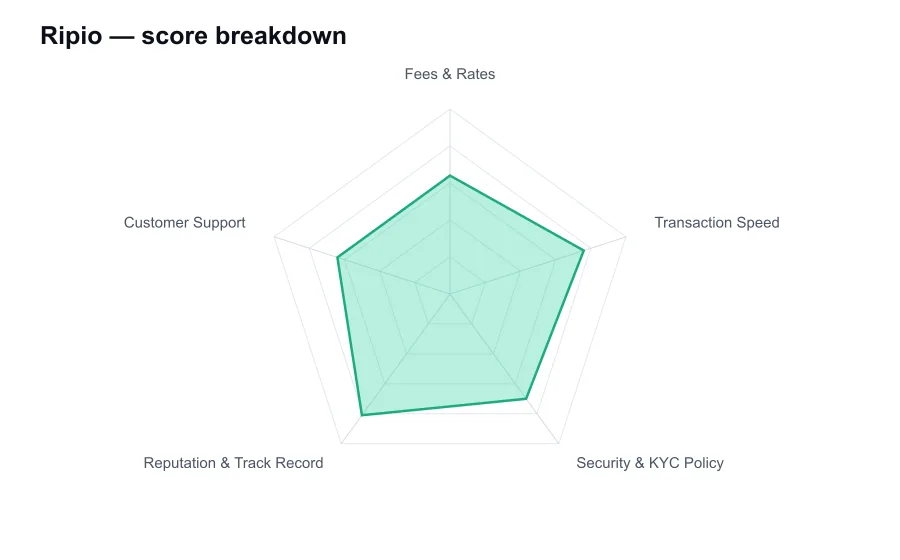
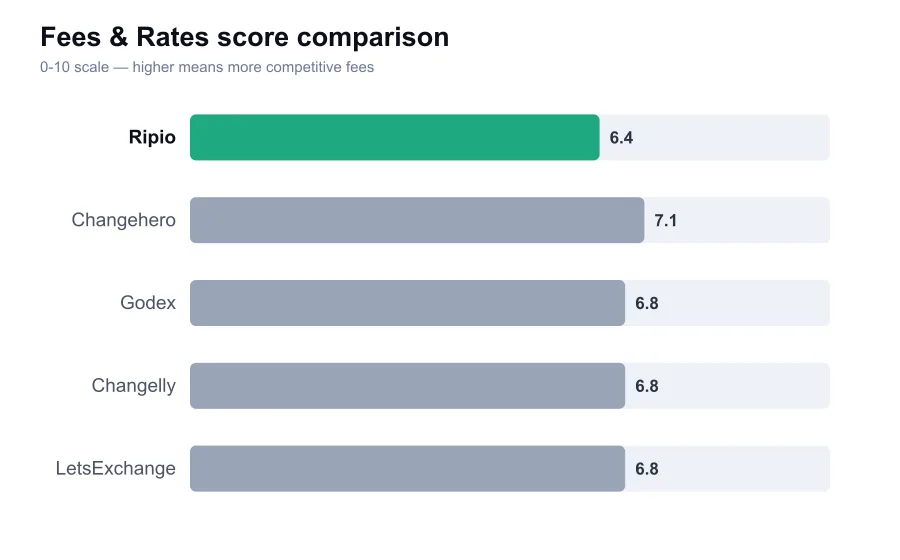
Fees need careful attention because Ripio's pricing varies by product, country, payment method and market conditions. The app's simple buy and sell flow commonly incorporates a spread, while trade-oriented products can use explicit commissions. Users should not assume that a zero-looking deposit or a promotional message means a free transaction. The right comparison is the local-currency amount paid and the crypto amount received, then the reverse quote if you were to sell immediately.
This matters particularly in Argentina and other high-inflation markets. A user may be focused on escaping peso depreciation and overlook a costly spread because the underlying currency is moving even faster. Ripio is often more convenient than an international platform for local deposits and withdrawals, but convenience has a price. For larger orders, it is sensible to compare Ripio's execution with regional competitors such as Mercado Pago, Lemon, Belo, Bitso, Buenbit or a global exchange with local banking access.
Bank transfer fees and processing times also depend on the country. In Brazil, PIX has set a very high standard for fast local settlement, and crypto services operating there need to keep up. In Argentina, local transfer rails can be quick, though banking rules and platform review procedures may affect availability. Crypto deposits and withdrawals follow the underlying blockchain. Ripio is usually practical for normal retail use, but it is not the venue I would pick for a huge order where every basis point and every minute matters.
Ripio's transaction speed is strongest within the local payments context. Adding funds through supported local rails and making an in-app purchase can be much easier than wiring money to an offshore exchange. Internal account updates are normally quick. External blockchain withdrawals require risk checks and network confirmation, as they should. Users should leave extra time when moving funds before a market event, since any centralized platform can slow down during heavy demand or compliance review.
The platform is fully KYC-oriented. Customers should expect identity verification, personal details and local tax or compliance information where applicable. That will disappoint privacy maximalists, but it is part of why Ripio can work with local payment systems and operate as a recognizable business in regulated markets. For a mainstream user converting local money to crypto, that trade-off is usually reasonable. For someone seeking anonymous access, Ripio is simply the wrong product.
On security, Ripio offers the familiar protections expected from a centralized exchange, including account authentication controls and custodial storage practices. Users should enable every available security setting, use a unique password and avoid leaving their account logged in on a shared phone. The platform's security is not just a question of whether Ripio has technical controls. In Latin America, account takeover attempts, SIM-swap fraud and impersonation scams are persistent practical threats, and users need to defend their own access seriously.
Ripio's longevity is a substantial asset. A company that started in 2013 has seen the rise and collapse of multiple crypto booms, local banking changes and the failures of many competitors. It has also attracted institutional investment and expanded beyond one domestic market. That doesn't make it equivalent to a bank, and it does not remove custody risk. It does place Ripio above newly launched exchanges that have not had to prove they can operate during a prolonged bear market.
The company has also faced the normal pressures of operating in a fragmented regulatory environment. Rules, tax treatment and product availability vary across its markets. Users should check the terms for their specific country instead of assuming a feature advertised in Brazil will exist in Argentina or Colombia. This is especially important for stablecoin access, local-currency withdrawals and any yield-like product. Regional specialization is a strength, but the region itself is not one uniform market.
Customer support is adequate but uneven, which is common for consumer fintech platforms handling high volumes. Help-center material and in-app channels cover common problems, but cases involving verification, transfers or account restrictions can take patience. Spanish and Portuguese language support are more meaningful here than generic English-only help. Still, a user should not expect white-glove service for every ticket. Keep receipts, transfer confirmations and screenshots if an issue involves local currency funding.
Ripio's own ecosystem ambitions, including wallet and blockchain-related initiatives, show that it wants to be more than a buy button. That can be positive for users who value local innovation, but I would keep the core assessment simple. The app's real usefulness is its ability to bridge local money and mainstream crypto assets with less friction than foreign platforms. It should be judged on execution, local withdrawals and customer reliability, not on how many future-facing features can be added to a menu.
For a resident of one of Ripio's supported Latin American markets, the service is a credible on-ramp and off-ramp, especially for modest recurring purchases or stablecoin use. It is less attractive for advanced trading, self-custody purists or users outside its strongest markets. I would use it to acquire crypto through local rails, then consider moving long-term holdings to a personal wallet. Ripio has earned its regional standing, but its best role is practical access, not custody of your entire financial life.