SatoshiTango is a Latin American cryptocurrency platform with roots in Argentina, and its real value is clearer if viewed through that regional lens. It is not trying to be Binance with every imaginable token, derivatives market, and global liquidity pool. It is trying to give users practical access to crypto, local payment methods, and everyday account functions in markets where inflation, currency controls, and banking friction have made digital assets more than a speculative hobby. That focus gives it relevance, though it also creates limitations that international traders will notice quickly.
The service has been operating since 2014, which gives it a much longer record than the large number of exchanges that appeared during the 2021 boom. Longevity is not proof of perfection, but in a business full of temporary brands it counts for something. SatoshiTango has expanded beyond simple Bitcoin buying into a broader platform offering cryptocurrencies, deposits and withdrawals through local rails, a payment card in supported markets, and business-oriented tools. Its strongest case is convenience for residents of countries it serves, not bargain pricing for high-volume global trading.
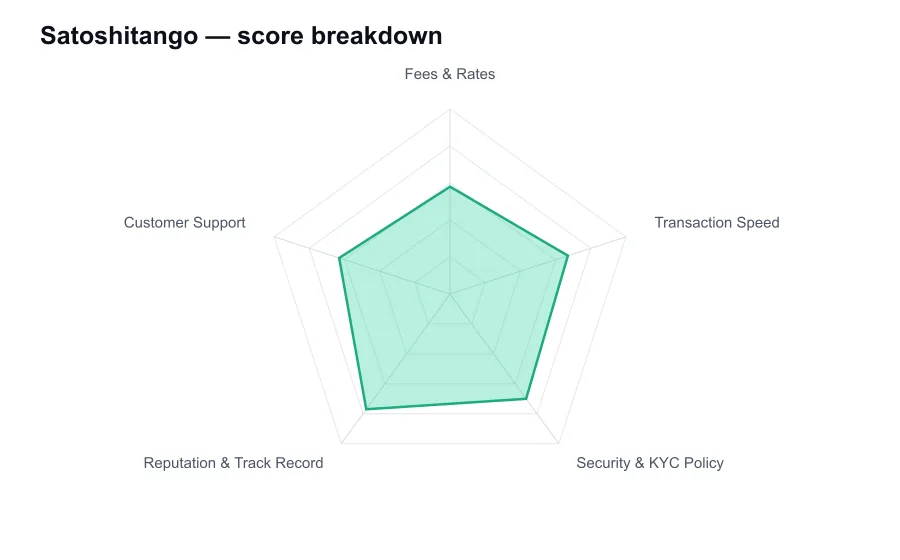
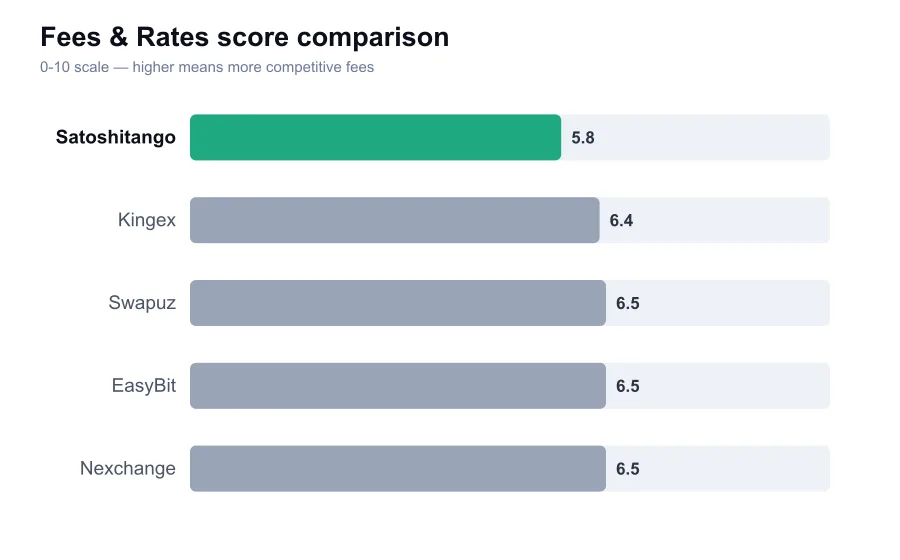
Fees are the biggest reason I would tell users to read every displayed quote before confirming. SatoshiTango's costs can vary by asset, payment method, country, and the type of transaction. Local bank transfers may be materially cheaper than cards or cash-style payment options. Crypto trading is often presented through a buy and sell price rather than a clean maker and taker table that a professional trader can model in advance. That is common among retail platforms, but it means the spread matters as much as any published transaction charge.
For a small purchase funded from a local account, the convenience can justify that cost. A user in Argentina or another supported market may value a familiar local transfer method far more than saving a fraction of a percent on an offshore venue. For larger purchases, the arithmetic changes. A spread that looks harmless on a modest USDT or Bitcoin order becomes expensive at scale, and users should compare the final number of coins received against Bitso, Ripio, Lemon, Buenbit, Binance, or a local broker available in their country. Do not assume the brand's local identity guarantees the best rate.
Trading speed is adequate rather than exceptional. The platform's internal purchase confirmation can be fast once funds are credited and the order is accepted. Crypto withdrawals then depend on the selected blockchain, its fee conditions, and the exchange's compliance checks. Bitcoin withdrawals are naturally less predictable than a stablecoin transfer on a lower-cost fast network. Fiat deposits can be the real bottleneck, particularly where local banks process transfers only during business hours or flag unusual activity. SatoshiTango cannot fully solve the banking systems around it.
There is a useful distinction between a simple retail app and a deep exchange order book. SatoshiTango leans toward the former. That makes the purchase flow approachable, but a sophisticated trader may miss advanced order controls, richer market depth, low-fee execution tiers, and the ability to work substantial size without worrying about a quoted spread. It is better thought of as an access platform and payments-adjacent crypto service. If your goal is to run systematic trades, arbitrage price differences, or move seven-figure liquidity, this is not where the platform is most convincing.
SatoshiTango operates as a custodial provider. That means the service holds assets on behalf of users until they withdraw them, which is convenient but materially different from holding keys in your own wallet. The platform uses ordinary account protections such as passwords, verification processes, and security controls expected of a centralized crypto business. Users should enable every available second factor, use a unique password, and set withdrawal safeguards where offered. None of this erases custodial risk. If a provider has access to your coins, its operational discipline and solvency matter.
KYC is part of the deal. This should not surprise anyone using local banking rails, cards, and regulated financial products, but it does rule SatoshiTango out for privacy-first users. Identity verification requirements can change by country, product, and transaction level, and a request for additional documents is possible. That can frustrate a customer who expected a quick purchase, especially during a volatile market, but it is the practical cost of operating in the regulated payments world. Anyone needing no-KYC swaps should use a different category of service entirely.
The company's regional reputation is one of its better assets. SatoshiTango has survived multiple crypto cycles and some difficult economic conditions in its home market. That gives it more credibility than an anonymous website with a flashy referral program. Still, the exchange does not have the global institutional reputation of Coinbase, Kraken, or Bitstamp, nor should customers treat its age as a reason to leave large idle balances on the platform. Crypto history has enough examples of established local businesses running into trouble to make that a poor habit anywhere.
Its product range can be a benefit or a source of confusion. Crypto cards and payment features make the brand feel more practical than a basic spot exchange, particularly for people who want to spend rather than merely hold. Yet card availability, fees, limits, and merchant acceptance can vary by jurisdiction. A card program should be evaluated separately from buying crypto. Users should check whether conversion occurs at the moment of spending, what foreign exchange costs apply, and whether the card is issued directly by SatoshiTango or through a regulated partner.
Support is likely to feel better for Spanish-speaking regional users than for somebody arriving from outside Latin America. The company offers help materials and customer channels, but response times can depend heavily on verification queues, banking issues, and market demand. The difficult cases are rarely about tapping the buy button. They involve a delayed deposit, a name mismatch on a transfer, a blocked withdrawal, or a document review. Those situations need clear communication, and customer reports across the industry show that centralized exchange support is often tested precisely when customers are most anxious.
There is also a common retail-exchange trap here: treating the app balance like a long-term vault. SatoshiTango can be a practical place to convert local money into Bitcoin, USDT, or another asset, but it is not a substitute for understanding self-custody. If you are buying a meaningful long-term position, plan the withdrawal path before you make the purchase. Confirm network compatibility, test a small transfer, and use a hardware wallet where the amount justifies it. That approach protects users from both platform risk and costly network-selection errors.
I would not dismiss SatoshiTango because it is not the cheapest exchange on a spreadsheet. In its intended markets, access and reliable local payment handling have genuine value. The criticism is that its pricing transparency needs careful user attention, and advanced traders can find better execution elsewhere. It occupies a sensible middle ground for a regional retail customer, especially one who wants fiat on and off ramps plus a recognizable local brand. It is much less compelling as a universal exchange for every type of crypto user.
My take is that SatoshiTango earns respect for surviving and serving a difficult region, but it should be used deliberately. Use it for local access, routine conversions, and payment-oriented functions if the displayed quote is competitive. Do not use convenience as an excuse to ignore spreads, KYC obligations, or custody risk. The platform is best at making crypto practical for Latin American retail users. It is not designed to win a fee war against major global trading venues, and users who need professional market tools should not expect it to.