Maple is not a conventional retail crypto exchange, and treating it like one creates the wrong expectations from the start. Maple Finance is a decentralized credit marketplace built around institutional and professional lending, onchain collateral, and yield-bearing lending pools. It occupies a far more specialized corner of crypto than Coinbase or Kraken. The core question is not whether you can quickly swap one token for another, but whether you understand the credit, smart-contract, liquidity, and counterparty risks behind onchain lending.
The protocol became prominent during the boom in crypto institutional credit, when delegates or pool managers assessed borrowers and arranged undercollateralized loans. That model generated attractive yields while markets were calm. It also revealed exactly why credit is harder than automated swapping. The failures of several centralized crypto firms in 2022 exposed losses and default risk across the sector, including loans associated with Maple pools. That history should frame every promise of yield.
Maple has since evolved its approach and emphasized more structured products, secured lending, and institutional capital. Its syrupUSDC product and related lending arrangements are intended to give users access to yield generated through Maple's credit infrastructure. The direction is more conservative than the earlier era of broad undercollateralized crypto lending, but conservative is relative. A tokenized credit product remains fundamentally different from holding USDC in self-custody or earning a clearly disclosed bank deposit rate.
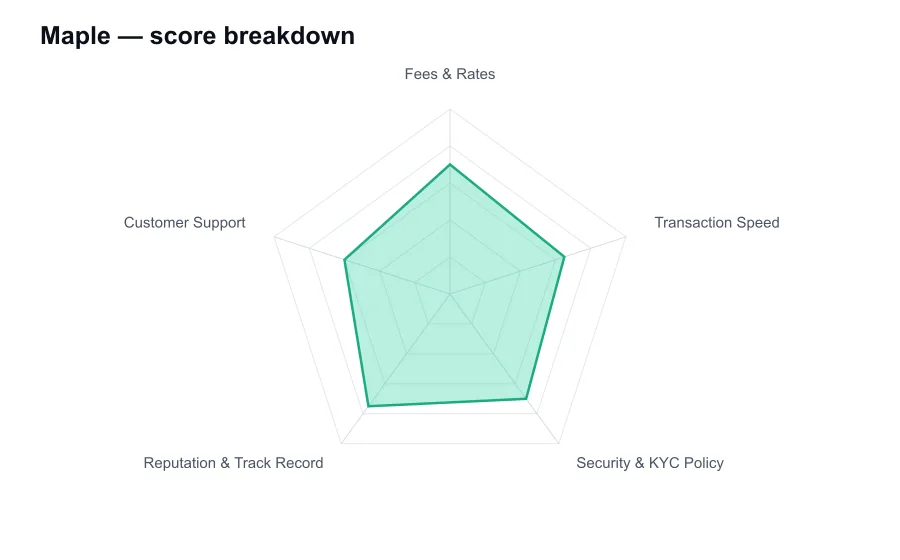
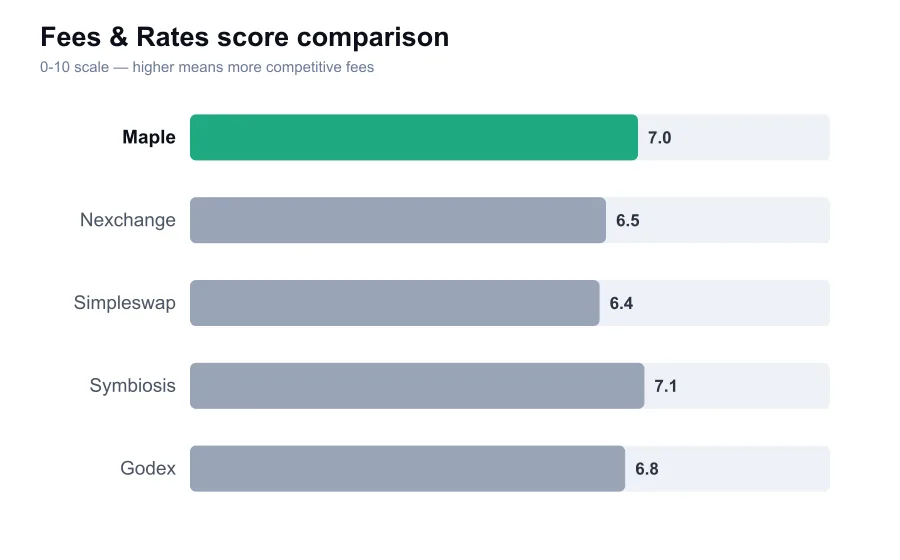
Fees are not best understood as a single trading commission. A lender's actual return is shaped by borrower interest, pool management fees, protocol fees where applicable, reserve mechanics, incentive arrangements, and the price paid for entry or exit liquidity. Rates displayed in a front end are annualized estimates, not a guaranteed fixed outcome. Serious users should inspect the particular pool documentation rather than assuming every Maple-branded product has the same economics.
This can be efficient for the right participant. Onchain lending structures can reduce administrative overhead and provide a transparent view of assets, pool utilization, and smart-contract activity. But a high headline yield is never free money. It compensates lenders for some combination of duration risk, liquidity constraints, borrower exposure, operational risk, and smart-contract risk. Anyone comparing Maple's yield with a savings account is making a category error.
Transaction speed is largely determined by the blockchain and the product's liquidity mechanics. Depositing USDC or interacting with a pool on supported networks can settle within minutes once a transaction is confirmed. That is technically fast. Redeeming money from a lending position is a separate matter. If funds are committed to a term loan or a pool has withdrawal rules, users may not have instant access to capital simply because the interface is onchain.
This distinction catches casual users. A wallet transaction can confirm quickly while the economic exit takes longer, especially if capital is deployed and withdrawals depend on available liquidity or scheduled settlement. Maple is therefore unsuitable for money you may need urgently. A user building a treasury allocation may accept that structure. A person trying to park emergency cash should not.
Security is one of Maple's stronger areas relative to obscure DeFi projects, because it has operated publicly through multiple market cycles, publishes documentation, and has a recognizable protocol identity. It has also used audits and engaged with security practices expected of a mature DeFi protocol. None of that eliminates risk. Audits reduce some implementation risk, but they do not insure lenders against a borrower default, oracle problem, governance failure, or a flaw that nobody found.
There is another security question that gets less attention than code. Maple's products involve real-world credit judgment, underwriting processes, delegates, counterparties, and legal structures. That is not inherently bad, it is actually central to what makes credit possible. It does mean users must evaluate people and entities as well as contracts. DeFi branding should not make anyone forget that lending is only as sound as the borrower and the enforcement arrangements.
KYC is product and jurisdiction dependent. Direct use of many public DeFi interfaces may not resemble opening an account at a centralized exchange, yet institutional products, permissioned pools, counterparties, and certain access routes can involve eligibility checks and compliance screening. Users should not assume anonymity or universal availability. Read the pool terms, verify your jurisdiction, and understand whether a wallet interaction gives you exposure to a permissioned or restricted product.
Maple's reputation is mixed but meaningful. It has genuine name recognition in institutional DeFi and survived a period that destroyed many weaker yield platforms. Survival deserves credit, but it is not an acquittal of the sector's earlier mistakes. The protocol's historical exposure to defaults is not a footnote. It is evidence that high-yield private credit can turn ugly when collateral quality, borrower solvency, or market liquidity deteriorate.
Support is more like protocol and documentation support than retail banking service. Users can find docs, community channels, and public announcements, but they should not expect a concierge to reverse a wallet error or rescue funds sent to the wrong address. That is standard in DeFi. It is still a hard lesson for anyone arriving from a centralized platform with account recovery, card support, and live agents.
Maple makes most sense for sophisticated stablecoin holders, crypto treasuries, and DeFi users who can read pool terms and size risk rationally. It can be a useful diversification tool, not a cash substitute. The appropriate allocation is one that acknowledges potential loss, delayed redemption, and changing rates. Anyone unable to explain where the yield originates should stay away.
My take is that Maple is one of the more serious names in onchain credit, but seriousness does not make it simple or safe in the everyday sense. The protocol has learned through a brutal market cycle, and its current direction is more disciplined than its early reputation suggests. Still, it belongs in the toolkit of informed risk-takers, not in a beginner's default portfolio. Treat the yield as compensation for real credit risk, because that is precisely what it is.