Tiendacrypto occupies a very different corner of crypto from global exchanges and decentralized protocols. It is a retail-facing crypto service aimed primarily at users who want a familiar local purchasing experience, commonly involving bank transfers, local currency, and direct assistance rather than order books and advanced trading tools. That positioning matters. Its appeal is accessibility, not the kind of global liquidity or razor-thin spreads available on Binance, Kraken, or Coinbase Advanced.
For a local buyer, the attraction is obvious. A service that understands domestic payment rails, local banking habits, and the questions people ask before a first purchase can be more useful than a giant exchange with a polished app but poor regional support. Tiendacrypto’s value proposition is built around reducing that friction. It is closer to a broker or dealer experience than a venue for active traders.
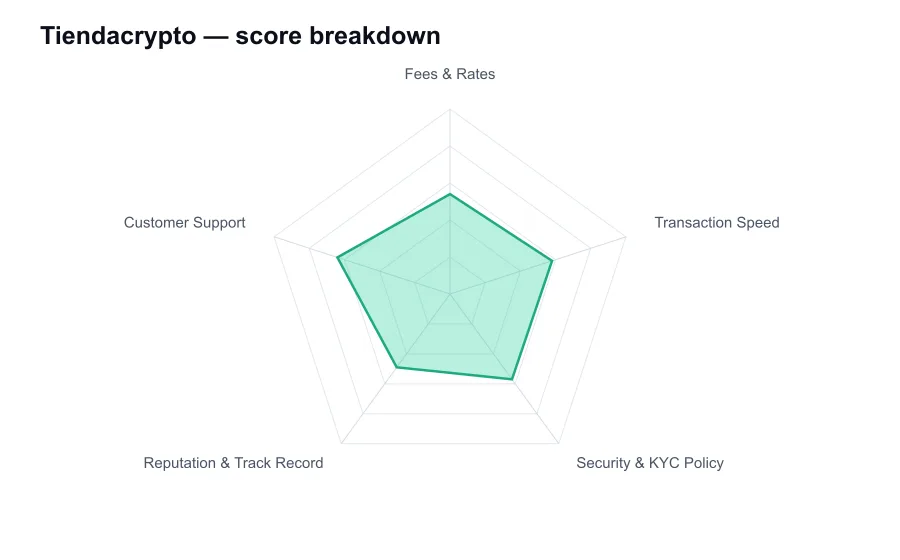
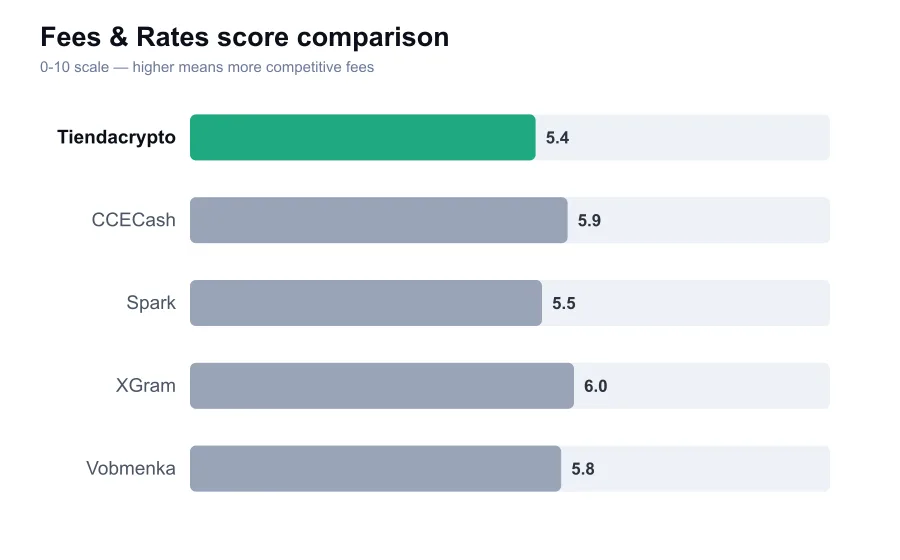
That also means buyers need to judge it like a broker. The number that matters is not merely an advertised commission, if there is one, but the final amount of crypto delivered for the money sent. Smaller regional providers often incorporate their economics in the spread between the market price and the buy or sell quote. This is common practice, but it makes comparison work essential. A simple quote can still be expensive.
Tiendacrypto is unlikely to be the right choice for someone who trades frequently or moves large volume. An active trader can usually do better by using a liquid exchange, placing limit orders, and accepting the extra work of deposits, withdrawals, and market mechanics. The customer who benefits here is the person making an occasional purchase and valuing a straightforward payment process more than a fractional percentage point.
Price transparency is the issue I would press hardest. Before sending money, check the quoted crypto amount against a liquid reference market and include any bank charge, withdrawal fee, or network fee. If the service offers a fixed quote for a short payment window, that can be helpful in a volatile market. If it only gives a broad estimate and settles later, the buyer carries more uncertainty than many realize.
Speed depends heavily on the payment method and the verification stage. A crypto transfer itself may appear on-chain quickly, but that is not the full experience if a bank payment needs to clear or a compliance check holds the order. During normal banking hours, local transfer systems can be efficient. Outside those hours, holidays, mismatched payer details, and manual review can all turn a supposedly instant buy into a wait.
That is not a unique weakness. Fiat-to-crypto services have to reconcile bank payments and comply with financial controls. The difference is that larger exchanges usually have more automation, more status information, and a deeper operational team. A smaller provider may offer a more personal response, but personal is not always fast. If timing matters, users should ask whether an order is locked at payment initiation or only after funds have been verified.
KYC should be expected here rather than treated as an unpleasant surprise. A provider handling fiat payments and converting them into cryptocurrency generally needs customer identity checks, transaction monitoring, and source-of-funds questions in some circumstances. That makes Tiendacrypto a poor fit for privacy-first users. It may be a sensible fit for customers who prefer a service operating within ordinary financial compliance rather than an anonymous offshore site.
The security conversation needs realism. Identity verification can reduce certain fraud and compliance risks, but it does not automatically make customer funds safer. Users should still confirm where assets are held, whether the platform encourages immediate withdrawal to a personal wallet, how account access is protected, and how payment instructions are delivered. A legitimate support chat is not a substitute for two-factor authentication and careful verification of bank details.
I would be particularly cautious about leaving a long-term balance with any small broker-style operation. That is not a specific accusation against Tiendacrypto. It is basic custody discipline. If the purpose is to purchase Bitcoin, USDT, or another asset, take delivery to a wallet you control once the transaction is complete, provided the withdrawal fee is reasonable. Keeping only a working balance limits the damage if an account issue occurs.
Its reputation is naturally more local and less independently documented than that of major international exchanges. That does not mean it is untrustworthy. It means a prospective user should do the unglamorous checks: confirm the official domain through established social channels, review company and legal information, read recent local feedback, and make a small initial transaction. A well-designed website alone tells you very little in this industry.
Customer support is likely one of the reasons someone would choose Tiendacrypto in the first place. Local-language assistance and familiarity with domestic payment issues can beat a global exchange’s generic ticket system. The limitation is scale. A small team can be attentive on an ordinary day and overwhelmed when banking rails fail, the market surges, or verification volume spikes. Ask how support is reached and what response window is realistically offered.
Compared with a peer-to-peer marketplace, Tiendacrypto can remove the stress of negotiating with an individual counterparty. Compared with a large regulated exchange, it may remove some onboarding complexity for local users. But it gives up liquidity, broad product selection, and the reassurance that comes from long public operating histories. That trade is reasonable for a modest purchase. It deserves more skepticism as the transaction size rises.
My take is that Tiendacrypto makes the most sense as a local access point, not as a complete crypto home. Use it if its supported payment methods, local service, and final quote are genuinely convenient for you. Do a small test first, save the payment and transaction records, and withdraw to your own wallet after settlement. People seeking deep markets, sophisticated trading, strong public proof of reserves, or privacy without identity checks should choose another route.