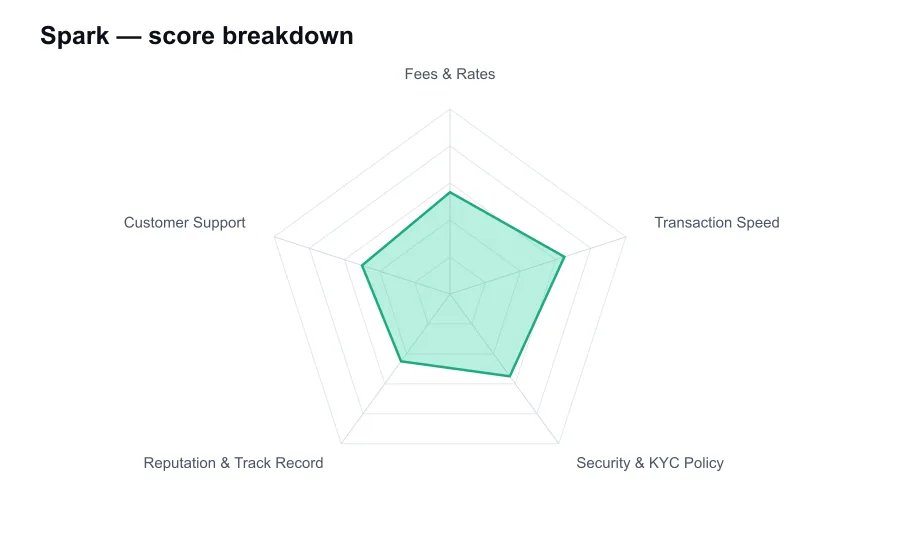
Spark is one of the less transparent names in the instant-swap market. The brand is positioned around quick crypto conversions without the account-heavy experience of a conventional exchange, but it does not have the public profile, long operating history, or easily verifiable corporate footprint of providers such as Changelly, ChangeNOW, or StealthEX. That immediately affects how I would use it. It may be convenient for a small conversion, but it is not where I would send a life-changing amount of Bitcoin.
The main appeal is simplicity. A user selects the asset being sent, chooses the receiving asset and wallet address, then receives a deposit address. There is little to learn and no trading screen to decipher. That is useful for somebody who holds coins in self-custody and wants a one-off swap, rather than a person looking for charts, order books, staking, or a place to keep funds.
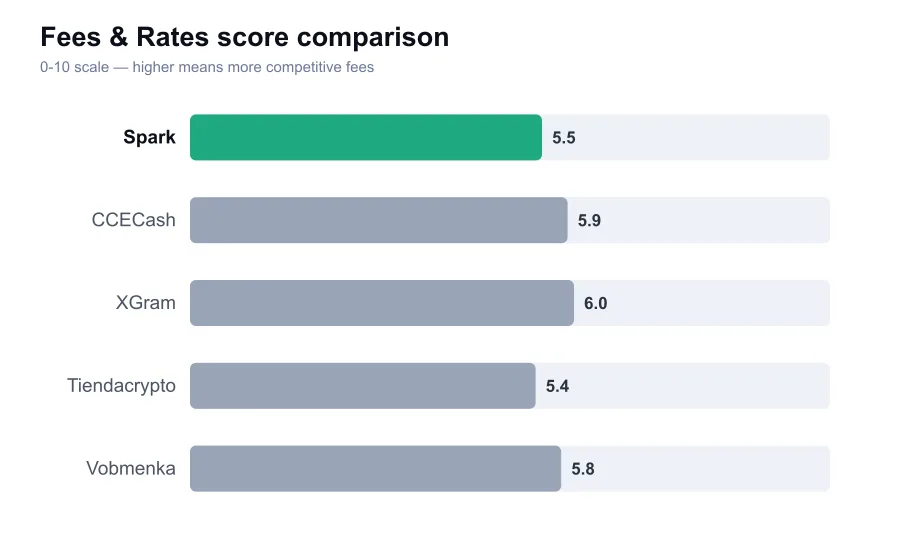
Spark's fee presentation is the area that deserves the closest scrutiny. Instant exchanges often advertise an attractive rate before the order is created, while the effective cost is built from the provider's margin, network fees, and the liquidity partner's spread. A quote can still be reasonable, but users should compare the final amount received with at least one established competitor before paying. A small percentage difference matters more than people think on a four-figure swap.
There is a meaningful distinction between a visible service fee and an opaque exchange rate. A platform can claim low fees while giving a weaker rate than a competitor that openly charges a fixed percentage. With Spark, I would judge the service by the amount shown in the receive field, not by promotional language about fees. Take a screenshot of the quote, check the minimum and maximum limits, and make sure the receiving amount has not changed before confirming.
Fixed-rate swaps are especially important during volatile markets. If Spark offers a locked quote for a specific pair, that can be preferable for someone swapping BTC into a stablecoin during a sharp move. Floating-rate conversions can be cheaper in quiet conditions, but they leave the customer exposed if Bitcoin or the asset being sold moves while network confirmations are pending. The practical question is not whether fixed rates are better, it is whether the premium is justified for that particular trade.
Speed depends heavily on the asset and the underlying liquidity route. A USDT swap on a fast network can settle in minutes. Bitcoin, Ethereum, and tokens on congested chains can take much longer because the provider usually waits for confirmations before buying or releasing the outgoing asset. Any service promising instant settlement should be read as describing its internal processing, not a guarantee that a blockchain transaction will complete instantly.
For small swaps, Spark's streamlined flow can feel quick. The risk appears when an order needs manual review, a network fee has been set too low, or the provider has to source liquidity from a partner. In those cases, the lack of a widely documented operating record matters. A mature service normally has extensive public help material explaining confirmation requirements, refund handling, and delayed orders. Users should not assume a swap is lost simply because it takes longer than the estimate, but they should expect clear status updates.
Security is another reason to keep transactions modest until trust has been earned. A noncustodial instant exchange does not hold a standing account balance in the way a centralized exchange does, which reduces one category of risk. It does not remove counterparty risk. Once coins are sent to a swap address, the customer is relying on the operator and its liquidity partners to complete the trade or return funds if something breaks.
No-account access is convenient, and many users prefer not to hand over identity documents for a routine crypto conversion. Yet no-KYC marketing should never be confused with a promise that identity checks will never happen. Providers can screen transactions, apply sanctions controls, or ask for verification if a transaction is flagged by a compliance partner. If Spark requests documents after receiving funds, the experience can become significantly less private and less predictable than the initial checkout suggested.
The sensible security routine is dull but effective. Use a self-custody wallet, verify every address character by character, test an unfamiliar provider with a small amount, and avoid sending from an exchange account that may reject or delay a deposit. Save the order ID, transaction hash, quote, and support correspondence. Those records are what support staff need if a transaction becomes stuck.
Spark has a reputation problem in the literal sense that it has a smaller public evidence base than the better-known instant exchange brands. That does not prove misconduct. It does mean there are fewer independent reviews, fewer long-running discussions, and less historical data about how difficult cases are resolved. Reputation in this sector is earned through years of visible, consistent handling of delays and refunds, not through a clean landing page.
Customer support is therefore a deciding factor. Before using Spark for a substantial amount, I would test whether the support channel is responsive with a straightforward question about a pair, confirmation count, or refund policy. Fast live chat is useful, but a written ticket trail is better if money is in transit. A provider should be able to explain what happens if the receiving wallet is wrong, if a deposit arrives below the minimum, or if a selected asset's network is suspended.
Spark may suit someone who values a stripped-down conversion flow and is prepared to verify the quote independently. It is not the natural choice for a newcomer who needs extensive guidance, nor for a trader who wants deep liquidity and a battle-tested dispute process. Those users are generally better served by a regulated exchange for fiat activity or a long-established instant-swap provider for wallet-to-wallet conversions.
My view is cautious rather than hostile. Spark can be useful if its live quote beats alternatives and the transaction is small enough that an unexpected delay would not be damaging. The service needs a stronger public track record, clearer fee disclosure, and more visible evidence of support performance before it belongs in the same trust tier as the sector's established names. Treat it as a convenience tool, not a vault or a default venue for large transfers.