CCECash is a small crypto exchange service built around direct conversions rather than a traditional trading venue. It is the sort of platform people find while looking for a specific route, often a stablecoin, Bitcoin, or altcoin swap that is not convenient on their usual exchange. That makes it potentially useful, but it also means the platform needs to earn trust transaction by transaction. It does not have the broad public standing that lets users assume its systems have been battle-tested at scale.
The basic appeal is obvious. An instant exchanger removes a lot of ceremony. You do not need to study order books, move funds through several trading pairs, or leave a balance sitting in an account for weeks. For a self-custody user, that is a legitimate advantage. You create an order, provide a destination address, send the deposit, and wait for the output. The experience can be cleaner than using a large exchange, provided every detail is entered correctly.
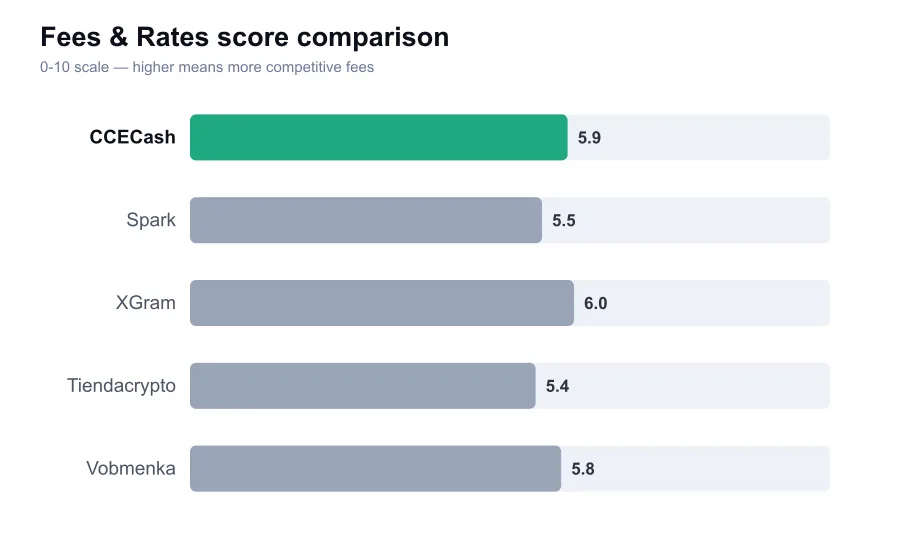
CCECash's pricing needs to be evaluated through the final receive amount. I would not place much weight on a claimed low fee unless the service shows exactly how that fee relates to its rate. A narrow advertised commission can coexist with a wide spread. This is not unique to CCECash. It is a structural issue with instant exchange services that source liquidity through partners or manage their own reserves. The number that matters is what arrives in your wallet after all deductions.
For common crypto pairs, CCECash may offer acceptable value if the market is calm and the order size is modest. It becomes less convincing as the trade size rises. A few percentage points hidden in the quote may not bother someone converting the equivalent of $50. On a four-figure transfer, that same spread can easily cost more than the convenience is worth. Anyone exchanging a meaningful amount should compare at least three live quotes, including a major centralized exchange after withdrawal fees.
Network choice has an outsized effect on costs. USDT can exist on multiple chains, and the cheapest route is not always the safest route for your destination wallet. Choosing TRON or another low-fee chain may reduce transfer expense, but only if the recipient supports it. CCECash cannot protect a user from selecting an incompatible network. The order screen should be treated as a final checklist, not a screen to rush through because the quote timer is running.
In normal conditions, CCECash can complete straightforward swaps at a respectable pace. The service's own processing is only part of the equation, though. Bitcoin confirmation policies, Ethereum gas conditions, and the receiving network all influence the real time to completion. Users often blame an exchanger for a delay that began with an underpriced transaction fee in their own wallet. The fair expectation is not instant delivery. It is prompt processing once the deposit is properly confirmed.
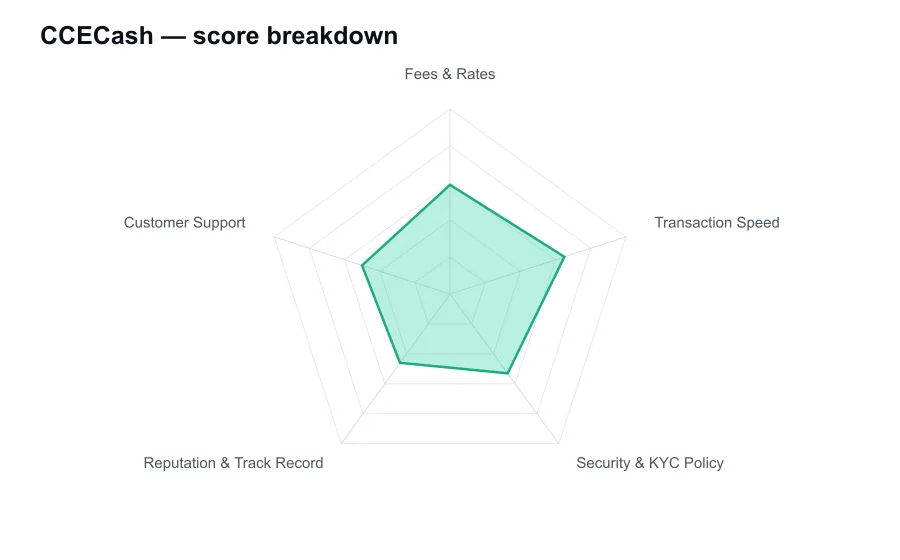
What concerns me more is the lack of extensive public evidence about how the platform handles irregular orders. Every exchanger looks efficient when a customer sends the exact amount on the expected network. The more important questions are what happens after an underpayment, a flagged transaction, or a payout that cannot be broadcast promptly. CCECash does not have the level of independently visible operational history that makes those answers obvious. That lowers its score more than its basic interface does.
Security starts with minimizing exposure. CCECash's direct-exchange model is preferable to leaving a long-term portfolio on an unknown custodial site, because the intended flow is deposit in and payout out. Still, the funds are in the service's hands during the exchange. Users should not mistake short custody for no custody. A technical incident, a compliance hold, or an internal liquidity issue can still affect money already sent.
The KYC question needs a similarly unsentimental reading. Many instant exchangers advertise a simple or registration-light process. That does not mean the service has waived anti-money-laundering procedures in every circumstance. Transaction-monitoring tools can flag a transfer, and providers may ask for identity or source-of-funds information. This possibility is especially important for users moving coins from wallets with a complicated transaction history. If documents would be impossible to provide, do not assume the order can never be paused.
A responsible service should spell out what happens after a compliance request, including what documents are accepted, how long review normally takes, and how a customer can appeal. Publicly accessible explanations of those details are more reassuring than broad promises about safety. CCECash would be stronger if it made that process exceptionally clear. In a market where customers are often afraid of frozen funds, vagueness is not a minor communications flaw. It directly affects whether people can judge the risk.
The reputation case for CCECash is cautious rather than condemning. It is not a household name among crypto exchanges, and it does not have the decades of market survival that help separate durable businesses from short-lived sites. The absence of widespread recognition is not proof of poor conduct. It simply means user diligence has to do more work. Look for recent, detailed third-party feedback and see whether staff responses address facts rather than posting boilerplate.
Support is likely to be the deciding factor if anything goes wrong. A small exchanger does not need a call center to be useful, but it does need fast, intelligible communication. Good support gives a transaction hash, explains confirmation requirements, and says plainly whether an order is waiting on a blockchain, a liquidity partner, or a compliance review. Bad support repeatedly says that a request is being processed. Before using CCECash, check whether current contact channels are active and responsive.
There is a sensible way to use a service like this. Begin with a low-value conversion on a network you understand. Record the order number and transaction hash. Verify the destination address independently, not from a copied chat message. Then assess the actual execution: did the output match the quoted terms reasonably, did it arrive promptly after confirmation, and did support answer a basic question coherently? That first order tells you more than promotional copy ever will.
CCECash is best treated as a convenience provider with a limited trust budget. It may have a place for routine, small wallet swaps where its final quote is attractive. I would not choose it for life-changing money, a payment that cannot be late, or any transfer where a compliance interruption would create serious trouble. The exchange model is useful, but this brand has not established enough public authority to make caution unnecessary. Use it selectively, keep custody in your own wallet, and compare every quote.