1inch is not an exchange in the traditional Coinbase or Kraken sense. It is a decentralized finance aggregation protocol and interface that searches participating decentralized exchanges and liquidity sources for a swap route. That difference defines both its strengths and its frustrations. You keep control of a connected wallet, there is no central order-entry account to fund, and execution happens through smart contracts. In return, you take responsibility for wallet security, network fees, token approvals, and transaction finality.
The project is one of the best-known names in DeFi. Its aggregation model developed from Ethereum's fragmented liquidity problem, where a single Uniswap pool might not offer the best price for a trade. 1inch can split an order across multiple sources and routes, seeking a better effective outcome. For active onchain users, that is a genuinely useful service. It is less a place to park money than a tool for making a transaction already intended to happen.
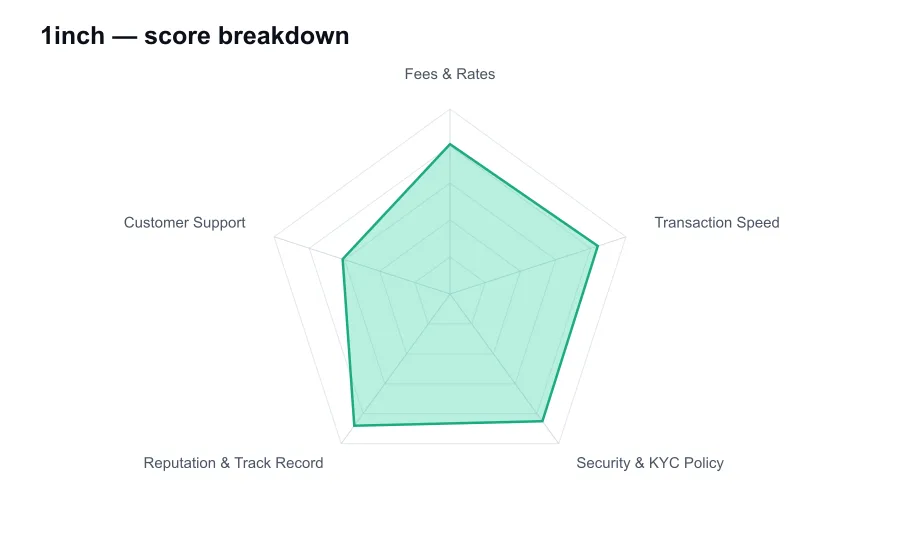
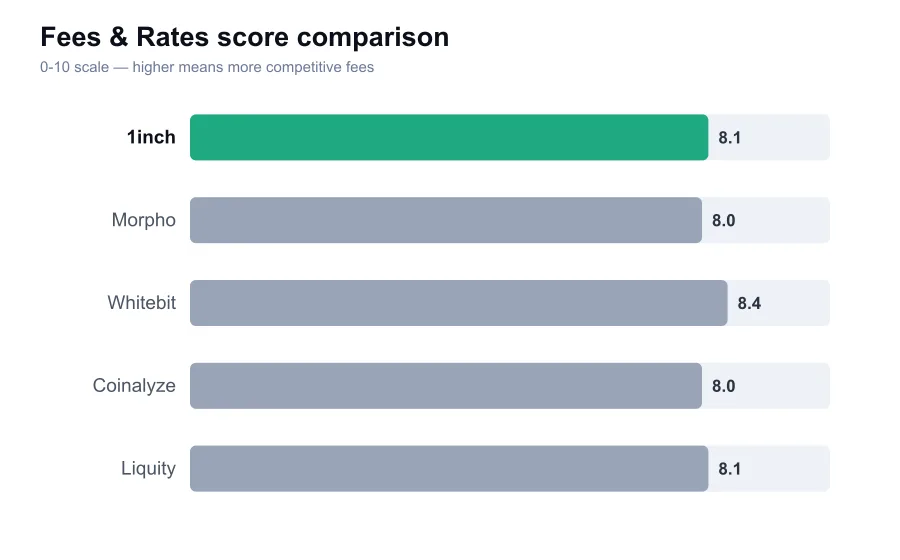
Fees need a more careful explanation than the usual claim that 1inch has no fee. The protocol interface may not charge a simple retail trading commission on many standard swaps, but nobody trades for free. You pay the liquidity-provider fees embedded in pools, blockchain gas, price impact, and sometimes an integrator fee if you use a third-party front end. The displayed expected output is the number to focus on, not a headline about zero commission.
On Ethereum mainnet, gas can dominate a small trade. A $50 token swap may be economically ridiculous if the transaction costs $15 or $30 to execute. That is not specifically a 1inch failure, but a good aggregator should not be judged without considering the chain it is being used on. Networks and layer 2 environments with lower gas costs can make 1inch far more practical for regular swaps. For large Ethereum trades, routing quality matters more and its optimization has real value.
The interface shows route details and expected output, which is better than asking customers to trust a black box. Still, users need to understand slippage settings. Set slippage too low and a changing market can cause the transaction to revert, after gas has already been spent. Set it too high and a volatile or thin pool can execute at a disappointing price. Default settings are not a substitute for judgment, especially with microcap tokens or during a market panic.
Speed is governed by the chain, not by a customer-service queue. Once a swap transaction is signed and broadcast, it will generally settle as soon as validators include it and the chain reaches the user's preferred confirmation level. On fast, inexpensive networks that can feel nearly immediate. On Ethereum during demand spikes, the wait and fee can become unpleasant. The advantage is that execution is visible onchain, rather than disappearing into an opaque exchange processing status.
1inch's limit order capability changes the speed calculation for certain traders. A limit order is not necessarily filled the moment it is created, because it needs a counterparty or resolver willing to execute it under the order's conditions. That is exactly how it should work. It can save gas by avoiding an immediate onchain trade, but it should not be confused with a guaranteed fill. A thin token pair can sit unfilled indefinitely even if the interface makes order creation look effortless.
Security is strong at the protocol-design level, but DeFi security has sharp edges. 1inch's smart contracts, audits, bug bounty efforts, and public code base give it a far stronger security posture than an anonymous instant-swap site. The team has built a long-running protocol rather than a disposable landing page. Yet audited does not mean invulnerable, and every interaction involves smart contract risk, oracle or routing assumptions, wallet compromise risk, and potentially dangerous token approvals.
The biggest practical threat is often not the 1inch protocol itself. It is phishing. Fake token sites, malicious browser extensions, deceptive transaction prompts, and counterfeit domain names can trick even seasoned users. Use the official bookmarked domain, inspect the wallet prompt, and be skeptical of approval requests granting unlimited spending permissions. A hardware wallet helps, though it will not protect a user who knowingly signs a malicious approval without reading it.
1inch is noncustodial in the ordinary swap flow. It does not ask a regular user to deposit assets into a centrally controlled exchange balance before trading, and it generally does not impose mandatory KYC for access to the core protocol. That is excellent for privacy-conscious DeFi users. It also means there is no conventional help desk that can reverse a transaction, recover a seed phrase, or cancel a completed swap. Self-custody is freedom paired with a much higher standard of personal care.
Its reputation is substantially better than most retail swap aggregators because it has existed through several market cycles, attracted meaningful developer attention, and become embedded in the DeFi ecosystem. The brand is not beyond criticism. Token governance, regional interface restrictions, MEV concerns, and the complexity of DeFi routing all invite debate. Still, 1inch has a visible operating history, recognizable integrations, and technical documentation that can be examined rather than merely advertised.
Support is where newcomers sometimes feel abandoned. Documentation, community channels, transaction explorers, and wallet diagnostics are useful, but they are not the same as calling a broker after an execution problem. If your transaction was confirmed onchain, support cannot simply undo it. If you sent funds to the wrong address, there is almost never a recovery path. Users who expect bank-style intervention will find the decentralized model unforgiving.
For the right person, 1inch is one of the most capable places to source an onchain swap. It is particularly effective for someone already comfortable with MetaMask, Rabby, hardware wallets, and block explorers. Compare the output with Uniswap or another aggregator for larger orders, because routing conditions change constantly. The protocol is an execution tool, and good users treat it that way, checking the route, gas, price impact, and approval before signing.
I rate 1inch highly, but not as a beginner's first crypto purchase platform. It earns its reputation through liquidity aggregation, noncustodial architecture, and transparent onchain execution. Its costs can be excellent or terrible depending on network conditions, and its support cannot repair user mistakes. For experienced DeFi participants, those are manageable trade-offs. For someone who wants simple fiat deposits, predictable customer assistance, and an institution to call, a regulated centralized exchange is the better starting point.