Liquity is not an instant exchange in the usual retail sense. It is a decentralized borrowing protocol built around ETH collateral and its dollar-pegged stablecoin, LUSD. Treating it like Kingex or LetsExchange would miss the point. Liquity is for users who want to borrow against ETH without selling it, or who want to use a protocol-native stablecoin system. It is closer to Maker and other DeFi lending markets than to a swap desk.
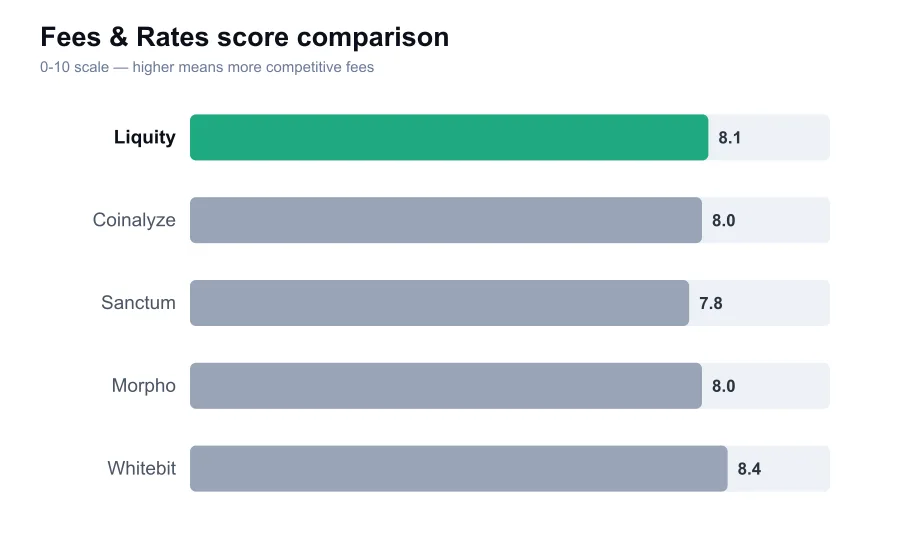
The original Liquity protocol became popular because it stripped borrowing down to a few hard rules. Users deposit ETH, mint LUSD, and must maintain a minimum collateral ratio of 110 percent. There are no recurring interest payments on the classic model. Instead, borrowers pay a one-time borrowing fee that changes according to demand, plus gas costs and a small LUSD liquidation reserve. That structure remains unusually clear compared with variable-rate lending products.
The absence of ongoing interest is Liquity's sharpest advantage. Someone who wants liquidity against ETH for months may find a one-off borrowing fee far easier to reason about than a debt position with a variable annual rate. There is no free lunch, though. A low stated interest rate elsewhere can be cheaper for a short loan, while Liquity's borrowing fee can rise as redemption activity and system demand change. Read the live protocol terms before opening a position.
Users should also separate Liquity's borrowing economics from the cost of acquiring or selling LUSD. Swapping ETH for LUSD on a decentralized exchange involves liquidity-provider fees, price impact, and gas. Borrowing LUSD directly avoids selling ETH, but it creates liquidation risk. The protocol is efficient only if you understand the distinction. A stablecoin that costs no monthly interest to mint can still become expensive if an aggressive collateral position gets liquidated.
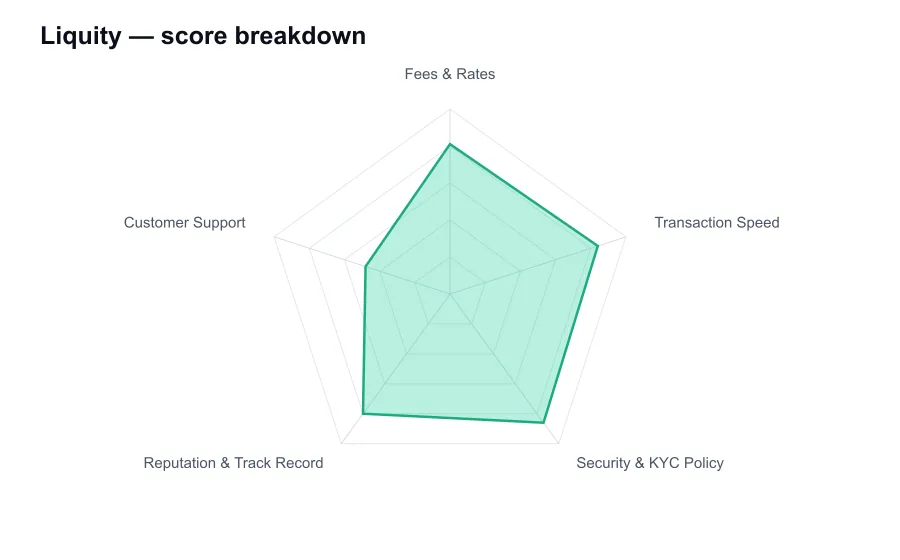
Speed is excellent at the protocol layer because transactions settle as soon as the underlying blockchain confirms them. There is no support agent, market maker, or internal review queue sitting between the user and the action. On Ethereum, that can mean minutes, but it can also mean expensive gas during busy periods. Liquity's speed is therefore blockchain speed, not the slick, predictable turnaround a centralized app might advertise.
The same directness applies to liquidations. If a user's collateral ratio falls below the protocol minimum, the position can be liquidated by the system. There is no grace period and no human discretion. That is a feature, not a bug, from a protocol integrity perspective. For a borrower, though, it is brutal if they have treated 110 percent as a target rather than an emergency floor. Sensible users maintain a much higher buffer.
A borrower with a 150 percent collateral ratio may feel comfortable in a stable market, but ETH does not stay stable simply because a dashboard looks calm. A severe intraday drop can erase a thin safety margin quickly. Liquity works best for people who monitor collateral, understand liquidation math, and have a plan to add ETH or repay LUSD. It is a poor choice for anyone who wants a loan they can ignore.
Security is where Liquity deserves respect, with an important qualification. The original protocol was designed to be immutable and was extensively audited, reducing governance and upgrade risk compared with endlessly adjustable DeFi systems. Its code-led approach has been one of its defining strengths. Yet smart contract risk never becomes zero, oracle dependencies remain important, and users still face wallet security, phishing, interface, and transaction-signing risks outside the core contracts.
Liquity does not require KYC because it is a permissionless DeFi protocol. There is no account application, identity review, or customer-service approval to mint LUSD from a compatible wallet. That is a major attraction for crypto-native users. It also means there is no customer support department that can reverse an error, restore a compromised wallet, or negotiate a liquidation. Self-custody is freedom with consequences.
LUSD has historically distinguished itself through its ETH-backed structure and redemption mechanism. Redemptions can help pull the token back toward its dollar target if it trades below one dollar, although the mechanism affects the least-collateralized borrowing positions. A user should not look at a stablecoin's peg alone. They should understand how that peg is defended and who bears the cost. In Liquity's case, borrowers near the bottom of the collateral queue bear meaningful exposure.
The protocol's reputation is strong inside DeFi circles. It has survived difficult market conditions and has attracted users who value minimized governance and clear mechanics. That said, LUSD is not as universally accepted as USDC, USDT, or DAI. Liquidity and integrations have improved over time, but a borrower still needs an exit plan. Before minting LUSD, check whether the applications and exchanges you actually use support it efficiently.
Support is intentionally limited because Liquity is not a company-operated customer account service. Documentation, community channels, interface guidance, and developer resources can help users understand the protocol. They cannot rescue a bad signature or unwind a liquidation. This is a real weakness for beginners, not merely a philosophical trade-off. The user experience may look simple, but the financial responsibility is closer to operating a small piece of personal infrastructure.
Liquity is not suitable for a casual user who simply wants to convert BTC into USDT. It is for ETH holders who have a clear reason to retain ETH exposure while accessing dollar liquidity. It can also suit DeFi users who want to understand collateralized borrowing rather than relying on a centralized lender. If your primary need is a stablecoin purchase, a normal exchange or decentralized swap may be much simpler.
My view is that Liquity is one of the cleaner and more intellectually honest DeFi borrowing designs, but it punishes shallow understanding. The one-time fee model and immutable architecture are serious strengths. The liquidation risk, Ethereum gas costs, and limited hand-holding are equally real. Used conservatively, with a healthy collateral buffer, it can be an excellent tool. Used at the minimum ratio during a volatile market, it becomes a fast route to losing ETH.