Morpho is not a conventional crypto exchange, and treating it like one leads to bad decisions. It is a decentralized lending protocol and infrastructure layer, best known for enabling permissionless lending and borrowing markets on Ethereum-compatible networks. Users do not arrive to swap coins at a fixed quote or deposit cash. They supply collateral, lend assets, borrow against collateral, or interact with applications built on Morpho's contracts.
That distinction matters because Morpho's strengths are unusually strong for DeFi, while its risks are very different from those of Coinbase or Kraken. The protocol is designed around on-chain transparency and user-controlled wallet access. There is no ordinary customer account, no password reset desk, and no company that can reverse a careless transaction. Sophisticated users get meaningful control. Unprepared users get very little protection from themselves.
Morpho began by optimizing lending around existing liquidity venues, then expanded into Morpho Blue, a permissionless framework where markets are defined by collateral, loan asset, oracle, liquidation loan-to-value ratio, and interest-rate model. This architecture has helped it become a serious name in DeFi lending. It also means that there is no single universal Morpho rate, risk profile, or fee schedule. The specific market is the product.
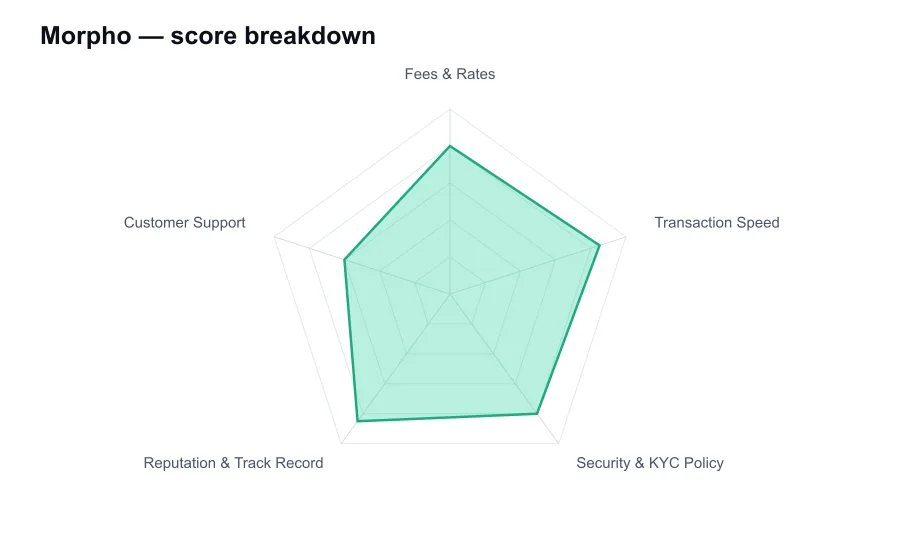
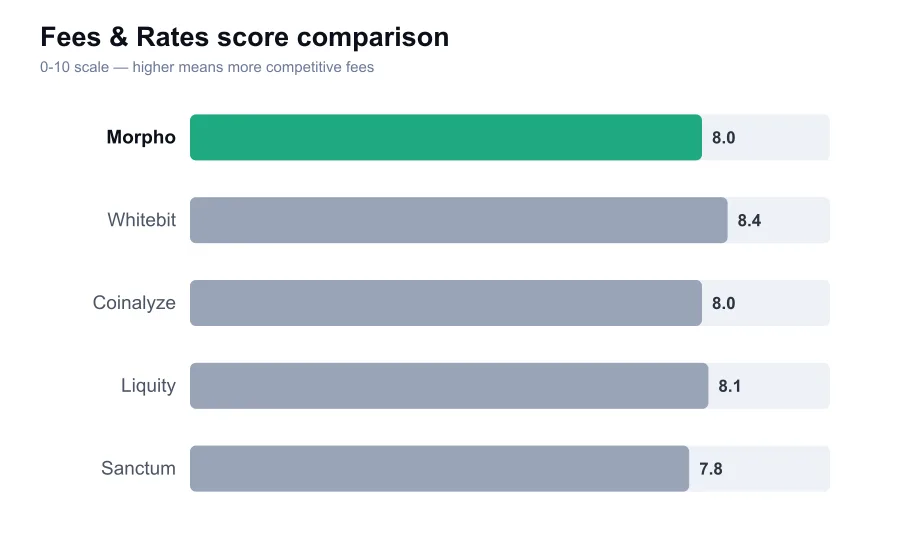
Fees are more nuanced here than on an exchange. A borrower pays interest set by the selected market's interest-rate model, plus Ethereum or network gas for transactions. A lender earns the borrow rate after any applicable protocol or vault fees, depending on the market and front end. Morpho Blue permits a fee recipient to take a fee capped by the protocol design, so users need to inspect the market configuration rather than assume a zero-fee experience.
The headline borrowing APR can look attractive beside a centralized loan product, especially where capital is efficiently deployed. But APR is not the only cost. Borrowers must consider gas, slippage when acquiring collateral, possible interest-rate changes, and the cost of closing a position under stress. Lenders need to distinguish displayed yield from sustainable yield. High utilization and incentives can produce eye-catching numbers that may not persist.
Morpho's speed is excellent at the protocol level. Once a transaction is included, supplying, borrowing, repaying, and withdrawing are settled according to smart-contract rules, not a back-office queue. On Ethereum mainnet, that can mean minutes rather than days, depending on congestion and gas selected. On supported lower-cost networks, the interaction can be faster and cheaper. Still, blockchain finality is not the same thing as a guaranteed instant cash withdrawal.
The real friction is market liquidity. A borrower may have collateral but find a market's available liquidity limited. A lender may be able to withdraw only as borrowers repay, unless a vault or available liquidity can meet the request. This is not a defect unique to Morpho. It is a basic feature of lending. Anyone who needs immediate, guaranteed access to all funds should not lock their emergency reserves into on-chain credit markets.
Security is one of Morpho's strongest areas relative to younger DeFi projects. Its contracts have undergone multiple audits and the protocol has attracted serious technical scrutiny and significant adoption. The architecture is open source and the on-chain state can be inspected. Those are real advantages. They do not mean risk has disappeared. Smart contracts, oracle feeds, liquidation mechanisms, governance, and integrations all create attack surfaces.
The permissionless nature of Morpho Blue deserves special emphasis. Anyone can create a market with a particular set of parameters, but permissionless deployment is not a quality seal. A market might use an unfamiliar collateral asset, an unsuitable oracle, aggressive liquidation settings, or a model that users do not understand. Curated vaults and interfaces can reduce selection burden, but users should still identify the market curator, underlying parameters, and concentration risk before supplying assets.
Borrowers need to watch loan-to-value ratios continuously. If collateral falls in price or borrowed assets rise relative to collateral, a position can be liquidated automatically. Liquidation is not customer service failure, and there is no KYC agent to call for an exception. It is code executing known rules. Experienced DeFi users maintain a sizable buffer rather than borrowing to the displayed maximum, particularly with volatile collateral such as ETH or long-tail tokens.
Morpho does not impose conventional KYC at the protocol layer. A self-custody wallet can interact directly with contracts, subject to the constraints of the network and the user's jurisdiction. Interfaces, fiat gateways, front ends, and regulated entities may apply their own restrictions. Users should not confuse protocol-level permissionlessness with a legal opinion that every use case is permitted where they live. Tax reporting and local lending rules still exist.
Its reputation is strong within DeFi circles, particularly among users who care about transparent lending primitives rather than glossy retail apps. Morpho has become associated with a technically serious approach, and the growth of its ecosystem supports that perception. I would still avoid calling any DeFi protocol safe in the ordinary consumer-finance sense. The track record is meaningful, but a severe oracle event or smart-contract exploit can change the picture quickly.
Support is necessarily different from a centralized exchange. Morpho and ecosystem applications provide documentation, community channels, and technical resources, but they cannot restore a lost seed phrase or undo an incorrect wallet signature. That can frustrate newcomers, yet it is the trade-off for self-custody. For a problem with a specific vault or interface, the relevant support path may be the curator or application, not Morpho core.
The best workflow is to start with a small supply transaction, inspect the exact contract and market, understand the oracle and liquidation threshold, then scale gradually. Use a hardware wallet, revoke stale token approvals, and bookmark verified interfaces. Avoid blind signing. If a yield opportunity cannot be explained in plain language, it is not ready for a meaningful allocation.
Morpho is excellent infrastructure for a user who understands DeFi lending and wants transparent, flexible markets. It is a poor substitute for a simple savings account or a beginner-friendly exchange. The protocol's quality is high, but the user bears a larger share of the operational and financial risk than they would on a regulated custodial platform.
My view is favorable, with a firm warning label. Morpho is one of the more credible and technically compelling lending systems in DeFi, and its open market design is genuinely useful. Yet that design asks users to perform their own risk management, from collateral selection to liquidation buffers. For skilled on-chain users, that is a feature. For everyone else, it can become an expensive lesson.