Coinalyze is not an exchange, and judging it as one would miss the point. It is a derivatives market analytics platform built for traders who want a sharper view of futures and perpetual markets. Its charts bring together open interest, funding rates, liquidations, long and short positioning signals, volume, and exchange level data. That makes it closer to a specialist terminal than to Coinbase, Kraken, or Bybit. It doesn't take custody of your coins, match your orders, or execute a trade for you.
That distinction is actually one of Coinalyze's strengths. You can study a market without depositing money with the analytics provider. There is no platform balance to protect, no withdrawal queue to fear, and no hidden conversion spread attached to a trade because Coinalyze isn't the venue making the trade. A trader can inspect Bitcoin perpetual funding across supported exchanges, then decide whether the setup justifies placing an order elsewhere. It is research infrastructure, not a brokerage account.
The free tier is unusually useful for casual market observation. Coinalyze exposes a meaningful amount of futures data and charting without demanding that a user buy a monthly plan first. That makes it approachable for someone who is learning how open interest and funding interact. The paid plans are aimed at people who need more alerts, more saved layouts, more indicators, advanced data access, or API capacity. Exact plan limits and prices can change, so the current pricing page should be the source of truth before subscribing.
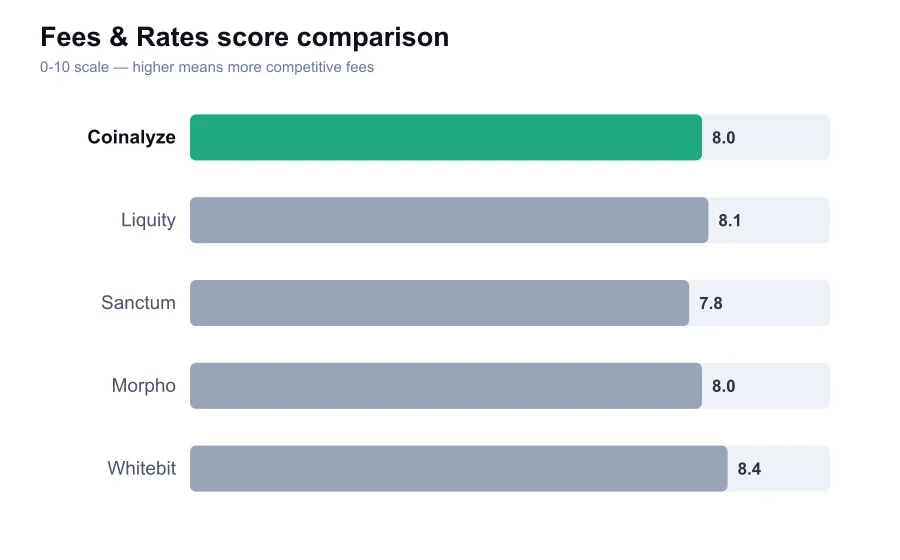
For the right user, the fee question is simpler than it is at a trading platform. There are no maker or taker fees, no withdrawal fees, and no spread charged by Coinalyze because it does not execute orders. The real calculation is whether a subscription saves enough research time or improves discipline enough to justify its cost. If you trade a few times per month and barely use derivatives data, a premium dashboard is likely unnecessary. If you monitor several markets daily, the value proposition gets stronger.
I like that this model avoids the usual exchange trick of advertising low trading fees while recovering money through spreads, token incentives, and confusing tiers. Coinalyze charges for software features rather than pretending analytics are free because it wants your order flow. That said, it is still easy to overspend on any trading tool. A data terminal can encourage compulsive monitoring, and more indicators do not automatically produce better decisions. Most retail traders need fewer signals and better risk limits.
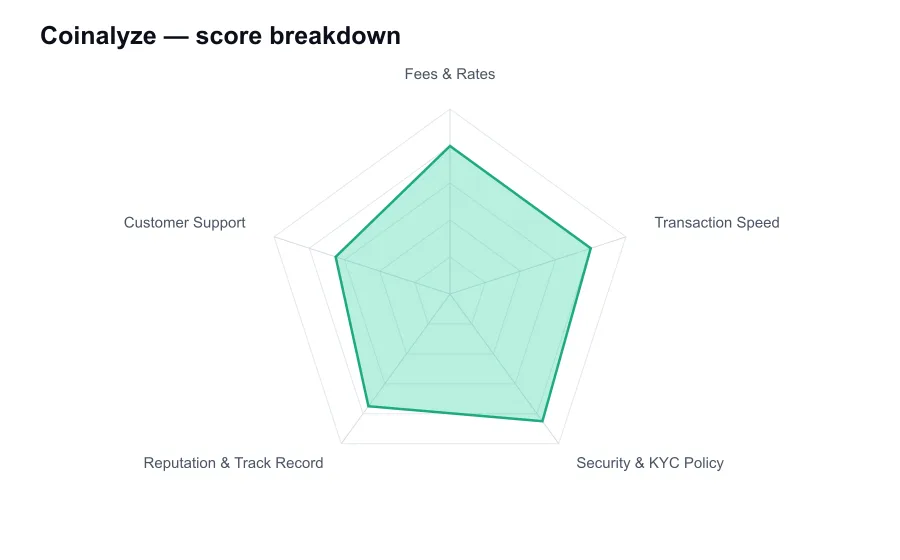
Speed is one of Coinalyze's central selling points, but traders should understand what fast means in this context. Market dashboards are only as current as their data pipelines, exchange feeds, and browser session. The platform is designed to surface changes in derivatives activity quickly, which is useful during volatility. It is not a guaranteed low latency execution system, and a liquidation print on a chart is not permission to chase a move after the fact.
The platform's practical speed is good for discretionary analysis. Charts load quickly in ordinary use, the interface makes it easy to compare contracts, and alerting can reduce the need to stare at a screen all day. But fast presentation should not be confused with perfect data. Exchange APIs can lag, symbols can differ, open interest methodologies vary, and aggregated figures can change as venues update their records. Professionals cross check important readings rather than treating any single dashboard as an oracle.
Coinalyze is particularly useful for understanding the context behind a price move. Rising price with sharply rising open interest can indicate aggressive positioning, but it does not by itself reveal which side will win. High positive funding can signal crowded longs, yet markets can remain expensive for longer than contrarians expect. Liquidation heat and funding are tools for framing risk, not magic reversal calls. Anyone selling them as certain signals is selling a fantasy.
Its security posture benefits enormously from not being a custodian. You don't have to transfer crypto to Coinalyze to use public dashboards, and the service has no reason to hold a retail trading balance. That removes the largest category of exchange risk. Account holders should still use a unique password, secure their email, enable available account protection, and avoid sharing API keys. Analytics subscriptions can be compromised too, even if the direct financial loss is usually smaller.
KYC is not normally the defining feature of Coinalyze because viewing market information is not the same as opening a financial account. Paid billing may require the ordinary payment information needed by the payment processor, while API use and account features have their own terms. Users should read the privacy policy and billing conditions rather than assuming anonymity. The important point is that Coinalyze does not position itself as a no questions asked venue for moving or storing crypto.
Coinalyze has built a respectable niche among derivatives focused crypto traders. It is not as universally cited as TradingView, and it does not have the institutional brand weight of Bloomberg or a major exchange's native data suite. Still, its focus is clear and its tools solve a specific problem. The platform has been around long enough to be familiar to people who watch perpetual funding and open interest, which counts for more than glossy marketing in this segment.
The reputation caveat is data coverage. No independent analytics site can be stronger than the exchanges it tracks. A dashboard may cover many familiar venues yet omit a contract, a regional exchange, or a new token market that matters to your strategy. Before relying on an indicator, confirm its venue composition and symbol coverage. It is reckless to claim the whole derivatives market is crowded based on a partial sample without checking where the numbers came from.
Customer support is adequate for a self directed analytics product, but this is not white glove institutional service. The site offers documentation and contact routes, and ordinary account or subscription issues should be manageable through those channels. I would not expect instant live help during a market panic. Since Coinalyze is not holding funds or executing trades, that limitation is less severe than it would be at an exchange. Still, paid users reasonably expect timely billing and access responses.
The best users are traders who already understand basic derivatives mechanics. If funding, basis, open interest, and liquidation cascades sound unfamiliar, start slowly and use the free tools as a learning aid. Coinalyze can show a lot of information in a compact space, and that density is productive only after you know what each metric can and cannot tell you. Beginners may be better served by simpler spot charts and a serious risk management routine before adding leverage data.
For active perpetual traders, Coinalyze is a strong supplemental screen. It pairs well with TradingView for broader chart work and with direct exchange interfaces for execution. It does not replace either one. The platform is at its best when it helps you avoid bad trades, such as entering into an obviously overheated funding environment, rather than when it talks you into more trades. That is an important difference.
My take is positive, with a firm warning against indicator worship. Coinalyze provides real value through accessible derivatives data, a noncustodial model, and a useful free entry point. Its score is held back only because the service depends on external venues and because support and coverage will not match expensive institutional terminals. For its intended audience, though, it is one of the more sensible specialist tools in crypto.