WhiteBIT is a centralized cryptocurrency exchange with roots in Ukraine and a much broader European ambition. Unlike a simple exchanger, it offers spot trading, order books, deposits and withdrawals, earn style products in some jurisdictions, and a platform designed for users who want to trade repeatedly rather than complete one conversion and leave. It sits between the bare bones global exchanges and the heavily regulated, high fee retail brands.
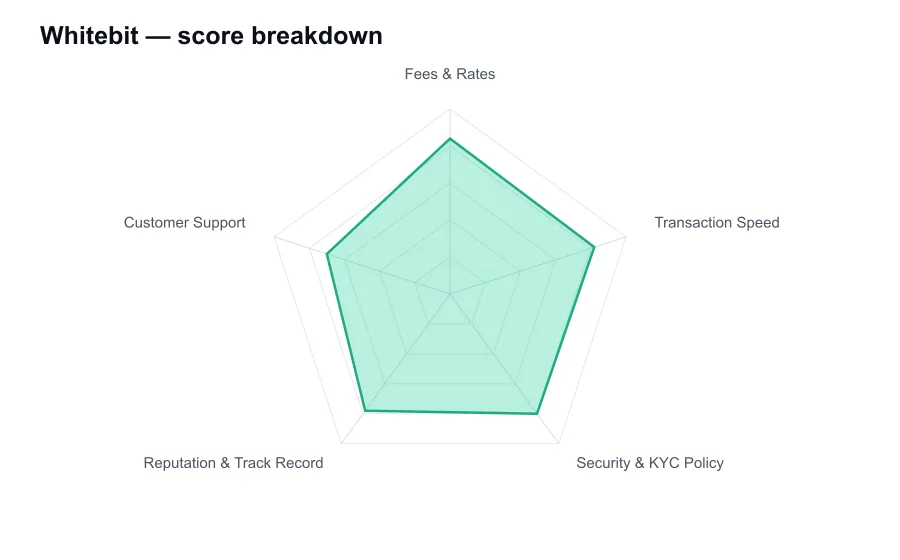
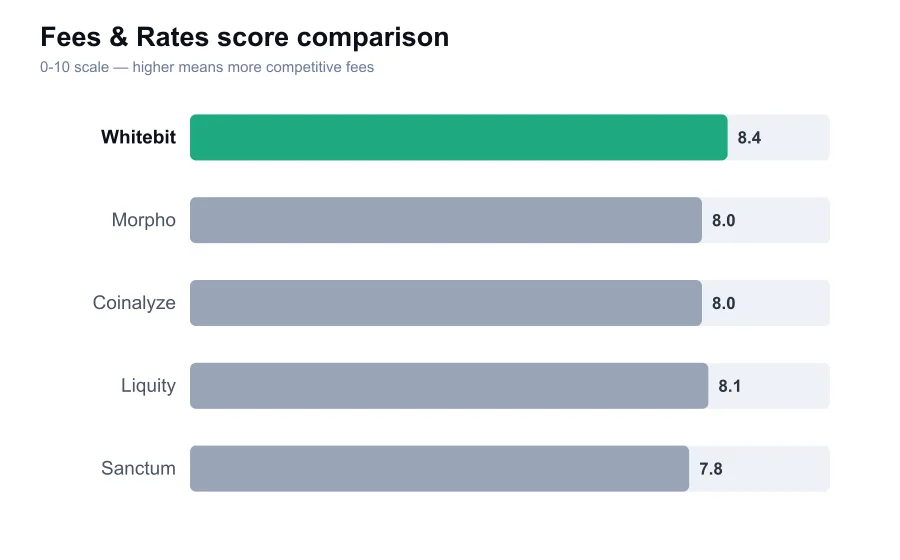
The exchange's strongest commercial argument is its fee structure. Standard spot trading fees have commonly been advertised at up to 0.1 percent, with lower conditions possible through programs or market specific arrangements. That is competitive with major centralized venues and materially cheaper than the spread based pricing that many instant buy services present. Fee schedules can change, so the live trading page remains the final authority.
The low headline fee is not the whole bill. Deposit and withdrawal charges vary by asset and network, while fiat funding methods can impose their own provider costs, minimums, or regional restrictions. A trader buying USDT with a card may pay far more in payment processing than in the eventual spot trade. Anyone comparing WhiteBIT with Kraken, Coinbase, Binance, or Bitstamp should separate trading fees from the cost of getting money on and off the platform.
Liquidity is also pair dependent. Major assets such as BTC, ETH, USDT, and a selection of high volume alternatives are generally the sensible place to trade. The order book experience can be less convincing on obscure tokens, where a posted price may not represent what a meaningful sell order can actually achieve. WhiteBIT is not unique here, but a low fee does little good if slippage consumes the saving.
For normal trading activity, the matching engine feels much closer to a conventional exchange than to an over the counter desk. Market orders can execute quickly in liquid books, and limit orders give users more control over price. Deposit crediting and withdrawals remain separate processes. They rely on the blockchain, internal risk checks, network conditions, and sometimes manual review. Promises of instant trading should not be confused with instant bank settlement.
WhiteBIT has invested visibly in operational security features. Two factor authentication, withdrawal address controls, device and session management, anti phishing tools, and confirmation procedures are the kind of basics every centralized exchange should provide. Users should enable them all. A password reused from another site is still a more common route to loss than a dramatic exchange hack.
The company has also publicly discussed security audits and wallet protection arrangements, including keeping a large portion of assets in cold storage. Those measures are reassuring, but they should be understood correctly. Customers are still exposed to centralized exchange risk, policy changes, withdrawal delays during security events, and the legal framework governing the entity serving their region. Cold storage is prudent operational practice, not a personal guarantee.
KYC is central to the WhiteBIT experience. This is not a no verification exchange, and anyone looking for anonymous crypto trading should not waste time trying to force it into that role. Identity verification, source of funds questions, sanctions screening, and transaction monitoring are part of operating a serious centralized venue. That can frustrate a customer who expects immediate access, but it is preferable to a platform that makes vague promises and then freezes accounts without a visible process.
The difficult part, as with virtually every centralized exchange, is the edge case. A user whose documents fail automated checks, whose name differs across payment records, or whose wallet activity prompts a risk alert may face delays. WhiteBIT's policy pages and support channels help, but compliance decisions can feel rigid from the customer's side. Do not deposit a large amount before completing verification and testing a modest withdrawal.
Reputation is WhiteBIT's most developed strength relative to smaller Eastern European crypto services. It has operated since 2018, built a recognizable consumer brand, entered sports and commercial partnerships, and maintained a significant regional presence through difficult market conditions. That history does not make it immune from criticism, but it gives prospective users more evidence to assess than a newly launched exchange with anonymous ownership and a handful of reviews.
It is also fair to say that WhiteBIT has not reached the universal trust level of the oldest globally regulated names. Jurisdiction, product availability, and legal protections depend on the customer location. Crypto exchanges have repeatedly shown that size and a polished interface are not substitutes for sensible self custody. Users holding long term reserves should withdraw to a hardware wallet rather than assume any exchange is the safest final destination.
Customer support is available through the platform's help resources and ticket based channels, with an extensive knowledge base covering common verification, trading, and withdrawal questions. For ordinary technical issues, that structure is useful. It is less satisfying if a customer needs urgent human intervention during a market move. The industry has trained traders to expect real time answers, while compliance and payment investigations often operate on a much slower clock.
WhiteBIT is strongest for users who want low spot fees and a full exchange interface without jumping immediately to the world's largest platforms. The mobile and web experience is generally approachable, yet beginners should resist the urge to explore every token, margin style feature, or promotional product on day one. Start with basic spot orders, learn network selection, and understand withdrawal whitelisting before moving meaningful funds.
My practical recommendation is to use WhiteBIT actively but not blindly. It offers enough depth, competitive pricing, and security tooling to be a credible central venue for a retail trader, particularly in its core European markets. Its centralization, KYC requirements, and support limitations are not minor footnotes, they are part of the deal. For trading, it is a strong contender. For permanent storage, it is still an exchange and should be treated accordingly.