Independent Reserve is a serious Australian crypto exchange, not a flashy global casino trying to win attention with hundreds of speculative listings. Founded in 2013, it has survived far more market cycles than most competitors, and that longevity is meaningful. It is built primarily for Australian and Singaporean users who want local currency access, a conservative product range, and a platform that treats compliance as part of the service rather than an annoyance to be hidden.
The exchange's personality is deliberate. You won't find the relentless gamification, celebrity-token launches, or maximal leverage culture associated with some offshore platforms. Independent Reserve concentrates on major digital assets and a relatively restrained trading environment. That can feel limited to someone seeking every new Solana meme coin, but it is a strength for investors who want to buy Bitcoin, Ethereum, and other established assets without wading through a cluttered market catalogue.
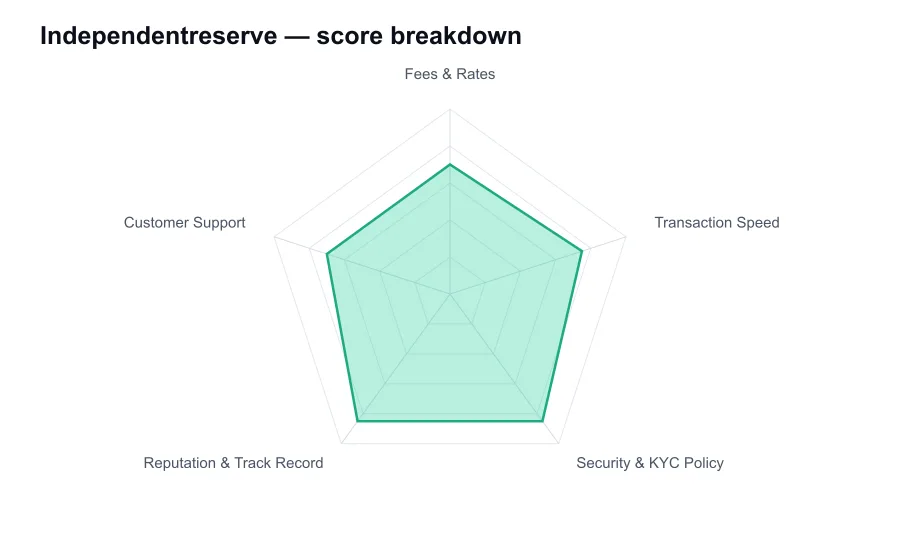
Its regulatory positioning is one of the main reasons it deserves attention. Independent Reserve is registered with AUSTRAC in Australia and has operated within the country’s anti-money-laundering framework for years. Its Singapore business has also operated under Monetary Authority of Singapore oversight. Regulation does not eliminate crypto risk or guarantee every customer outcome, but it creates reporting obligations, compliance procedures, and a clearly identifiable operator. That is a substantial improvement on anonymous or lightly documented exchanges.
Account verification is mandatory in practice, and users should expect identity checks before getting full access to deposits and withdrawals. Some people will see that as a disadvantage next to no-KYC swap sites. I don't. For an exchange that connects to bank rails and holds customer assets, predictable KYC is preferable to a platform that promises anonymity then blocks a transaction later. Verification can still be frustrating, especially where source-of-funds questions arise, but the policy is not surprising.
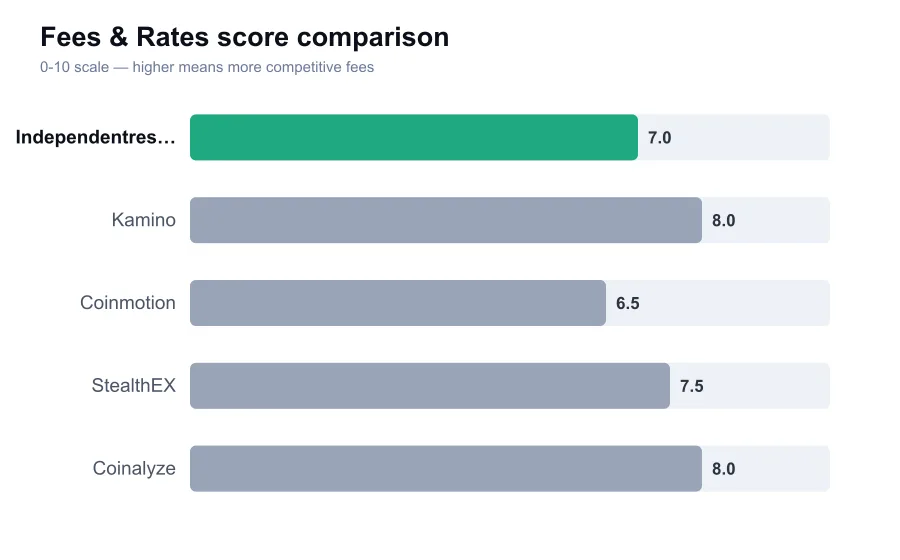
Independent Reserve's fee structure rewards users who trade through its order-book interface rather than taking the easy brokerage route. The standard trading fee begins around 0.5 percent and declines with 30-day trading volume, reaching materially lower tiers for active clients. That opening rate is not cheap by global professional-exchange standards. Kraken Pro, Coinbase Advanced, and Binance can be less expensive for frequent traders. For ordinary Australian investors making occasional purchases, though, the difference is less dramatic than it first appears.
The key is understanding which screen you are using. Instant-buy or brokerage-style transactions are convenient, but convenience can involve a spread in addition to a visible fee. The order book gives you more control. Use a limit order, inspect the bid and ask, and you can often avoid paying unnecessarily for immediacy. This is the right way to use Independent Reserve if cost matters. The platform is not designed to be the cheapest possible venue, but it is transparent enough for a careful user to control the bill.
AUD funding is one of its practical advantages. Local bank transfers and PayID-style payments can make the path from Australian dollars to crypto much smoother than international wires or card-based purchases on overseas exchanges. Timing still depends on the sending bank, account matching, and compliance checks, but domestic transfers are generally much more convenient. Crypto deposits are credited after the relevant network confirmations, which is standard rather than exceptional.
Trading itself is responsive and uncomplicated. Major-pair orders are normally matched quickly when the market has enough liquidity, and the trading interface is more approachable than a professional derivatives terminal. It is not a platform for latency-sensitive arbitrage or high-frequency strategies. That isn't its job. For a buy-and-hold investor or a person placing measured spot orders, the execution experience is dependable enough and less intimidating than the most complex international exchanges.
Withdrawals need a realistic expectation. An approved crypto withdrawal is subject to the destination network, internal security checks, and occasionally manual review. Bitcoin, Ethereum, and busy token networks can all slow down independently of Independent Reserve. Australian dollar withdrawals can also depend on bank cut-off times and account verification. A platform that takes security seriously will not always process every transfer at the absolute fastest theoretical speed, and that trade-off is acceptable for this audience.
Security is handled with more maturity than at many retail-first exchanges. Independent Reserve has long emphasized offline storage practices, multi-layer operational controls, and account protections such as two-factor authentication. It also offers an insurance option called Premium Account for qualifying users, which is more useful than vague statements about being insured, though customers should read its terms closely. It is not a government deposit guarantee and should never be treated as one.
The platform's Crypto Trading Insurance offering is a differentiator, but it needs a plain reading. Insurance is designed to address specified theft or loss scenarios, not every possible market event, password mistake, phishing attack, or blockchain failure. Customers should check eligibility, coverage limits, exclusions, and any extra cost. Still, the existence of a defined product and published framework is better than the empty reassurance common at less established exchanges.
Independent Reserve has a good reputation, though not a perfect one. It has been operating since the early Australian crypto market and has not become synonymous with a major exchange collapse or a reckless lending scheme. That matters. It has also developed tools such as tax-oriented reporting assistance and features aimed at SMSFs, trusts, and business accounts. These aren't glamorous features, but they reflect a platform built for people managing real financial records rather than chasing a weekend trade.
Support is solid by exchange standards, particularly for users in its home markets, but it is not the sort of instant concierge service private-bank clients might imagine. Expect ticket-based assistance and business-hours relevance for many account issues. A complicated compliance case can take time, and users sometimes dislike the documentary requirements. That is the cost of operating a more regulated service. The important point is that Independent Reserve has identifiable channels and a real business behind them.
Independent Reserve is best viewed as a dependable local on-ramp and spot exchange, not an all-purpose crypto universe. It lacks the enormous token selection, derivatives depth, and ultra-low headline pricing offered by the largest offshore venues. Yet its conservative approach has aged well. For Australians and Singapore-based users who value regulation, local currency rails, and an exchange that has been around long enough to be tested, it remains one of the more credible choices.