Sanctum is not a conventional crypto exchange. It is a Solana-focused liquidity layer built around liquid staking tokens, or LSTs, and that distinction matters before anyone starts comparing it to Coinbase, Kraken, or a swap site. Its core idea is simple: users should be able to stake SOL, retain liquidity through an LST, and move between different Solana staking positions without being trapped by slow unstaking windows. For active Solana users, it is one of the more interesting pieces of infrastructure to emerge from the network's staking economy.
The product sits at the intersection of staking, decentralized finance, and token swapping. Sanctum has become especially associated with Infinity, its multi-LST liquidity pool, and with creating or supporting validator-specific LSTs. Instead of choosing between holding native SOL or one dominant derivative such as JitoSOL or mSOL, users can hold a stake-backed token tied to a validator or strategy and still have a route back to broader on-chain liquidity. That is a meaningful improvement on the old model, where smaller LSTs could be technically valid but practically hard to sell.
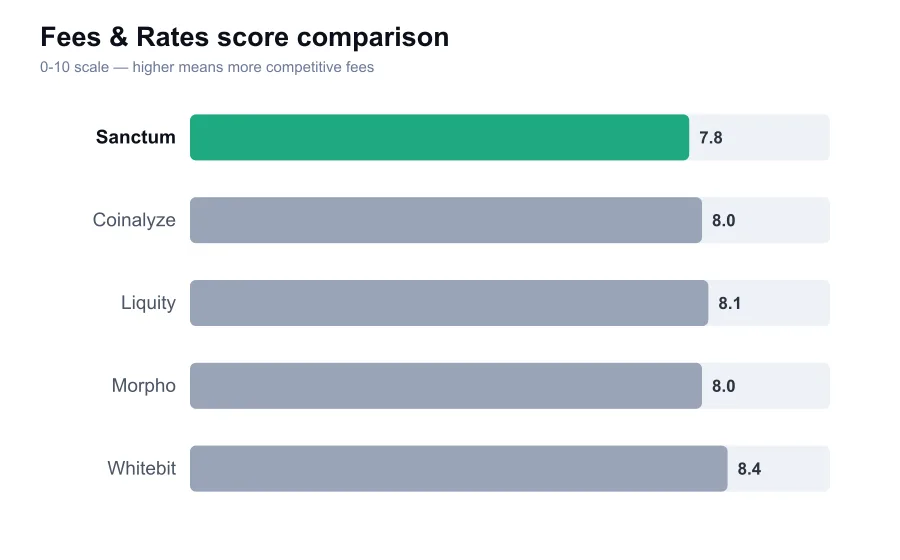
Fees require more attention here than a headline number suggests. Sanctum's underlying transactions occur on Solana, so network costs are normally tiny by Ethereum standards, often fractions of a cent. But the economic cost can appear in several places: a swap fee, pool pricing, spread, validator commission, and potentially a withdrawal or liquidity cost depending on the chosen route. Users expecting a neat, universal trading fee such as 0.1 percent will be disappointed. The effective price is transaction-specific, which is common in DeFi but less friendly than a centralized exchange's fee schedule.
For straightforward LST swaps, Sanctum can be competitively priced because the protocol was designed to make those markets work. The best experience is usually moving among well-supported Solana liquid staking assets or entering an LST through Infinity. However, a thin validator LST can still carry pricing risk. The fact that a token is redeemable for staked SOL does not guarantee that a large sale will execute at a perfect value. That is the part promotional material rarely emphasizes enough, and it is where users need to inspect the quoted output rather than assume the word liquidity solves everything.
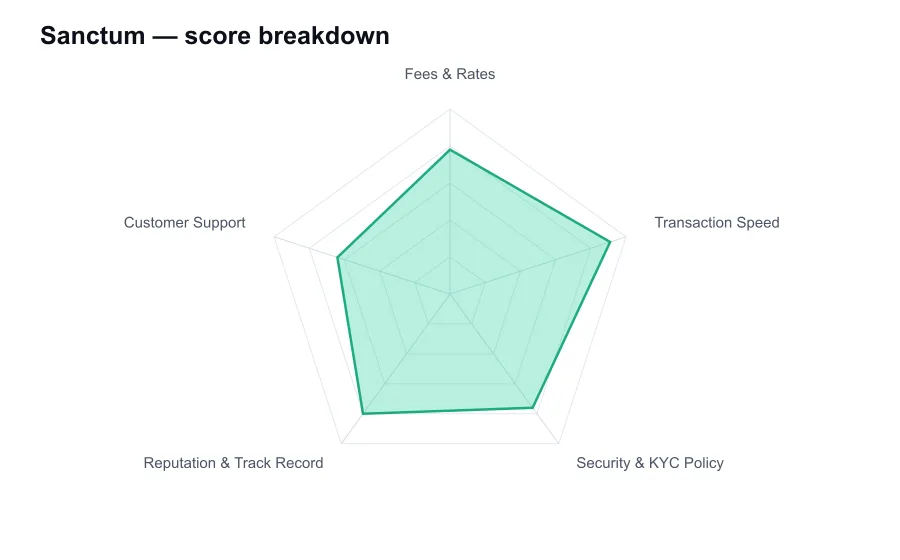
Speed is one of Sanctum's strongest cards. Solana transactions generally confirm in seconds, and a completed LST swap can feel nearly instant compared with unstaking native SOL, which can involve waiting for the network's epoch cycle. For someone reallocating a staking position during a market move, that difference is enormous. The system does not eliminate all delay, though. A wallet transaction can fail during congestion, a quote can change before signing, and withdrawing through native unstaking is still governed by Solana's validator and epoch mechanics rather than Sanctum's interface.
The platform makes most sense for people already comfortable using Phantom, Solflare, Backpack, or another self-custody Solana wallet. There is no normal account creation flow, no bank deposit desk, and no password-reset safety net. You connect a wallet, approve a transaction, and bear responsibility for the address and signing request. That is liberating for experienced users. It can also be unforgiving. A beginner who merely wants to buy SOL with dollars has landed in the wrong place and should start with a regulated fiat exchange instead.
Sanctum's security model is fundamentally different from a custodial exchange. It does not ask users to surrender custody of their everyday wallet balance, and it does not normally impose personal KYC for ordinary on-chain usage. That reduces the risk of an exchange freezing a retail account or becoming a single honeypot for customer assets. It does not remove risk. Smart contract risk, oracle and pricing design, malicious website clones, compromised wallet extensions, and user signing errors are all very real. Self-custody shifts the burden, it does not make the burden disappear.
The protocol has made security a visible part of its public posture through audits, program design, and open technical documentation, but users should resist treating any DeFi audit as insurance. Audits find some classes of mistakes. They do not guarantee that pool incentives will behave as expected, that integrations will remain secure, or that an upgrade path cannot introduce a problem later. Sanctum also relies on the health of Solana validators and the broader LST ecosystem. This is layered risk, not a bank account with a government guarantee.
Its reputation is unusually strong within the Solana-native crowd. Sanctum gained attention for tackling a real market weakness, namely fragmented LST liquidity, rather than issuing a token with little obvious utility. The team has also been prominent in Solana's points and incentive culture, which brought a wave of users and considerable scrutiny. That visibility is a positive because the project is not obscure. It is also a reason to stay skeptical. Incentive campaigns can attract short-term capital that behaves very differently from organic long-term liquidity.
Compared with Jito, Marinade, or Lido's simpler staking-style experience on other chains, Sanctum offers more flexibility but more moving parts. JitoSOL has deep recognition and a clear value proposition around staking and MEV rewards. Marinade has a longer history as a Solana staking brand. Sanctum's edge is its attempt to make many forms of liquid staking interoperable. Its weakness is that the concept is harder to explain, and the user must understand what they are actually receiving rather than blindly chasing the highest displayed yield.
Customer support is where the polished DeFi story meets reality. Sanctum provides documentation and community support channels, and its team has been visibly engaged in the Solana ecosystem. For normal questions about transactions, supported LSTs, or wallet connections, that can be sufficient. But it is not the sort of service where a customer can phone an agent, reverse a blockchain transfer, or demand an immediate investigation of every bad trade. Response quality in Discord-style environments varies with market conditions and with the complexity of the issue.
Users should be particularly cautious about impersonators. Projects with active communities attract fake support accounts that offer to help, then request seed phrases or malicious signatures. Real support will not need a recovery phrase, and no legitimate DeFi protocol can undo a transaction because somebody sent assets to the wrong address. Bookmark the official site, verify links through the project's established social channels, and treat direct messages as hostile by default. That advice is basic, but it is more important here than debating a few basis points of swap cost.
For the right user, Sanctum can be genuinely useful. A SOL holder who wants liquid staking exposure, wishes to support a particular validator, or needs a quicker route between LSTs will find a service built for that job. It is also a sensible venue for learning how Solana's increasingly diverse staking market actually works. Just start small. Check the received amount, check the token mint, and understand whether the action is a swap, an instant withdrawal, or a request that depends on normal stake deactivation.
My view is that Sanctum is a strong specialist protocol, not a general-purpose exchange and not a hands-off savings product. Its transaction speed and Solana-native liquidity tools are impressive, while the low visible network costs can be excellent for frequent on-chain users. The trade-off is complexity, variable execution pricing, and the need to take smart contract and wallet security seriously. Experienced Solana participants have good reason to keep it on their shortlist. Everyone else should learn the basics of SOL staking and self-custody before deciding that the convenience of liquid staking is worth the additional risk.