AvanChange sits in the independent instant-exchange corner of crypto, a market built for people who want to convert one asset into another without learning a trading terminal. It isn't trying to be Binance, Kraken, or a regulated brokerage. The appeal is simpler: choose a pair, send coins, and receive the output asset at a quoted rate. That can be useful, but it also means the buyer is accepting a much thinner layer of public disclosure than they would get from a major exchange.
The service appears aimed at straightforward crypto swaps rather than active trading. There is no reason to approach a converter like AvanChange expecting order books, advanced order types, margin, deep reporting, or a broad fiat banking product. Its natural customer is somebody holding one coin who needs another quickly, perhaps to pay a merchant, rebalance a small wallet, or move funds between ecosystems. For that job, an uncluttered swap flow has value.
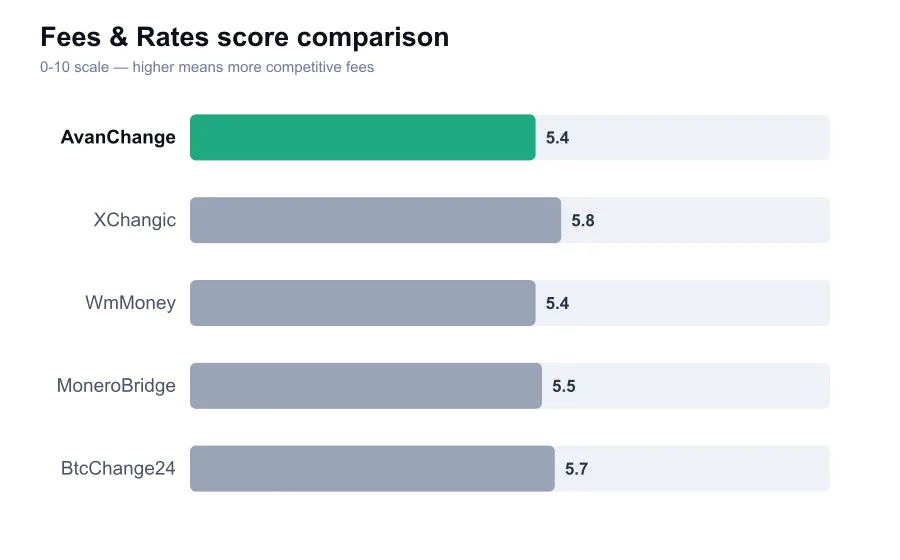
Pricing is the first place where instant exchangers need a skeptical eye. AvanChange presents an exchange amount and expected payout before the user sends funds, but that does not make the effective cost easy to compare. The cost is normally embedded in the quoted rate rather than displayed as a separate trading commission. That is standard practice across this niche, including services such as ChangeNOW, SimpleSwap, and Godex. It is also the reason a rate that looks convenient can be more expensive than buying on a liquid spot exchange.
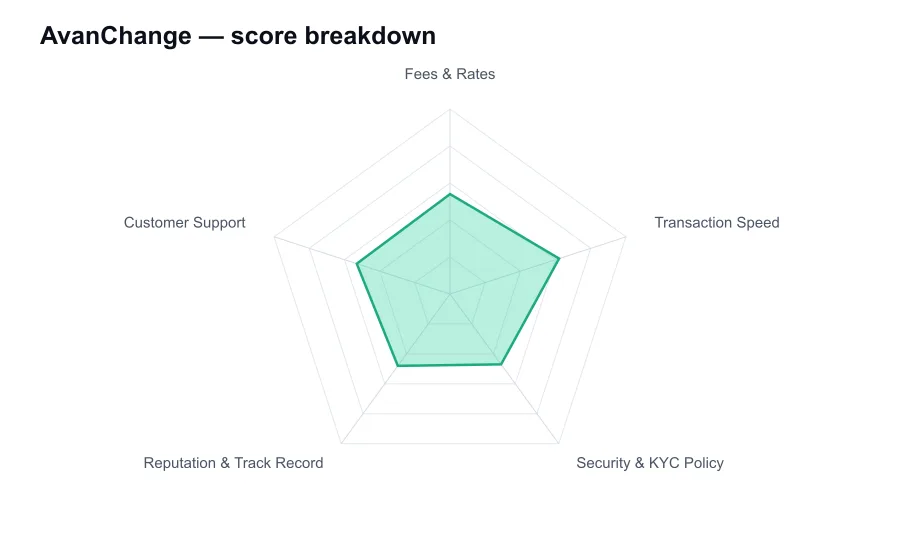
A sensible test is to compare the offered payout with a live mid-market price, then include the network fee needed to send the deposit. On small transactions, the spread can matter more than any stated service fee. A user swapping a modest amount of BTC into USDT may find the convenience premium acceptable. Someone moving several thousand dollars should check at least two competing quotes first. AvanChange does not make the pricing structure transparent enough for me to call it a low-cost venue without that comparison.
Fixed-rate and floating-rate swaps deserve attention here. A floating quote can move between the time the order is created and the time the deposit receives enough blockchain confirmations. That exposes the customer to market movement, especially on volatile pairs or slow networks. If AvanChange offers a rate-lock option on a given route, read the conditions closely, because the locked rate may have a wider spread and may only apply if the exact deposit arrives within a short window. Those details are not cosmetic.
The speed experience depends far more on the selected network and liquidity route than on the website's interface. A swap involving fast chains can complete in minutes after confirmation. Bitcoin deposits, congested Ethereum transfers, privacy-focused assets, and assets that require more confirmations can take substantially longer. No exchanger can honestly promise an instant result while waiting for a public blockchain, and users should be suspicious of any marketing that suggests otherwise.
AvanChange's operational challenge is what happens after the deposit arrives. A polished exchange flow should show the transaction state, confirmations, and payout hash clearly enough that a user can distinguish blockchain delay from internal processing. With smaller exchangers, this clarity matters more because there is less public evidence about liquidity partners and manual review practices. If an order pauses, the user needs an accessible record of what was received and what is still pending.
The security model is custodial for the duration of the swap, even if the service does not hold a long-term account balance. That is an important distinction. You send crypto to an address controlled by the service or its routing partner, then rely on it to make the outbound payment. There is no chargeback mechanism on a mistaken blockchain transfer. Test transactions, careful address checks, and avoiding last-minute changes to order details are basic precautions, not paranoia.
AvanChange's public-facing information does not carry the same institutional weight as a long-established, licensed exchange with audited reserves, named executive leadership, and detailed corporate reporting. That does not prove wrongdoing. It does mean the burden of due diligence sits more heavily with the user. I would not route retirement-sized holdings through any little-known converter simply because its quote was a few dollars better than a recognizable competitor's.
KYC is another area where expectations need to be realistic. Instant exchangers often market a no-registration or low-friction process, yet reserve the right to request identity documents or proof of source of funds when automated compliance checks flag a transaction. Users should not confuse an email-free order form with a guarantee of anonymity. If a transaction is selected for review, completion can depend on supplying documents, and that can be frustrating if the policy was not read before funds were sent.
The published anti-money-laundering language matters because it defines the bad outcome: funds can be paused while a review occurs. A strong provider explains review triggers, document handling, refusal procedures, and refund treatment in plain language. AvanChange does not have the level of public compliance documentation I would want before using it for a large, time-sensitive conversion. For routine low-value swaps, that concern is less severe, but it does not disappear.
Reputation is where AvanChange remains a secondary choice rather than a first call. It has the kind of footprint associated with an online exchanger, but it does not have the long public operating history, regulatory profile, or broad independent coverage of established platforms. Review-site ratings can be useful for spotting recurring complaints about delayed orders or payout differences. They are weak evidence by themselves, since referral incentives and selectively solicited feedback are common across the exchange industry.
I would pay more attention to the quality of dispute handling than to a perfect-looking star rating. Do complaints identify a transaction hash, an order number, and a provider response? Does the service explain whether the issue was a wrong network, a late deposit, a rate change, or a compliance hold? An exchanger that resolves visible problems with evidence earns more confidence than one that only collects praise. AvanChange has not built enough widely verifiable history for me to assume that confidence.
Support appears to be centered on online contact channels rather than the staffed, multilingual support operation found at larger exchanges. That is normal for this business model. The practical question is whether somebody answers while an order is live and whether they can interpret a blockchain transaction rather than send a generic reply. Before using a meaningful amount, I would inspect the listed support hours, save the order ID, and make sure the confirmation email arrives.
There is a particular kind of user who can get value from AvanChange: someone who understands wallet addresses, knows the network they are selecting, and wants a simple one-off conversion without opening a full trading account. That person should still compare the quote and begin with a small amount. Newcomers who need phone support, transparent regulated custody, tax reporting, or dependable fiat rails should choose a better-known exchange.
My take is restrained. AvanChange may be functional as a convenience tool, but convenience is not the same thing as low cost or high assurance. The opaque spread, limited public institutional information, and possibility of compliance interruption make it unsuitable for large transfers or urgent payments. Use it only after checking the live quote, confirming the receiving wallet details, and accepting that a small exchanger cannot offer the same safety net as a major platform.