MoneroBridge is a small, privacy-oriented instant exchange service built around one very particular demand, moving into or out of Monero without opening a conventional trading account. It occupies the same broad territory as ChangeNOW, SimpleSwap, and LetsExchange, but it is far less established than any of those names. Its appeal is obvious to people who value a short path from one wallet to another. Its weakness is equally obvious, there is not much public institutional history behind it.
The site presents the familiar instant-swap model. A user selects an input asset, chooses XMR or another supported coin as the destination, supplies a receiving address, and sends funds to a generated deposit address. There is no order book, no custody dashboard, and no promise that users will be able to trade actively. That simplicity is useful, but it also means the service lives or dies on execution quality and support when something goes wrong.
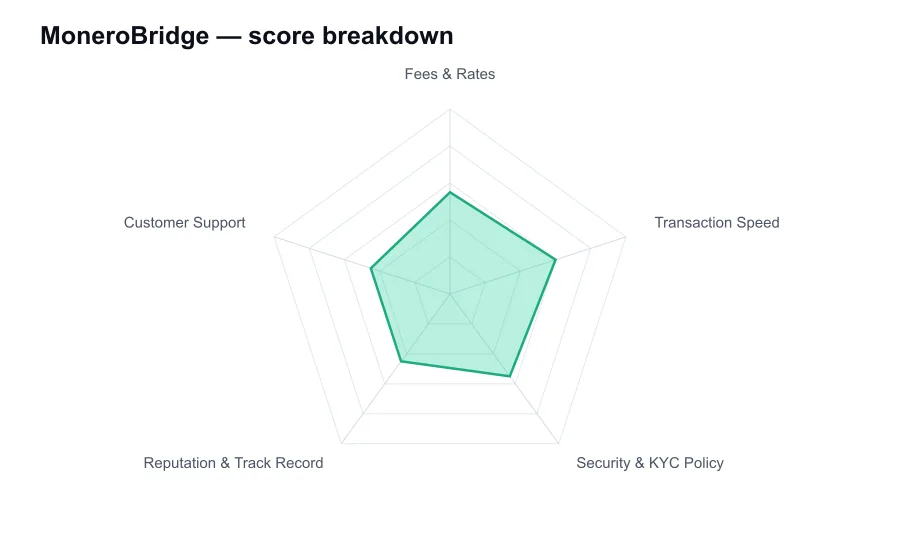
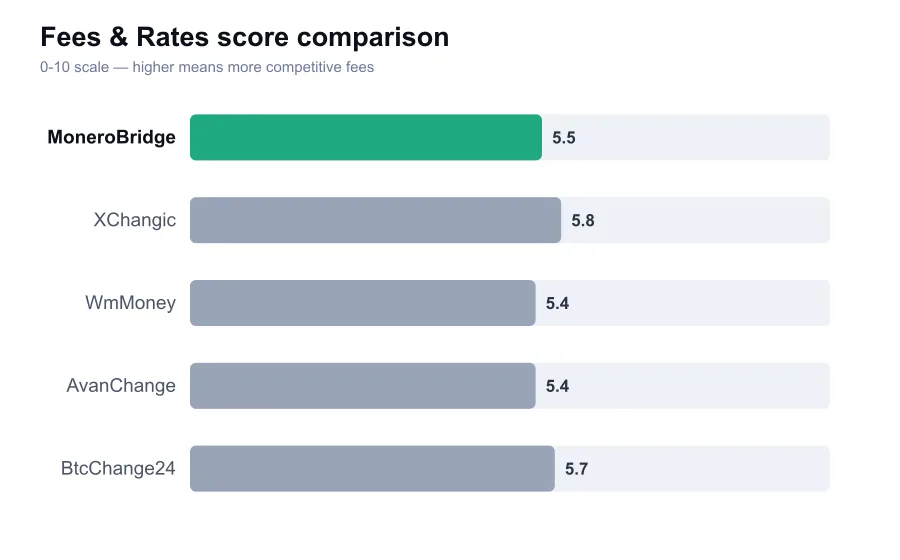
Fees are the first area where a prospective user should slow down. MoneroBridge does not have the sort of transparent, published maker and taker schedule available on a major exchange. The quoted rate is the real cost to inspect, including the provider spread, network fee allowance, and any liquidity-provider charge baked into the estimate. This is common in instant exchange services, but it makes direct price comparisons essential rather than optional.
For a small XMR swap, the final quote can be perfectly acceptable. For a larger conversion, a spread that looks modest in percentage terms can become expensive quickly. I would compare the received amount with ChangeNOW, FixedFloat, and a liquid centralized venue before committing. MoneroBridge is a convenience product, not a price-discovery venue, and users should not confuse a clean checkout screen with a best-execution guarantee.
Floating-rate swaps are the bigger concern. Crypto prices can move between the time a deposit is sent and the time the service completes its outbound transaction. If MoneroBridge offers a fixed quote for a route, that is generally the safer choice for users who need a known result. If only a floating quote is available, leaving a generous margin between the expected and acceptable output is sensible, especially in thinly traded assets.
Speed is usually governed less by the website than by the chains involved and the liquidity route chosen. A Bitcoin deposit may need several confirmations before processing starts, while an Ethereum transaction can be visible quickly but still face congestion or fee-related delays. Monero itself has a roughly two-minute block target, and exchanges often wait for multiple confirmations before releasing the other side. A fast swap is possible, but it should not be treated as guaranteed.
The best use case is a routine wallet-to-wallet conversion where the user can wait and has sent a test amount first. It is a poor choice for a time-sensitive payment, liquidation, or trade that depends on a precise market price. Small providers can have a perfectly functional engine for months, then hit a liquidity problem or manual review that turns a supposedly instant transaction into a support case. That is exactly when reputation matters.
MoneroBridge's security model is mostly noncustodial in the limited sense that it does not ask users to park balances in a personal account. That reduces account takeover risk and removes the temptation to leave funds on an exchange. It does not eliminate counterparty risk. For the period between deposit and payout, users are trusting the operator and its liquidity partners to settle the swap honestly and promptly.
No-KYC messaging should be read carefully. Not requiring registration for ordinary swaps is not the same as guaranteeing that every transaction will avoid compliance screening. Blockchain analytics flags, unusual transaction sizes, sanctioned-address exposure, or a route involving a regulated partner can trigger extra questions or a hold. Any service that claims it can never intervene is making a promise it probably cannot keep in the current compliance environment.
That policy matters more with Monero than with mainstream coins. Monero's privacy features attract legitimate users who do not want their financial history exposed, but they also make some counterparties cautious. A user who cannot tolerate a delay, cannot document source of funds, or needs formal legal assurances should use a regulated venue that clearly states its verification and dispute rules. Privacy and predictable compliance are not always compatible products.
Public reputation is MoneroBridge's soft spot. It does not have the long operating record, extensive independent review base, or widely recognized corporate footprint that helps users judge a service during a dispute. A lack of major public scandals is not the same thing as a proven record. Small exchange brands can be genuine and useful, but they deserve smaller initial transactions and a more skeptical level of trust.
The service's support experience is also difficult to rate as highly as that of a larger operation. A transaction ID, deposit hash, and destination address should be saved before contacting support. Users should expect email or ticket-style handling rather than an institutional service desk with guaranteed response times. If a transaction is delayed, clear status updates matter almost as much as eventual completion, and smaller providers often struggle on that basic communication point.
There are practical precautions here. Verify the domain carefully, do not follow exchange links from unsolicited messages, check the receiving address character by character, and test a small amount before sending a meaningful sum. Keep screenshots of the quote and the exchange identifier. If the quoted amount changes sharply after a deposit, ask for an explanation before accepting any resolution that looks materially worse than the market.
MoneroBridge can make sense for someone who already understands wallet operations and wants an uncomplicated XMR conversion without an account. It is not where I would send a large treasury transfer, nor would I use it as my only route into Monero. The convenience is real, but it has to be weighed against limited public transparency and a thinner trust record than the category leaders.
My take is restrained rather than hostile. The service fits the instant-swap pattern and may be useful for modest, low-urgency exchanges, particularly for experienced privacy-conscious users. Yet opaque all-in pricing, uncertain escalation paths, and a limited public track record keep it well below the level of a mature exchange partner. Treat MoneroBridge as a tool for controlled, tested transactions, not a platform to trust blindly with money you cannot afford to have delayed.