XChangic is positioned as a compact online exchanger, aimed at users who want to move value between cryptocurrency and conventional payment channels without navigating a full exchange terminal. It belongs to the same fast-turnover market as dozens of regional exchange desks, where an attractive quote and available reserve matter more than brand polish. That can be useful, but it is a market that rewards scepticism.
The service is best understood as an order processor rather than a financial platform. A customer selects a direction, enters payment details and follows payment instructions. There is no reason to expect sophisticated execution tools, insured balances, lending products or the broad asset universe offered by large global exchanges. XChangic is trying to solve a narrower problem, and users should keep their expectations just as narrow.
Its interface tends to make the first exchange look easier than it really is. The form itself is simple, but the underlying route may involve a bank transfer, card processor, blockchain confirmation and a final payout channel. Any one of those steps can create delay or compliance scrutiny. A smooth small transaction is a useful sign, but it is not evidence that every currency pair will perform the same way.
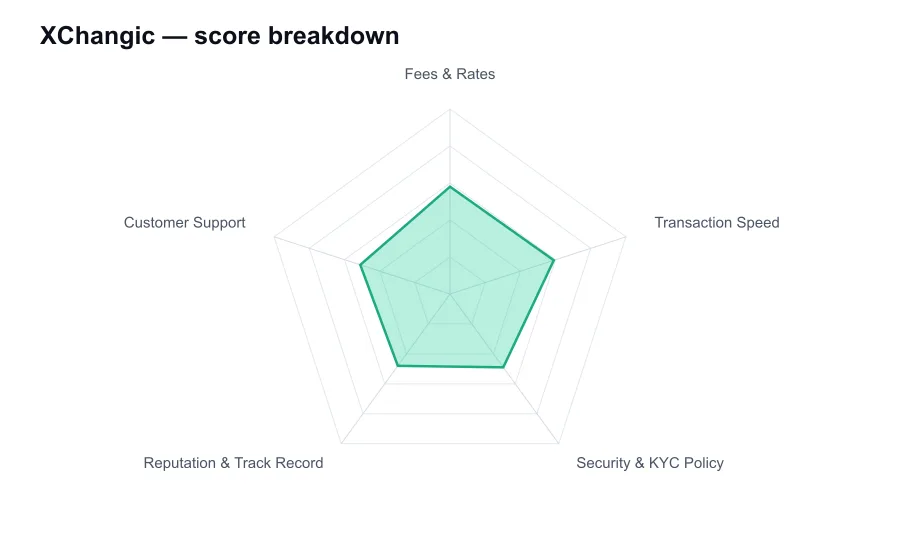
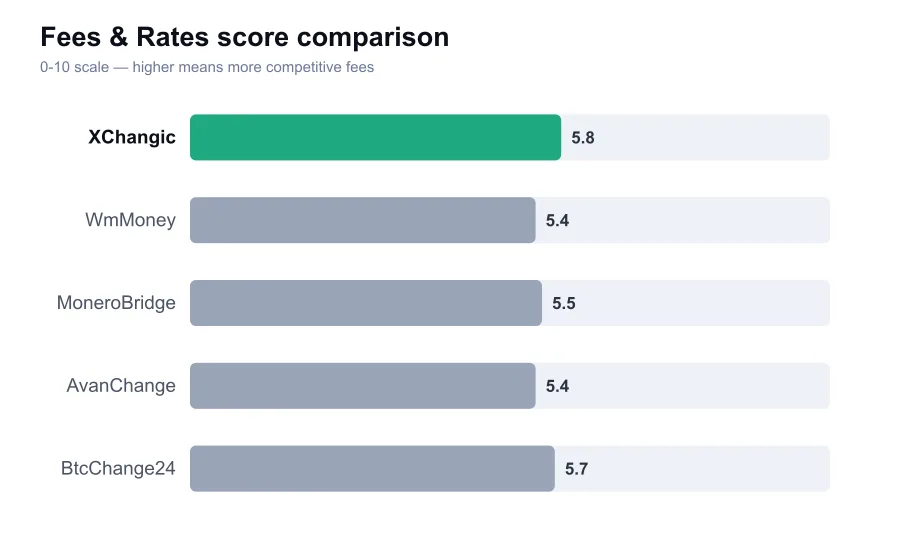
Price shopping is essential here. XChangic's rates are quoted as a conversion result, which means the service margin is usually folded into the rate instead of appearing as a clear trading commission. That is common practice, but it makes a claimed low fee impossible to assess in isolation. The only figure that matters is the amount that reaches the destination after all network, payment and exchange costs.
For a customer exchanging USDT to a card payout, the difference between the best and fourth-best quote can be larger than a standard exchange's explicit spot fee. The reverse is also true, because a direct exchanger can occasionally beat a trading platform once withdrawal friction is included. Check the quote at the moment of payment, review the minimum and maximum limits, and make sure the selected USDT network is exactly the one supported by the order.
XChangic does not strike me as the place to chase a fleeting market move. Crypto transfers can be fast, especially on networks with short block times, but payout timing may depend on the recipient bank and the operator's processing queue. Bitcoin needs confirmations, card payments can trigger anti-fraud holds, and a floating-rate order can change economically while those steps happen. That is the nature of an exchange office, not necessarily a service failure.
A fixed-rate order, where offered for a specific direction, is preferable for users who need certainty. Read how long the rate is reserved and what happens if the payment arrives short or late. Some customers mistake a displayed quote for a binding promise. It may only be an indication until the incoming funds are detected. XChangic should make that distinction especially clear, because rate disputes are where small exchange services attract their worst feedback.
Security is a more complicated subject than whether the site uses HTTPS. The real question is how safely the operator handles an unusual transaction and how much of that process is visible before funds are sent. XChangic does not have the public profile or detailed risk disclosures of a large licensed exchange. That does not make it automatically unsafe, but it means the customer has less independent material to rely on.
Users should assume that a supposedly no-registration route can still face transaction screening. Crypto addresses, card activity and payment references can all cause an order to be reviewed. If identity or source-of-funds material is requested, the quality and speed of the response become decisive. People who require guaranteed privacy should avoid bank-linked exchange routes entirely, because no honest provider can promise that result.
The practical security routine is boring and effective. Open the service only from a verified bookmark, never from an advertisement or a message link. Confirm the exact asset and network. Do not reuse an old payment instruction, because recipient details and order identifiers may be specific to a single transaction. Keep screenshots of the order terms, proof of payment and the blockchain hash until settlement is complete.
XChangic's reputation should be treated as developing rather than established. The exchange sector is full of services with enough positive comments to look safe at a glance, yet not enough long-term independent scrutiny to inspire confidence with a large sum. Look for feedback that describes an actual direction, amount range and resolution process. Generic praise, copied phrasing and a sudden burst of reviews carry very little weight.
I would also watch for the way negative feedback is answered. A credible operator does not need to disclose private customer data, but it should explain whether an order was delayed by confirmation count, a payment mismatch, reserve shortage or compliance review. Silence and canned answers are poor signs. XChangic may be suitable for measured use, but it has not earned the presumption of reliability that a household-name exchange has.
Support is where users will feel the difference between a good small operator and a weak one. A chat button and email address are only the beginning. The useful test is whether an agent can identify the status of an order, explain what evidence is needed and give a realistic timeframe. Before making a meaningful exchange, ask a concrete question. Ask about the selected payment route, not a vague question such as whether the service is safe.
For a first order, send an amount small enough that a delay is merely annoying. This is not paranoia. It is sensible operational testing. Verify the arrival time, payout description, communication quality and final amount. If all four are satisfactory, the service may deserve a larger repeat order. If support has to be chased over a small transaction, do not assume a larger one will be easier.
XChangic can be useful for users who value a direct conversion workflow and are capable of comparing quotes carefully. Its appeal is convenience, not a unique safety advantage or a proven institutional history. I would not recommend it to a beginner who wants a fully documented, regulated experience. Nor would I use it for money needed on a strict deadline.
My final view is that XChangic is serviceable within its lane, but the lane is narrow. The right customer is experienced, cautious and willing to test before trusting. The wrong customer is trying to convert a large holding quickly, privately and with guaranteed recourse. A decent quote can justify a small order, but it should not override the limited public transparency typical of this type of operator.