CoinDrop is a difficult provider to place confidently because the name has been used in several crypto contexts and there is no single, widely established exchange brand with the market visibility of Kraken, Coinbase, Coinmotion, or Bitstamp. That matters more than it might seem. A crypto service is handling irreversible transfers, so a vague corporate identity, thin public documentation, or unclear jurisdiction is not a small cosmetic problem. It is the first thing a careful buyer should investigate.
I would not approach CoinDrop as a proven mainstream exchange. Its public footprint is limited compared with regulated European brokers and long-running global trading platforms. That does not automatically mean it is fraudulent, and small providers do exist before they become well known. But obscurity changes the burden of proof. The operator should make its legal entity, registered address, terms, supported countries, custody practices, and complaint route easy to verify before anyone sends meaningful funds.
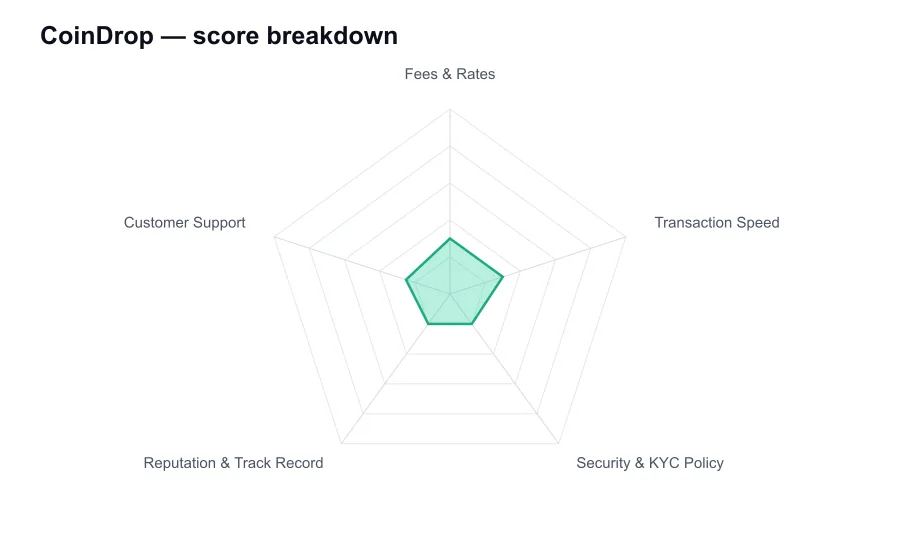
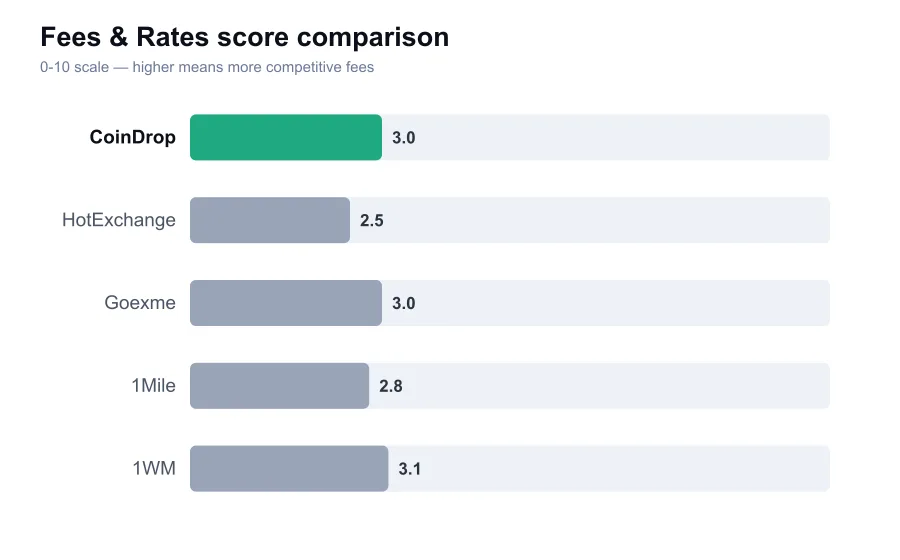
Pricing is another area where a buyer should be unusually strict. With established exchanges, a fee schedule normally separates trading commission, spread, card charges, deposit costs, and withdrawal fees. If CoinDrop presents only a final conversion quote, the visible fee may not be the full cost. A wide spread can make a supposedly low-fee swap considerably more expensive than an order placed on Kraken Pro or Coinbase Advanced.
The practical test is simple. Before completing a purchase, compare the quoted amount of bitcoin or ether against the live market price and then compare it with a quote from two better-known services at the same moment. Do this with the total amount you will receive, not the headline percentage. A difference of a few tenths of a percent is normal in retail crypto. A gap of several percent is a warning that convenience is being priced aggressively.
There is also little reason to accept vague network-fee language. Blockchain fees fluctuate, but a provider should still state whether it adds a handling margin and whether a withdrawal is batched or processed individually. For small transfers, those details often cost more than the advertised exchange fee. CoinDrop does not have the kind of deeply documented fee history that lets me call its pricing competitive with confidence.
Speed claims deserve the same scrutiny. A crypto transfer can appear quick because the provider immediately marks an order complete, while the actual bank settlement, blockchain broadcast, or withdrawal review still takes time. Card purchases can be authorized within minutes but sometimes trigger manual checks. Bank transfers depend on the payment rail, cutoff time, sender name matching, and the provider's compliance queue.
A good platform tells users what stage an order has reached and gives a transaction hash once coins leave its custody. That is the baseline I would expect from CoinDrop. Without a reliable public record of fulfillment times and a transparent status page, I would only test it with an amount I could afford to have delayed. Do not send a large first transaction merely because a site promises instant delivery.
Security is where a small or poorly documented operator faces its hardest comparison. Major custodial platforms publish information about cold storage, access controls, identity verification, and incident handling, even if they don't reveal every technical detail. CoinDrop should be judged by the same standard. Two-factor authentication, withdrawal confirmations, device management, and clear anti-phishing guidance are basic requirements, not premium features.
KYC can be either a strength or a source of friction depending on how it is implemented. An exchange that handles fiat payments will usually need identity checks, source-of-funds questions, or transaction monitoring. That is normal. What is not normal is asking for extensive documents without naming the regulated entity collecting them, explaining retention, or providing a privacy policy that can be held to account.
I would be particularly wary of any provider that asks customers to pay an extra tax, unlock fee, verification deposit, or liquidity charge before releasing a withdrawal. Those demands are common characteristics of crypto fraud operations and are not how legitimate exchanges handle routine payouts. A genuine compliance review may delay funds, but it should come with coherent support communication and a contractual basis, not improvised payment requests.
Reputation is not just a star rating. It is the accumulated evidence of years of customers making deposits, withdrawing assets, resolving errors, and discussing those experiences across independent places. CoinDrop does not have a well documented track record at the level I would require for substantial holdings. I could not treat a sparse review profile, promotional social media posts, or affiliate pages as a substitute for that record.
Customer support is similarly hard to score generously without visible evidence of operating depth. A contact form and an email address may be enough for a tiny service, but they are inadequate reassurance during a frozen withdrawal or a failed bank transfer. Users should check whether there is a published support schedule, a response-time commitment, an escalation channel, and documentation written for more than marketing purposes.
If somebody is determined to try CoinDrop, start with a very small transaction and withdraw immediately to a wallet you control. Save screenshots of the quote, the terms, the payment confirmation, and the blockchain transaction. Never leave a balance there until you have personally confirmed that deposits, trades, and withdrawals work as described. That cautious process is sensible at any new exchange, but here it is essential.
CoinDrop may appeal to people who have independently verified the operator and found a local payment option they cannot get elsewhere. For the ordinary buyer, though, the lack of an easily established public record is a decisive weakness. Crypto already has enough execution and counterparty risk. There is no compelling reason to add avoidable provider risk when regulated, recognizable alternatives are widely available.
My view is blunt. CoinDrop has not earned the trust premium that comes with sending serious money to a platform. Until its ownership, regulatory standing, fee mechanics, security controls, and support performance can be independently confirmed, treat it as an unproven service rather than a bargain. A small test may be defensible. Making it your regular exchange or storage location is not.