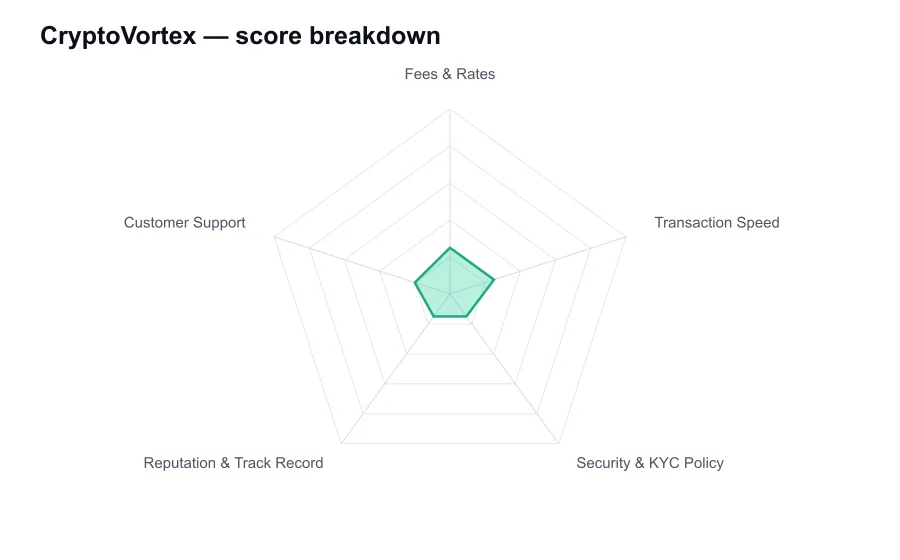
CryptoVortex is another name that should make a careful crypto buyer stop before opening a deposit screen. It does not have the readily verifiable market profile, regulatory visibility, or long public operating history associated with recognized exchanges such as Kraken, Coinbase, Bitstamp, or Coinmotion. In a sector full of copycat trading sites and short-lived brands, that absence is not a minor research inconvenience. It is a core risk factor.
A credible exchange should make it easy to answer ordinary questions: which company operates it, where that company is incorporated, whether it has relevant authorization, where customer assets are held, and which courts govern a dispute. If CryptoVortex does not present those answers clearly in primary legal documents, users should not fill in the blanks with reassurance from a polished website. Design, testimonials, and trading charts are trivial to create.
The name itself is broad enough that users should be alert to lookalike domains, cloned pages, and social-media impostors. Search results alone are not verification. Before registering, confirm the exact domain through official company records where possible, read the legal terms, and inspect whether contact details lead to a real support operation. A platform asking for crypto deposits should withstand this very basic due diligence.
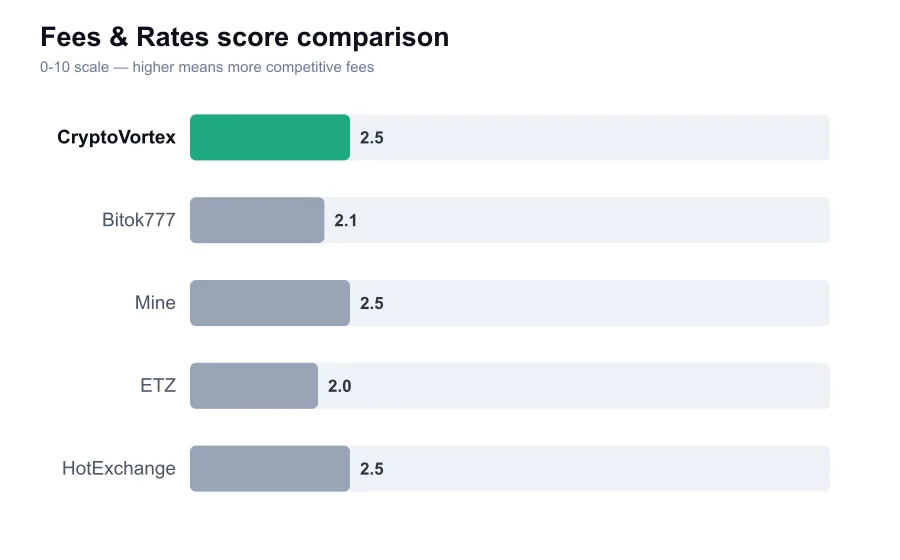
Fees are often where an unproven venue can look most tempting. A banner advertising zero commission or unusually low trading costs says very little if the bid-ask spread is wide, the execution price is poor, or withdrawals are subject to undisclosed charges. The only meaningful calculation is the net result: how much crypto or fiat you receive after every trading, conversion, network, and withdrawal cost.
CryptoVortex does not have the extensive independent pricing record needed for me to call it cheap. A sensible user would compare a small quoted trade against a live market price and against a quote from an established competitor. If the service uses an internal price rather than a transparent order book, the spread may be its real fee. That is not inherently improper, but it must be visible enough for the customer to judge.
Be wary of a fee schedule that becomes clear only after funds arrive. Legitimate services state minimum deposits, minimum withdrawals, supported networks, and charges before the customer commits. They do not reveal a new account activation fee, tax prepayment, anti-money-laundering deposit, or withdrawal release charge after a user asks to cash out. Those demands are serious danger signals, especially if payment is requested in crypto.
Execution speed is similarly easy to advertise and hard to verify. A screen can credit an account instantly without proving that a withdrawal will be processed promptly. Real speed involves card or bank settlement, risk review, order execution, blockchain broadcast, and network confirmations. Each stage has different failure points. The useful question is not whether CryptoVortex calls an order instant, but whether users can reliably move their assets out.
For any platform without an established withdrawal reputation, I would test that exact process before doing more business. Deposit the smallest practical amount, make a simple trade if required, and withdraw to a self-controlled wallet. Keep a record of timestamps, fees, and transaction identifiers. If a platform delays the withdrawal, changes conditions, or presses you to deposit more money, stop and seek independent advice before sending anything else.
Security claims should be evaluated with the same hard standard. Statements about encryption, military-grade protection, artificial intelligence, or cold storage are not substitutes for documented controls. At minimum, a serious provider should support robust two-factor authentication, confirm changes to account details, protect withdrawals, communicate security incidents, and explain its account recovery process. Customers should also be able to see how to report phishing or an unauthorized login.
KYC creates a particular tension with obscure providers. A regulated fiat service may legitimately ask for identity documents, proof of address, or information about a transaction. But handing that data to an organization with unclear ownership creates privacy risk as well as financial risk. Do not upload a passport, selfie, or bank statement until you can identify the legal entity receiving it and read a credible privacy policy.
CryptoVortex has not built the public, independently corroborated record required for a strong reputation score. Trust in this industry is earned through years of ordinary operational behavior: honoring withdrawals in volatile markets, responding to complaints, maintaining transparent terms, and surviving scrutiny. A handful of glowing comments or an influencer promotion cannot demonstrate that. They may be genuine, but they are not enough.
Support should be tested before money is involved. Send a basic pre-sale question and see whether the reply addresses the question, names the company, and provides a traceable route for escalation. A chat agent who only urges a deposit is not customer support. Nor is a Telegram contact who claims an account must be topped up before funds can be released. Serious exchanges have documented channels and can explain delays without pressure tactics.
I would also avoid installing remote-access software, sharing a screen with a supposed account manager, or accepting unsolicited trading help connected to CryptoVortex. No legitimate support person needs your recovery phrase, banking password, or remote control of your device. These warnings apply to all crypto platforms, but they are especially relevant where a provider's identity cannot be independently established.
There is a difference between taking investment risk and taking provider risk. Buying bitcoin through a transparent, reputable exchange exposes you to market volatility. Depositing funds with an opaque service exposes you to volatility plus the possibility that you cannot withdraw or even identify the counterparty. CryptoVortex, based on its limited verifiable standing, falls too far toward that second category for me to recommend it.
My recommendation is to avoid using CryptoVortex for meaningful deposits unless you can independently confirm a regulated operator, transparent pricing, and successful withdrawals under normal conditions. There are too many established alternatives to justify gambling on a service with limited public accountability. If you have already deposited and encounter a demand for extra release fees, do not keep paying. Preserve evidence and contact your bank, card issuer, relevant regulator, or fraud-reporting body promptly.