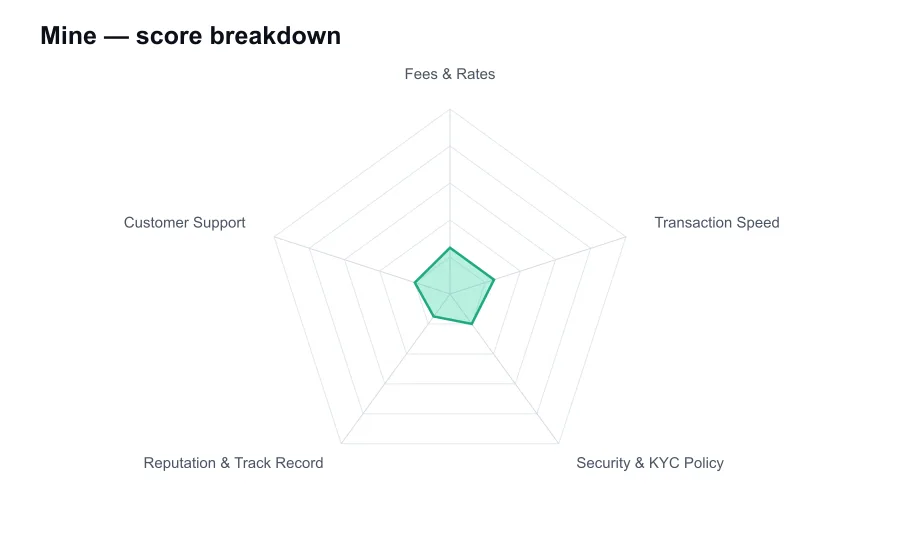
Mine is an exceptionally ambiguous name in crypto. It can refer to mining businesses, wallet products, token projects, applications, and small exchange services, but it does not identify a single well-established exchange brand in the way that Gemini or Bitstamp does. That ambiguity is not a minor editorial inconvenience. It is a serious user-safety issue, because criminals routinely exploit generic names and search confusion to imitate real services, advertise fake investment portals, or direct users to the wrong website.
For that reason, I cannot responsibly treat Mine as a verified mainstream exchange provider. A genuine exchange should make its legal entity, supported jurisdictions, licensing claims, customer terms, fee schedule, custody model, and official communication channels easy to confirm. If a service merely calls itself Mine while leaving those basics vague, it has not met the threshold for a trust recommendation. The burden is on the provider, not on the customer, to establish identity.
This is particularly important in a market full of lookalike domains and social-media promotions. A polished app screen, a Telegram group, or a promised daily return is not evidence that an exchange exists as a credible business. Before creating an account, users should independently locate the legal terms, check whether the company details match official registries where relevant, and confirm that support contacts appear consistently across the service's own materials. Never use a link supplied in an unsolicited message.
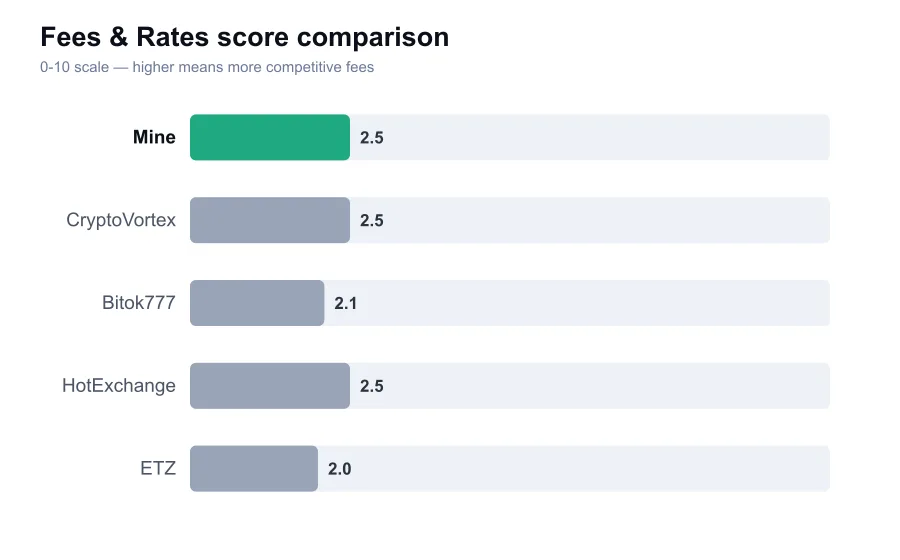
Fees cannot be assessed favorably where the product identity and official pricing are unclear. A legitimate exchange lets users see trading charges, spreads, withdrawal fees, deposit conditions, minimum transaction sizes, and any inactivity or conversion costs. Generic platforms often market a zero-fee claim while recovering their revenue through a poor exchange rate or restricting withdrawals. If you cannot calculate the all-in cost before funding, you should assume the price may be worse than it looks.
The comparison point is simple. Kraken and Coinbase may not always be the cheapest venues, but their fee structures and transaction records can be examined. A smaller exchange can compete by publishing clearer fixed fees or offering superior local payment rails. Mine, as an insufficiently identified provider, cannot earn that benefit of the doubt. An attractive advertised rate is meaningless if the user cannot independently verify whether withdrawals will be processed on normal terms.
Speed claims deserve the same skepticism. Crypto transfers may settle quickly on a blockchain, but an exchange can delay the part that matters most, account approval, withdrawal processing, compliance review, or fiat payout. Fraudulent services often show an internal balance updating instantly, then invent a tax, verification charge, or release fee when the customer asks to withdraw. No reputable exchange requires a customer to send more cryptocurrency to unlock an existing balance.
A secure exchange needs more than two-factor authentication on a login screen. It needs custody controls, segregation practices, withdrawal protections, security monitoring, incident response, and transparent policies for account compromises. For a little-known product named Mine, public evidence of those protections is too limited to award a strong score. Users should never upload identity documents or deposit funds until they have verified exactly who operates the service and why that information can be trusted.
KYC is another point where ambiguity creates trouble. A proper provider states when identity verification is required, which documents it accepts, what jurisdictions it serves, and how it handles personal data. A questionable platform may initially promise no verification, then freeze withdrawals and demand intrusive documents with no credible privacy policy. That is not merely inconvenient. It can expose users to both financial loss and identity theft.
Reputation is the decisive weakness. I could not establish a single, widely recognized exchange track record under the standalone name Mine that would support a normal recommendation. There is a major difference between a young but identifiable company and a label that cannot be reliably tied to a public operating history. Without durable third-party coverage, verifiable customer reports, and clear legal information, a cautious reviewer must score reputation poorly.
Support should not be judged by how quickly a sales account responds before a deposit. Test whether the provider can answer practical questions about withdrawal limits, network maintenance, chargebacks, account closure, and complaint escalation. A real support operation gives consistent answers from official channels. It doesn't pressure users to deposit through private chats, communicate only through disappearing messages, or ask for seed phrases. Any request for a wallet recovery phrase is an immediate stop sign.
For users who have already deposited into a service called Mine and are experiencing withdrawal problems, don't send additional money to pay a so-called unlock fee. Save screenshots, transaction hashes, wallet addresses, emails, and chat logs. Contact your bank or payment provider promptly if fiat was involved, and report the case to relevant consumer-protection or cybercrime channels in your jurisdiction. Recovery firms that demand upfront crypto payment can create a second loss.
There may be a legitimate niche product behind a specific Mine-branded service, but a name alone is not sufficient evidence. A reviewer should not fill the gaps with assumptions, and users should not either. If you can identify a particular legal entity and official domain, assess that exact business on its own facts. Until then, the only responsible position is to regard Mine as unverified.
The right alternative depends on what you need. For buying crypto with fiat, use a regulated exchange available in your country. For self-custodial token swaps, use a recognized DEX or aggregator and verify every contract. For mining exposure, use established public companies or understand that cloud-mining offers are commonly high-risk. Trying to make one vague service cover all of these functions is how users end up with unnecessary exposure.
My final take is severe because the risk is avoidable. Mine does not have enough clearly attributable public exchange information to justify a deposit recommendation. A provider with an unclear identity cannot score well on fees, security, support, or reputation, regardless of how attractive its marketing may be. Keep your funds and personal documents away until you can independently verify the exact operator, and choose a transparent alternative if that verification is not possible.