Coinmotion is a Finnish crypto broker and custody service that has built its business around a more conservative promise than the typical global exchange. It is aimed at people who want to buy, sell, store, and use major cryptoassets through a regulated European company, rather than chase every new token or trade perpetual futures at high leverage. That positioning is narrow, but it is real, and it makes Coinmotion easier to evaluate than many flashy crypto brands.
The company is operated from Finland and is registered as a virtual currency provider under Finnish supervision. For a customer using euros and wanting a named European counterparty, that carries meaningful weight. It does not remove market risk, and it does not turn crypto into a bank deposit. Still, it is a far stronger starting point than an exchange that hides behind an offshore address or a generic registration number.
Coinmotion's interface feels more like a broker than a trading terminal. You choose an asset, see a quoted price, and execute. Beginners often prefer that because there is less room to make a mistake with order types or fragmented markets. Active traders may find it restrictive. There is no attempt to compete with Binance's enormous asset menu or Kraken's sophisticated spot and derivatives infrastructure.
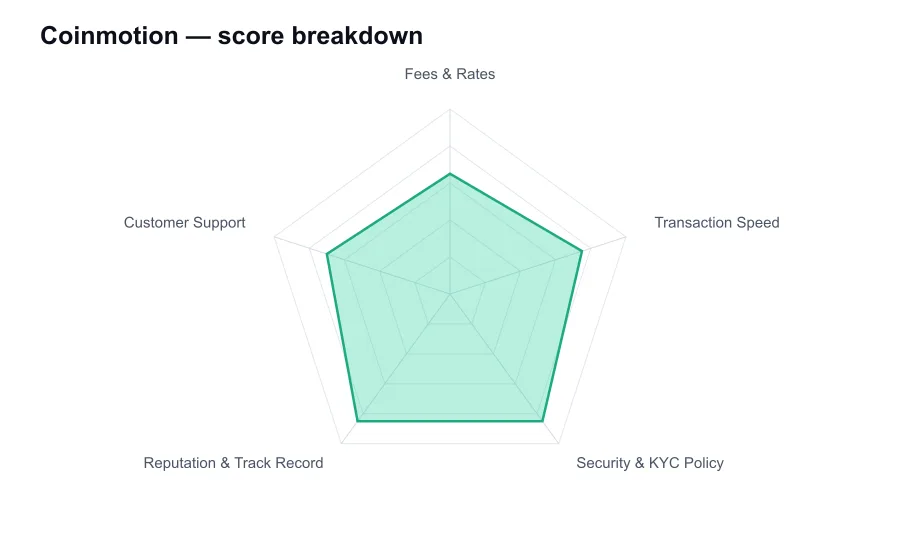
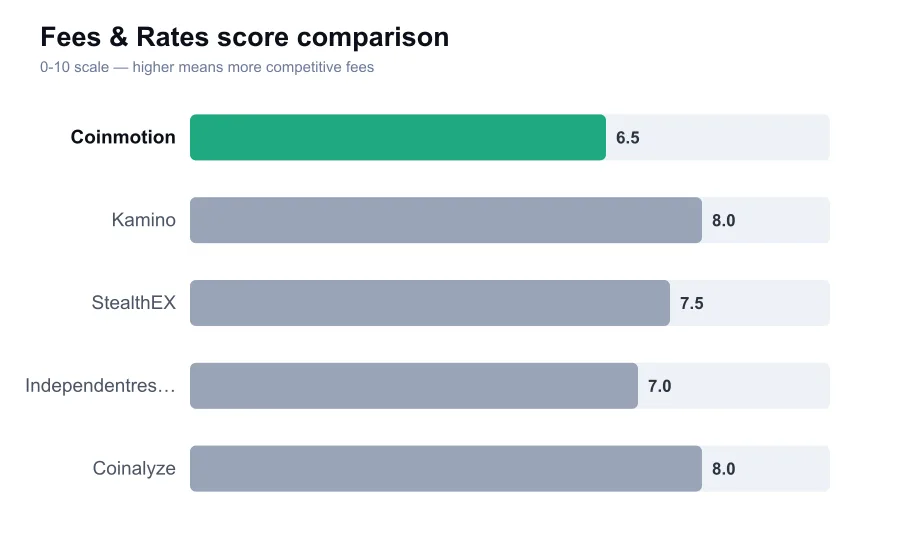
The trade-off appears most clearly in cost. Coinmotion has traditionally used a percentage-based pricing model, with fees that can fall as trading volume rises and with service tiers for more active clients. Retail customers should expect a broker-style price rather than the razor-thin maker fees available on a professional order book. The exact rate shown in your account and quoted transaction should be treated as the authoritative figure, because tiers and product pricing can change.
That does not make Coinmotion expensive in every useful sense. A simple euro purchase with a clearly displayed quote can be better value than a supposedly cheap exchange where a newcomer pays card fees, crosses a poor spread, and makes a withdrawal error. But for someone buying large amounts regularly, the percentage cost adds up quickly. A liquid spot market at Kraken Pro or Coinbase Advanced will often be cheaper if you are comfortable placing orders and managing transfers.
Bank funding is one of Coinmotion's stronger practical points for European customers. SEPA transfers are familiar, relatively inexpensive, and generally far more sensible than buying crypto by card. Processing time still depends on the sending bank, weekends, reference details, and compliance checks. Once euros are available, internal trades are normally prompt because the broker is matching a purchase from its own available liquidity rather than waiting for a public order book to fill.
Crypto withdrawals are a separate question. Coinmotion has to perform sensible security checks before releasing assets, and blockchain confirmation time depends on the network. Bitcoin can take from minutes to much longer during congestion, while assets on faster networks may arrive sooner. The important thing is that the customer can distinguish an internal order completion from an on-chain withdrawal. Coinmotion's established operating model inspires more confidence here than a service that merely labels every order instant.
The service also offers features beyond basic brokerage, including custody, recurring buying options, and tools tied to crypto-backed lending or collateral products in eligible circumstances. Those products can be useful, but they should not be confused with ordinary savings. Borrowing against volatile collateral can create real liquidation risk. Coinmotion presents a more sober face than many platforms, yet the underlying asset class remains unforgiving if a customer overextends.
Identity verification is mandatory for normal use. Some privacy-focused users will dislike that, but it is the expected result of using a regulated euro gateway. Coinmotion asks customers to verify identity and may request further information under anti-money-laundering obligations. That can feel intrusive, particularly if a payment is paused for review. I would rather see clear, lawful compliance processes at a custodian than an implausible promise that fiat conversion can happen with no checks at all.
Security is a major reason to consider Coinmotion. The company describes a custody approach built around offline storage and controlled access, and it has operated through multiple crypto market cycles. No custodian is invulnerable, so users should still use a unique password, two-factor authentication, and withdrawal controls where available. Long-term holders with the knowledge to self-custody may still prefer their own hardware wallet, but Coinmotion is one of the more credible custodial choices in its region.
Its reputation rests less on loud marketing and more on longevity. Coinmotion has been active since the early 2010s, survived several boom-and-bust cycles, and maintained a visible Finnish corporate identity. That does not mean every customer experience will be effortless. Compliance delays, bank transfer timing, and market volatility can all produce frustration. It does mean the platform has a track record that is materially stronger than a newly launched broker with anonymous founders.
Support is competent but not magical. A smaller European service cannot offer the enormous multilingual, always-on support operation that the largest exchanges advertise. Customers should expect normal ticket-based assistance and should read the help material before a time-sensitive transfer. The quality of support often becomes most visible during verification reviews, where staff may be constrained in what they can disclose. That is frustrating, but it is not automatically a sign of poor service.
The people likely to get the best experience are Finnish and broader European buyers who value local regulation, euro banking, and a simpler purchase process. They may happily pay a little more for that clarity. It is less compelling for a day trader, altcoin hunter, or user whose first concern is finding the lowest possible spread. Coinmotion is intentionally not built for those audiences.
I also like that its proposition does not depend on promising impossible yields or treating every customer as a speculative trader. That restraint is refreshing in crypto. The drawback is that a careful broker can feel slow and expensive beside a giant international exchange during a bull run. Whether that is a flaw depends on why you are buying in the first place.
Coinmotion is a strong choice for the person who wants crypto access with a recognizable European compliance framework and a comparatively calm user experience. It is not the cheapest execution venue, and it should not replace proper self-custody for someone with serious technical confidence. But its combination of regulatory standing, long operating history, and practical euro access makes it one of the more credible broker-style options available to European retail users.