Kamino is not a conventional centralized exchange. It is a Solana-based decentralized finance protocol that combines lending, borrowing, automated liquidity strategies, and leveraged positions. That distinction matters from the first click. Kamino does not normally take custody through a standard exchange account with a password reset desk and a bank-style customer relationship. You connect a self-custody wallet, approve on-chain transactions, and interact directly with smart contracts.
For experienced Solana users, Kamino occupies an important place in the market. It has become one of the ecosystem's more prominent DeFi money markets and liquidity-management protocols, alongside applications such as Jupiter, Marinade, Drift, and Marginfi. Its appeal is that it turns several tasks that used to require separate protocols into a relatively coherent interface. You can supply assets, borrow against collateral, use vault strategies, or create leveraged exposure without leaving the Solana environment.
That convenience should not obscure the risk. DeFi is not a savings account, and a lending deposit is not a guaranteed yield product. The displayed annual percentage yield is variable. It changes with supply, borrowing demand, token incentives, and market conditions. A high yield can disappear quickly, while a borrowing position can become dangerous just as quickly if collateral falls or the borrowed asset rises. Kamino is powerful because it gives users control. It is unforgiving for the same reason.
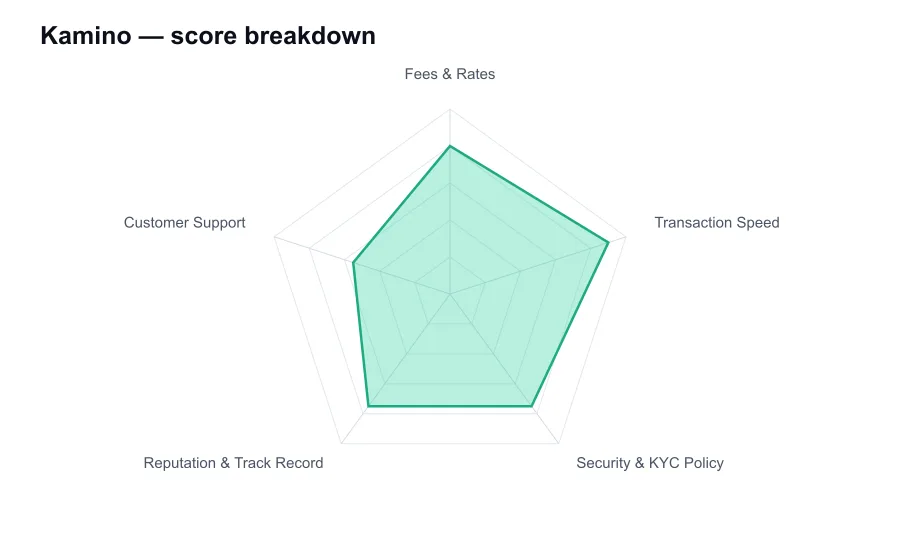
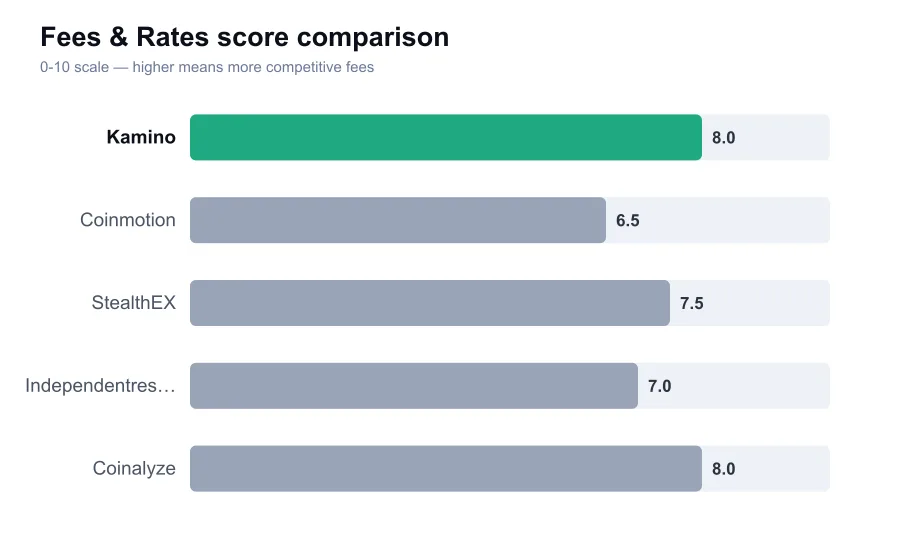
Fees are more complex here than at a centralized spot exchange. There is no simple universal maker and taker percentage. Supplying assets generally involves Solana transaction costs, while borrowing has a variable interest rate determined by pool utilization and protocol parameters. Liquidity vault users may also face strategy, performance, swap, or underlying pool costs depending on the product. Leveraged users need to account for borrowing costs, price impact, and repeated rebalancing, not just the fee shown at entry.
Solana network fees are usually tiny compared with Ethereum mainnet, which is one of Kamino's strongest practical advantages. Opening a position, depositing collateral, or repaying a loan can cost cents or less in ordinary conditions. Cheap transactions encourage sensible behavior, such as adjusting collateral before a position is near liquidation. But low network fees do not make a trade cheap. Slippage on a thin asset or interest on a highly utilized borrow pool can dwarf the blockchain cost.
Kamino's multiply and leveraged tools deserve special caution. Leverage can amplify a well-timed directional trade, but it can also turn an ordinary market move into a liquidation. Users need to understand loan-to-value ratios, liquidation thresholds, health factors, and the cost of maintaining exposure. Do not treat the maximum position the interface permits as a recommendation. A conservative user leaves a large buffer, monitors the position, and holds enough SOL for transaction fees if they need to act quickly.
Speed is excellent by traditional finance standards. Solana transactions typically confirm within seconds, and Kamino's interface benefits from that responsiveness. Deposits, repayments, and collateral adjustments can happen far faster and more cheaply than comparable actions on many Ethereum-based lending protocols. For a user managing a volatile position, that speed is genuinely valuable. It is one reason Solana DeFi has become competitive rather than merely experimental.
Still, rapid settlement doesn't mean guaranteed execution. Solana has experienced periods of congestion and degraded performance, and wallets or RPC providers can fail at exactly the moment you need them. Oracle updates, transaction priority, and a sudden rush to unwind positions can affect practical outcomes. Kamino can be fast most days, but users should not build a strategy that assumes they will always exit at a precise price during market stress.
The protocol has made a more serious effort at security than the average anonymous DeFi project. Kamino has published security material and has used external audit and review firms, including well-known Solana security specialists. It also participates in the established DeFi practice of public vulnerability reporting and bug bounty incentives. Those are positive signals. They reduce some avoidable smart-contract risk, but no audit or bounty can guarantee that a complex lending system is free of bugs.
There are several layers of risk beyond a direct contract exploit. Price-oracle failures can cause bad liquidations. A depegging stablecoin can damage both lenders and borrowers. A governance decision can alter parameters. A compromised wallet can drain an account even if Kamino's contracts function perfectly. Users should verify the official domain, inspect wallet approval prompts, revoke unused permissions, and never sign a transaction they do not understand. In DeFi, the user is part of the security model.
Kamino generally does not impose conventional exchange KYC because the protocol is accessed with a non-custodial wallet. That is attractive to users who value permissionless access, though it should not be confused with legal immunity. Front ends may restrict certain jurisdictions, wallet providers can apply their own policies, and users remain responsible for tax reporting and local law. There is also no account recovery process if you lose your seed phrase or send assets to the wrong address.
Its reputation is good within Solana DeFi, especially compared with short-lived yield farms that appear and disappear every cycle. Kamino has been used at meaningful scale, has retained relevance as Solana activity has expanded, and is widely discussed by informed ecosystem participants. That said, the protocol is still young compared with traditional financial institutions. Its reputation is a reason to investigate it, not a reason to abandon position sizing or self-custody discipline.
Customer support is the clearest compromise. Kamino has documentation, community channels, social updates, and an active ecosystem presence, but it does not offer the customer-service model of a regulated centralized exchange. Nobody can reverse a valid on-chain transaction because you clicked too quickly. Community support can help diagnose an interface issue or explain a parameter, but it cannot restore a lost seed phrase or guarantee a rescue from liquidation.
Kamino is excellent for users who already understand Solana wallets and want capital-efficient DeFi tools. It is a bad first crypto product for someone who has never managed a private key or watched a collateral ratio. Start by supplying a small amount of a major asset, not by opening a leveraged multiply position. My take is favorable on the protocol's utility and ecosystem standing, but firm on the risk: Kamino rewards competence, and it charges harsh tuition to users who confuse a fast interface with a safe investment.