Moneta365 is the sort of crypto brand that calls for a more defensive review than a conventional exchange comparison. It has a limited, difficult-to-verify public profile and does not carry the recognizable regulatory, corporate, or market history associated with established platforms. That does not automatically prove wrongdoing, but it sharply changes the burden of proof. Users should demand evidence before depositing, not after a withdrawal problem appears.
A credible exchange normally makes it easy to identify the company operating it, its legal jurisdiction, its terms, its trading conditions, and a way to reach accountable support. With Moneta365, the central issue is not whether a promotional page can promise fast trading or attractive returns. Anybody can make those claims. The issue is whether independent sources and clear documentation support them. The available public footprint is too thin to inspire confidence.
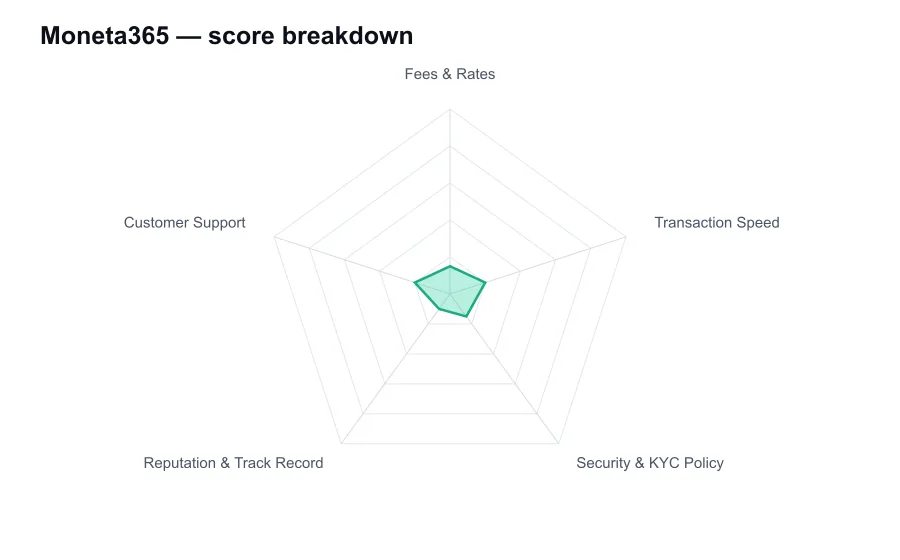
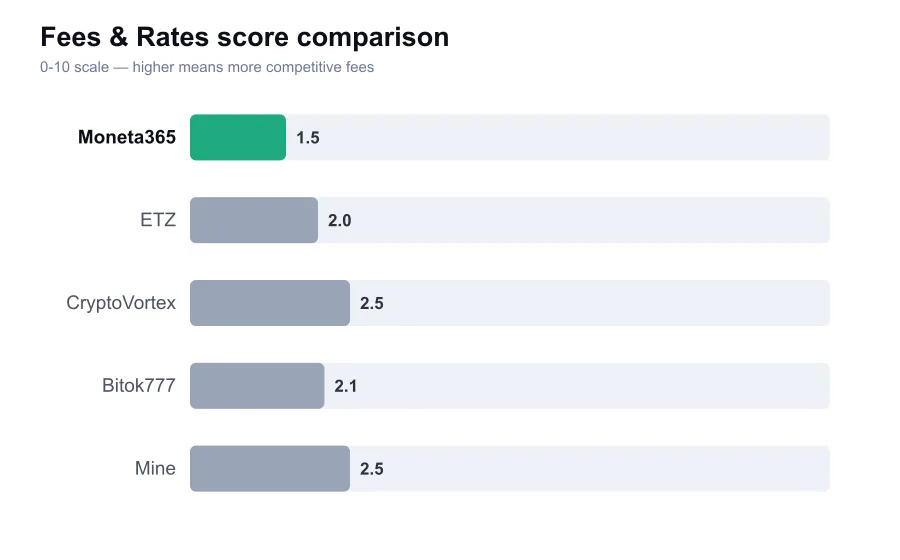
That lack of transparency makes a meaningful fee score difficult. A low headline fee is irrelevant if withdrawal conditions are vague, spreads are hidden, or a customer later encounters an unexplained charge. Reputable exchanges distinguish trading fees, withdrawal fees, network fees, and conversion spreads. They also publish fee tables that can be checked before money moves. Any provider that cannot meet that basic standard should not receive the benefit of the doubt.
Users should be especially suspicious of requests to pay an additional fee, tax, insurance payment, wallet activation charge, or verification deposit before a withdrawal can be released. Those demands are common red flags in fraudulent investment operations. Real exchanges may charge a published withdrawal fee or require identity verification, but they do not usually ask customers to send new funds in order to unlock funds that are already theirs.
Transaction speed claims deserve the same scrutiny. A provider can mark a withdrawal as pending, processing, or completed on its own interface without proving that an on-chain transaction has been broadcast. The proof is a valid transaction hash visible in an independent blockchain explorer, with the correct destination address and amount. Until that exists, a customer has no reliable evidence that a withdrawal has left the platform.
In normal exchange operations, deposits become available after stated blockchain confirmations and withdrawals are sent within an established processing window. Delays can happen for genuine security checks, maintenance, or network congestion. The difference is communication and evidence. A credible venue can explain the hold, cite the relevant policy, and provide a path to resolution. An opaque venue merely repeats that a customer must wait or pay more.
Security cannot be judged only by whether a site displays a padlock icon or offers a login page. HTTPS is table stakes. The meaningful questions are whether customer assets are segregated, whether the operator has published security practices, whether withdrawals are protected with strong authentication, and whether there is a credible incident history. Moneta365 does not provide enough independently verifiable material to score well on those measures.
KYC is another area where vague language can become dangerous. Regulated platforms explain who must verify, what documents are required, how data is handled, and why certain restrictions apply. A site that asks for highly sensitive documents after a deposit, without a clear legal entity and privacy policy, creates a serious identity-risk concern. Do not upload a passport, bank statement, or selfie merely because an unfamiliar site says it is necessary.
The reputation question is decisive here. Established exchanges are not perfect, but they leave an extensive trail, app-store history, press coverage, corporate records, public complaints, and years of user discussion. Moneta365 lacks the depth of independently assessable history needed for a trust-based financial service. A few positive comments on a website or social account do not replace verifiable evidence, particularly where users cannot confirm the reviewers' identities.
There is also no substitute for a transparent legal route if a dispute occurs. Before using any platform, a user should be able to find the operating company, physical jurisdiction, governing terms, and formal complaint channel. If those details are absent, inconsistent, or difficult to verify, recovering funds may be exceptionally hard. Crypto transactions already limit reversibility. Sending coins to an unclear counterparty adds another layer of risk that most users do not need.
Support is where questionable platforms often reveal themselves. Fast replies that pressure a user to deposit more are not good support. Useful support can answer precise questions about a transaction ID, blockchain hash, quoted fee, withdrawal status, and written policy. It should not rely on private messaging apps, personal wallets, or urgent emotional language. Any representative asking for a seed phrase is attempting to take control of a wallet.
A sensible test, if someone has already opened an account, is not to increase exposure. Attempt the smallest permitted withdrawal to a wallet you control and independently verify it on-chain. Do not send additional money to meet a claimed release condition. Preserve all communications, screenshots, wallet addresses, and transaction hashes. If there is pressure to pay to withdraw, stop, seek local fraud-reporting advice, and contact the payment provider where applicable.
Comparing Moneta365 with recognized venues is not really a close contest. Kraken, Coinbase, Bitstamp, and regional licensed exchanges may ask for more identity information and can be less convenient for privacy-focused users, but their policies, fee schedules, and corporate presence are substantially easier to evaluate. For instant conversion, established noncustodial swap providers also offer more publicly observable operating histories.
The right question is not whether Moneta365 might work for one small transaction. Many unsafe services can process early withdrawals to build confidence. The question is whether the available evidence justifies risking funds or identity documents. On that test, it falls short. The lack of verified transparency is itself the relevant finding, and no attractive offer should override it.
I would not recommend Moneta365 for deposits, investment activity, or long-term use. There are too many unanswered questions around ownership, fees, security controls, and withdrawal reliability. Crypto users already accept market risk and irreversible transfers. They should not also accept avoidable platform risk from a provider that has not established a credible, independently verifiable track record.
My final view is blunt. Moneta365 has not supplied enough public evidence to be treated as a trustworthy exchange provider. Avoid sending meaningful funds, avoid submitting sensitive identification, and use a clearly established alternative instead. If funds are already involved, focus on documentation and a small withdrawal test, not on escalating deposits in response to promises or pressure.