Symbiosis is a cross-chain liquidity protocol rather than a conventional instant exchange. Its pitch is simple enough, swap an asset on one network and receive the destination asset on another without manually using a bridge, changing wallets, or buying gas on every chain. In practice, it sits between a bridge, a decentralized exchange, and an intent-based routing layer. That makes it useful, but it also makes it more technically involved than a basic Bitcoin to USDT swap service.
The protocol has focused on EVM networks and has expanded its reach over time through supported chains, stablecoin routes, and integrations. A typical user connects a wallet, selects the source and destination networks, approves the token, and confirms the transaction. The interface does a decent job of hiding the ugly mechanics of cross-chain settlement. Someone moving USDC from Arbitrum to BNB Chain can often complete the task in one flow instead of juggling a bridge, a swap, and a separate destination-chain transaction.
That convenience is the reason Symbiosis has a real place in the market. It competes less directly with Trocador or ChangeNOW and more with products such as Across, Stargate, LI.FI-powered interfaces, Synapse, and native bridge routes. It is especially appealing to DeFi users who already understand wallet approvals and network fees but do not want to babysit a multi-step transfer.
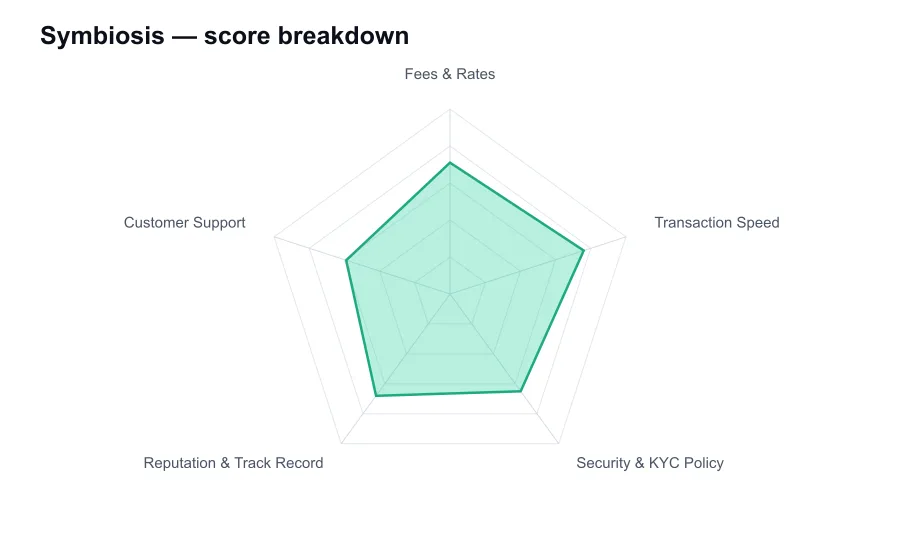
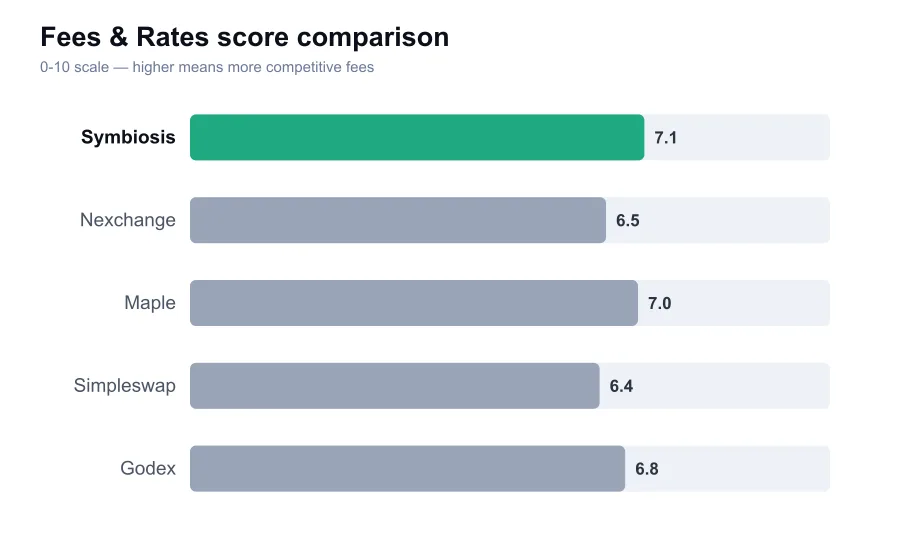
Fees are not presented as one clean, universal percentage because the final cost has several pieces. There is the underlying swap price, liquidity-provider economics, the protocol's routing charge where applicable, and gas on the source chain. If a route involves a less liquid asset or a more expensive network, the price can look materially worse than the headline exchange rate. That is not automatically a Symbiosis problem, but it is the user’s bill, and the interface needs to be judged by the final amount received.
For liquid stablecoin routes, Symbiosis can be reasonably priced. Moving between major EVM chains is often competitive with manually stitching together a bridge and a decentralized exchange. The difference is rarely dramatic enough to call it the cheapest route every time. Aggregators can find a better path on a given day, and native bridges may be cheaper for a single supported asset. Symbiosis earns its fee advantage through reduced friction, not by being the permanent price leader.
The quote screen deserves close attention before confirmation. Network gas can be trivial on Polygon, Arbitrum, or BNB Chain, then become painful on Ethereum mainnet. Slippage also matters. A swap that looks inexpensive in percentage terms can become poor value if the destination token has shallow liquidity. I would not use it blindly for a large conversion into a long-tail token. For stablecoins and common wrapped assets, the economics are much easier to justify.
Speed is generally good, particularly for established routes with healthy liquidity. A straightforward transfer can settle in minutes, while congestion, source-chain finality, route availability, and destination-chain execution can extend the wait. That is still much better than older bridge experiences where a transaction could sit unresolved for an hour with little useful information. Symbiosis normally gives users enough transaction detail to check progress on explorers if the interface is slow to refresh.
There is an important distinction between fast and guaranteed. The protocol can only settle as quickly as its cross-chain design, relayers, liquidity, and the relevant blockchains allow. A delayed Ethereum transaction is not fixed by a polished frontend. Users should avoid initiating time-sensitive trades based on the shortest quoted estimate. For portfolio rebalancing, moving collateral, or funding another chain, the usual speed is practical. For an arbitrage trade with a narrow window, it is not the tool I would trust first.
Security is where the category gets uncomfortable. Symbiosis is non-custodial in the ordinary user sense, meaning it does not ask customers to deposit funds into a company account and wait for a manual payout. Your wallet signs the transaction. That is a strong privacy and control advantage. It does not eliminate risk, because users are still trusting smart contracts, cross-chain messaging, liquidity infrastructure, and the correctness of the route.
Cross-chain protocols have a harsher threat model than a single-chain exchange. The industry has seen bridge exploits large enough to make every serious user cautious, even where the affected project was not Symbiosis. Audits and public technical documentation are positive signals, but an audit is not insurance and a governance token is not a security guarantee. I would use a hardware wallet, verify the domain, inspect approvals, and keep large transfers split into sensible tranches.
There is no standard KYC gate for using the protocol through a self-custody wallet. That is a major attraction for DeFi-native users, especially those who do not want an account, identity upload, or withdrawal review. It also means there is no familiar centralized-exchange support structure if a user makes an irreversible mistake. Send funds on the wrong network or approve a malicious lookalike site, and there may be nobody who can unwind it.
Symbiosis has established more credibility than an anonymous one-page swap site. It has operated publicly in the DeFi ecosystem, maintains a recognizable brand, and has developed integrations rather than relying solely on paid search traffic. Still, it does not have the institutional history of Coinbase, Kraken, or Binance, nor does it have the battle-tested simplicity of a native chain bridge. Its record is credible for a DeFi protocol, but it remains a specialist product in a risky sector.
Support is serviceable rather than luxurious. Documentation, community channels, transaction hashes, and Discord or Telegram-style contact points are more relevant here than a call center. That works for experienced users who can provide a wallet address, chain, token, and transaction ID. It is weak for beginners who simply know that their money has not appeared yet. Response quality can depend heavily on whether the issue is a genuine protocol problem, a pending chain transaction, or user error.
My view is that Symbiosis is a capable cross-chain utility for people who understand why they need it. It is not a casual exchange for a first crypto purchase, and it should not be treated like a bank transfer. For stablecoin movement and routine EVM portfolio management, the combination of no account, integrated routing, and reasonable settlement times is compelling. For large one-off transfers, compare the final quote with Across, Stargate, LI.FI routes, and native options before pressing confirm.