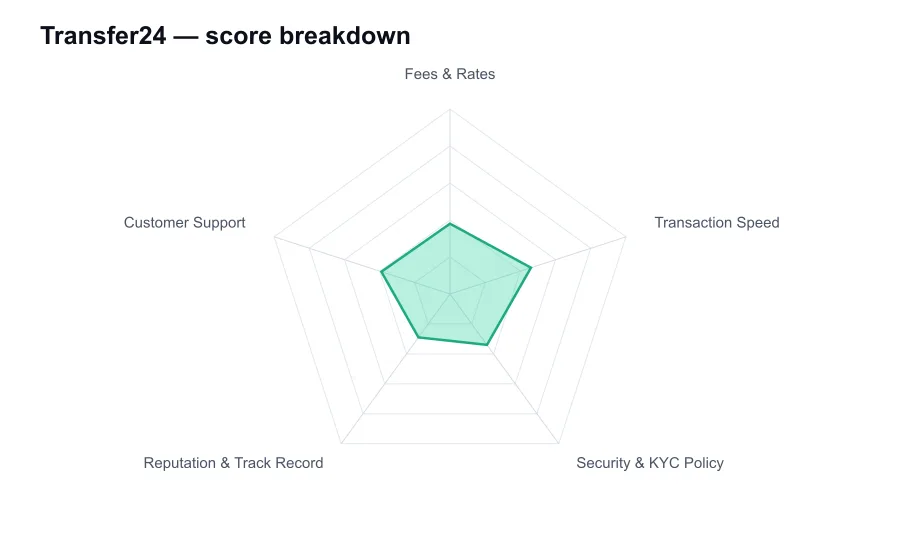
Transfer24 is the kind of name that demands more investigation than confidence. In crypto, generic financial branding can be a warning sign because it is difficult to distinguish a legitimate small provider from copycat websites, short-lived broker operations, and outright impersonators. A service using this name may present itself as a fast way to exchange or transfer digital assets, but prospective customers should verify the exact legal entity and official domain before sending a cent or a coin.
That caution is not cynicism for its own sake. Crypto services handling deposits need to earn trust with clear ownership, licensing claims that can be checked, meaningful security documentation, and a history that exists outside their own marketing pages. Transfer24 does not have the broad independent visibility or extensive public track record associated with established brands such as Kraken, Coinbase, Bitstamp, or even better-known instant exchange aggregators.
The product proposition appears aimed at simplicity. That can be attractive to someone who wants to convert one asset into another without learning charting tools, order types, or wallet mechanics. But simplicity is only useful if the provider explains what happens after funds are sent. Is the platform acting as principal, finding a third-party provider, or holding assets in custody? If the answer is vague, the customer is accepting a risk they cannot price.
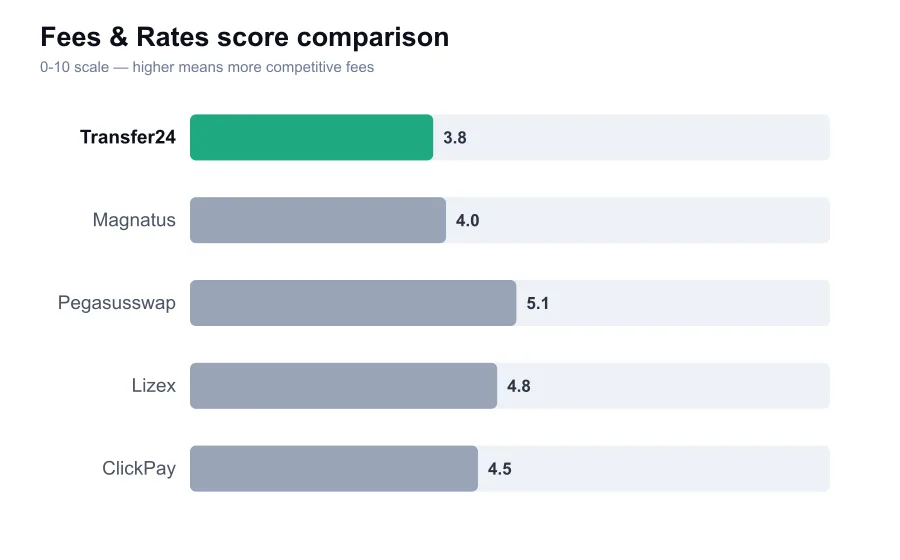
Fees are the first place to slow down. Many small conversion services market speed while burying their compensation in the exchange rate. A quote may show no explicit commission while still carrying a spread far wider than a major exchange’s trading fee. That does not automatically make the service dishonest, because liquidity, payment processing, and operational costs are real. It does mean that a user should compare the final received amount, not the attractive word free.
For a small, urgent transaction, paying a convenience premium can be rational. For recurring purchases or any meaningful sum, opaque pricing is a poor bargain. Compare the quoted rate against a live reference price, then factor in deposit fees, withdrawal charges, and network cost. If Transfer24 cannot state whether a quote is fixed or floating, walk away. A floating rate can change while a transaction is confirming, and that matters during volatile markets.
Speed claims also need translation. A crypto transfer can be broadcast in seconds, but confirmation and settlement are not the same thing. Bitcoin can take far longer than an Ethereum or Tron token transfer, and fiat payments may introduce bank processing delays. If the platform performs manual compliance checks, an order can be paused regardless of how fast the blockchain is. Any provider promising instant settlement without explaining those limits is overselling the experience.
The right test is a small transaction with an asset you understand. Record the quoted amount, time of payment, transaction hash, completed amount, and actual settlement time. That gives you more useful evidence than promotional language. Do not test with a large amount simply because a site promises attractive rates. In crypto, the inability to reverse a transfer makes poor due diligence expensive.
Security is the central concern. I could not place Transfer24 in the same trust category as long-established, heavily scrutinized exchanges based on publicly recognizable reputation alone. A smaller platform may use standard tools such as HTTPS, two-factor authentication, and wallet security controls, but customers need proof of operational maturity beyond those basics. Where are the company details? Are reserves, custody arrangements, incident procedures, and withdrawal controls explained? Those are the questions that separate a service from a landing page.
KYC policy can tell users something about the model, but it is not a quality seal. A no-KYC service may be privacy-oriented or simply poorly controlled. A KYC-heavy service may be compliant or may just collect sensitive data without providing meaningful protection. Before uploading an identity document, verify the business, read the privacy policy, and make sure the domain is exactly right. Identity theft risk does not disappear because a crypto company asks for a selfie.
The limited public footprint is a real reputational handicap. A company can be new and legitimate, but new businesses should not expect customers to extend them the same trust granted to firms that have survived market crashes, withdrawal runs, and regulatory scrutiny. Transfer24 has not earned that benefit of the doubt on the information available to a typical retail user. I would want strong external evidence before using it for more than a carefully controlled trial.
Support is another area where the risk becomes visible. Small providers often advertise round-the-clock assistance through chat or messaging apps. Fast replies are welcome, but they are not enough. A good support operation can identify an order by reference number, explain whether funds are pending on-chain or under review, and provide a clear escalation route. A vague chat reply telling users to wait is not meaningful support when money is locked.
Be wary of support contacts that initiate conversations, ask for a seed phrase, request remote access, or tell you to send an additional payment to release funds. No legitimate exchange needs your recovery phrase. No ordinary blockchain transfer requires a surprise unlock fee after the fact. Those warnings apply everywhere, but generic-brand services create more room for impostors to exploit confusion.
Transfer24 may work for users willing to perform their own verification and keep exposure very low. That is a narrow endorsement, not a recommendation to trust it blindly. The absence of a famous name is not disqualifying, yet the burden of proof shifts to the provider. Until its transparency, operating history, and independently verifiable reputation are clearer, the sensible posture is caution.
My final view is blunt. There are too many established alternatives in crypto to accept unclear pricing, thin public accountability, or uncertain custody practices merely for a promise of convenience. If Transfer24 provides a compelling local payment option, test it with an amount you can afford to lose and withdraw promptly. For larger purchases, serious trading, or any user who needs strong recourse, choose a provider with a deeper documented record.